 Save to Pinterest
 I was running late for dinner one Tuesday when I realized all I had was half a box of pasta and some odds and ends in the fridge. Then I spotted the pancetta tucked behind the butter, and something clicked. Fifteen minutes later, I was twirling the silkiest, most indulgent carbonara I'd ever made, wondering why I ever thought good food had to take hours. Sometimes the best meals are born from hunger and a little panic.
The first time I served this to friends, they went quiet after the first bite. One of them looked up and asked if I'd taken a cooking class in Rome. I hadn't, but I did learn that good carbonara isn't about fancy technique, it's about timing and temperature. That night, with wine glasses clinking and forks scraping plates clean, I realized this dish had become my secret weapon.
Ingredients
- Spaghetti or linguine: Use something with enough surface area to grab the sauce, and always cook it one minute less than the box says so it finishes perfectly in the pan.
- Eggs: They create the creamy base without any actual cream, but they need to be room temperature or they'll seize up when they hit the hot pasta.
- Parmesan cheese: Freshly grated is non-negotiable here because the pre-shredded stuff has anti-caking agents that make the sauce grainy instead of silky.
- Heavy cream: This isn't traditional, but it gives you a little insurance against scrambled eggs if you're still getting the hang of the technique.
- Black pepper: Crack it fresh and use more than you think you need because it's one of the four main flavors in real carbonara.
- Pancetta or guanciale: The rendered fat becomes part of the sauce, and the crispy bits add bursts of salty richness in every bite.
- Pasta water: It's the magic ingredient that transforms everything into a glossy, cohesive sauce instead of a clumpy mess.
Tired of Takeout? 🥡
Get 10 meals you can make faster than delivery arrives. Seriously.
One email. No spam. Unsubscribe anytime.
Instructions
- Boil the pasta:
- Bring a large pot of salted water to a rolling boil and cook your spaghetti until it still has a little bite. Before you drain it, scoop out half a cup of that starchy water because you'll need it later.
- Crisp the pancetta:
- While the pasta bubbles away, toss your diced pancetta into a dry skillet over medium heat and let it sizzle until the edges turn golden and crisp. Pull the pan off the heat once it's done so it doesn't burn.
- Whisk the sauce base:
- Crack your eggs into a bowl, add the Parmesan, cream if you're using it, a pinch of salt, and a generous amount of black pepper, then whisk until it's completely smooth and pale yellow.
- Toss pasta with pancetta:
- Drop the hot drained pasta straight into the skillet with the pancetta and toss everything together so the noodles get coated in that beautiful rendered fat.
- Coat with egg mixture:
- Take the skillet off the heat completely, pour in your egg mixture, and toss like your life depends on it, adding splashes of pasta water until the sauce turns creamy and clings to every strand. Work fast and keep it moving so the eggs don't scramble.
- Serve immediately:
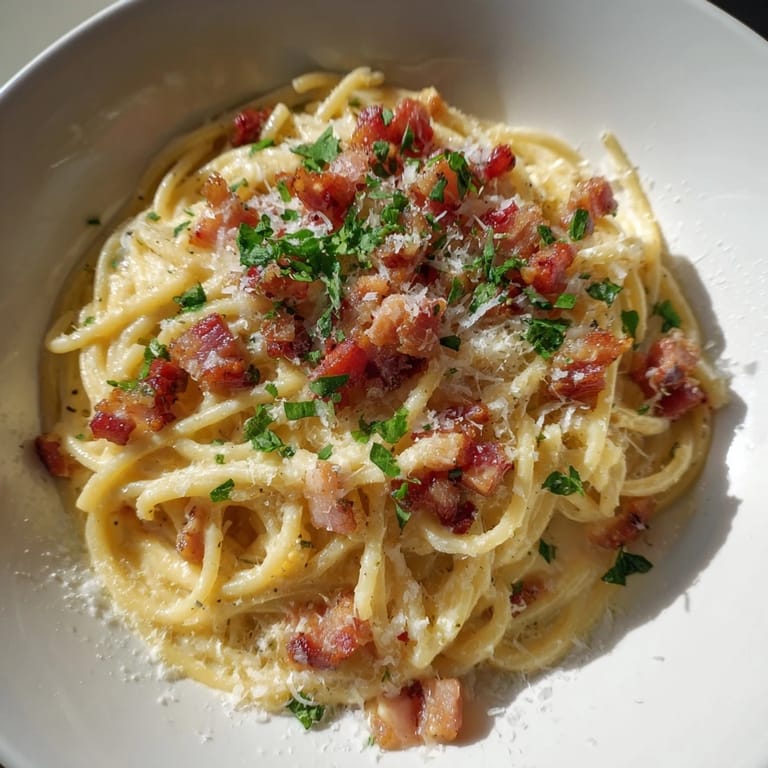
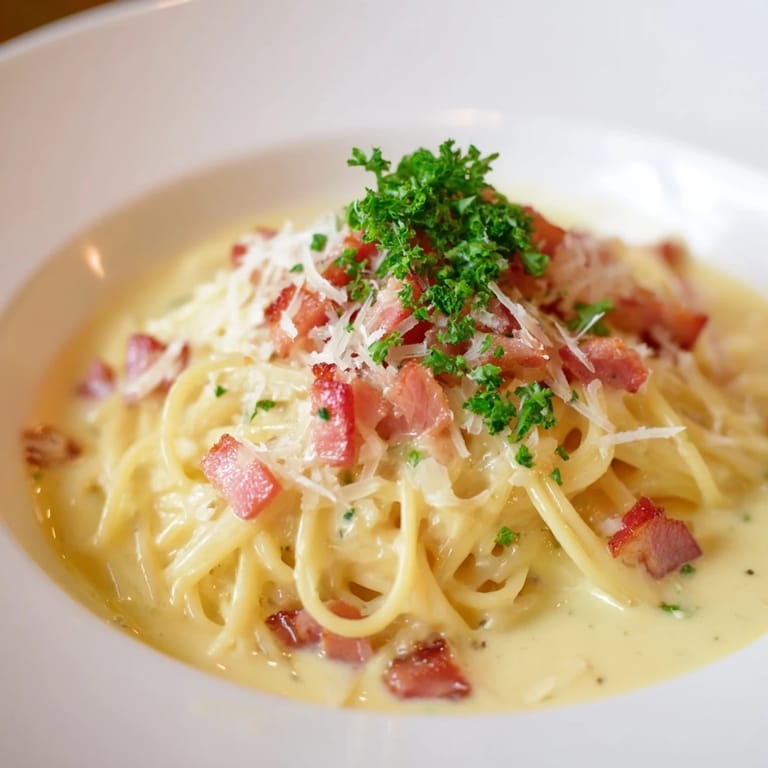
- Plate it up right away, hit it with extra Parmesan and a sprinkle of parsley if you've got it, and eat it while it's still steaming.
 Save to Pinterest
 There was a rainy Saturday when my sister came over feeling defeated after a long week, and I made this without saying much. We sat on the couch with bowls in our laps, and somewhere between the first and last bite, she started laughing again. Food like this doesn't fix everything, but it reminds you that some things are still simple and good.
What Makes This Different from Other Carbonara Recipes
Most carbonara recipes skip the cream entirely, and while that's more traditional, adding just a splash gives you a little breathing room if you're nervous about scrambling the eggs. I've made it both ways, and honestly, the version with cream is more forgiving on a busy weeknight when you're not paying full attention. Once you get comfortable with the technique, you can ditch the cream and go full Roman-style, but there's no shame in a little insurance.
How to Store and Reheat Leftovers
Carbonara is one of those dishes that's best eaten the moment it's made, but if you do have leftovers, store them in an airtight container in the fridge for up to two days. Reheating is tricky because the eggs can get rubbery, so I usually add a splash of cream or pasta water to a skillet, toss the cold pasta in over low heat, and stir gently until it loosens up. It won't be quite as silky as the first time, but it's still better than most takeout.
Common Mistakes and How to Avoid Them
The biggest mistake people make is adding the egg mixture while the pan is still on the burner, which turns everything into a grainy scramble instead of a smooth sauce. Another common issue is not using enough pasta water, so the sauce stays thick and clumpy instead of glossy and loose. I also learned the hard way that pre-grated Parmesan from a tub doesn't melt the same way, so grate it fresh if you want that creamy texture.
- Always take the pan completely off the heat before adding eggs.
- Use pasta water generously and add it slowly while tossing.
- Grate your own Parmesan for the smoothest sauce.
 Save to Pinterest
 This carbonara has saved more weeknights than I can count, and it never stops feeling like a small luxury. I hope it does the same for you.
Recipe FAQs
- → What type of pasta works best?
Spaghetti or linguine are ideal as they hold the sauce well and cook quickly.
- → Can I skip the cream in the sauce?
Yes, omitting cream produces a classic Roman style carbonara with a rich egg and cheese sauce.
- → How to make the sauce creamy without curdling?
Remove the pan from heat before adding the egg mixture and toss quickly. Adding reserved pasta water helps create a glossy, smooth sauce.
- → What’s a good substitute for pancetta?
Thick-cut bacon works well for a similar smoky, savory flavor.
- → What are ideal garnishes for this dish?
Extra Parmesan and freshly chopped parsley add brightness and depth to the final plate.