 Save to Pinterest
 There's something almost meditative about standing at the counter on a Sunday morning, watching sourdough turn golden in the skillet while the kitchen fills with that nutty, toasted aroma. I developed this toast during one of those quiet moments when I had a perfectly ripe avocado, a handful of basil from the windowsill, and the urge to make something that felt both simple and special. The first time I blended the avocado pesto, I was amazed at how creamy it became with just a few pulses, and how the lemon juice kept it from browning. Now it's become my answer to those days when I want breakfast to feel like a small celebration rather than just fuel.
I'll never forget making this for my sister when she stopped by unexpectedly on a Tuesday morning, already apologizing for showing up unannounced. I had exactly these ingredients in my kitchen, and within fifteen minutes we were sitting at the table with our plates, and she just went quiet for a moment before asking if I'd started a catering business. It wasn't fancy or complicated, but it was the kind of food that makes people feel looked after, and that's when I knew this recipe was worth keeping around.
Ingredients
- Sourdough bread: The tang and structure matter here—regular sandwich bread will get soggy and lose the contrast you need, so don't skip the real thing if you can help it.
- Ripe avocado: It should yield slightly to gentle pressure but not be mushy; if yours is still hard, let it sit on the counter for a day or slice it and eat it separately while you wait.
- Fresh basil: Use it the day you buy it if possible, as wilted basil makes the pesto taste stale rather than bright.
- Pine nuts: They toast beautifully in the food processor and add a subtle richness that walnuts or almonds won't quite replicate, though either of those work if that's what you have.
- Garlic clove: One small clove is enough—add it whole and let the processor do the work, so you don't end up with harsh raw garlic flavor.
- Parmesan cheese: Grating it fresh makes a real difference; the pre-grated stuff has anti-caking agents that change the texture of the pesto.
- Lemon juice: Use fresh lemon, not the bottled kind, and squeeze it just before making the pesto so the acidity is bright and alive.
- Extra-virgin olive oil: The quality shows here since it's not being heated, so this is the moment to use the good bottle you've been saving.
- Cherry tomatoes: Halving them releases their juices slightly and helps them distribute across the toast instead of rolling around.
- Microgreens: They add a peppery crunch that finishes the whole thing; if you can't find them, fresh arugula works but use it more sparingly.
- Flaky sea salt: Regular table salt is too fine and will make everything taste salty rather than seasoned, so grab the good finishing salt.
Tired of Takeout? 🥡
Get 10 meals you can make faster than delivery arrives. Seriously.
One email. No spam. Unsubscribe anytime.
Instructions
- Toast the bread until it sings:
- Brush both sides of your sourdough slices with olive oil and toast them in a skillet over medium-high heat or in your toaster until they're golden and crisp on the edges. You want to hear that satisfying crunch when you bite into it, and that takes a few minutes of patience rather than just a quick pass through the toaster.
- Blend the pesto into submission:
- Toss your avocado, basil, pine nuts, garlic, Parmesan, lemon juice, and olive oil into the food processor and pulse until it's smooth but not so long that it becomes a thin paste. Season it with salt and pepper, then taste it and adjust—sometimes it needs a tiny pinch more lemon to wake it up.
- Spread generously and don't hold back:
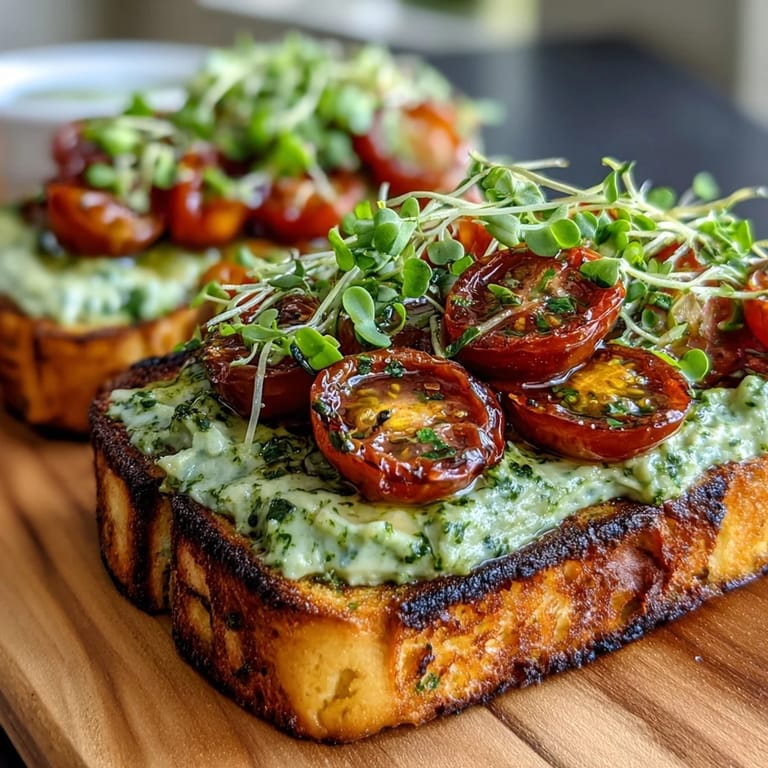
- Use a spoon or small spatula to spread the pesto onto each warm toast slice, making sure you get it all the way to the edges so every bite has the creamy goodness. Warm toast helps the pesto spread more easily and means it'll warm through slightly without getting oily.
- Layer on the brightness:
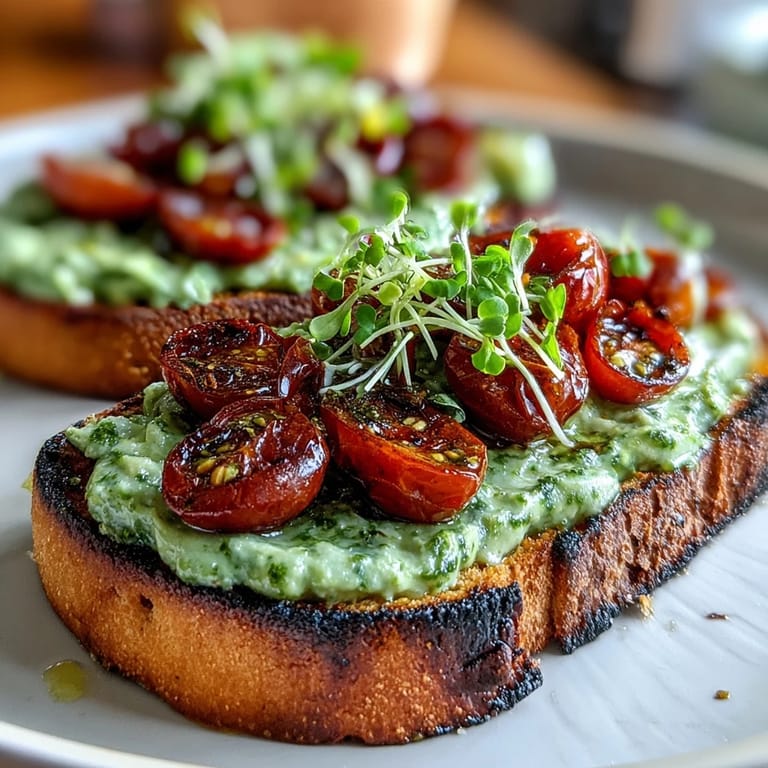
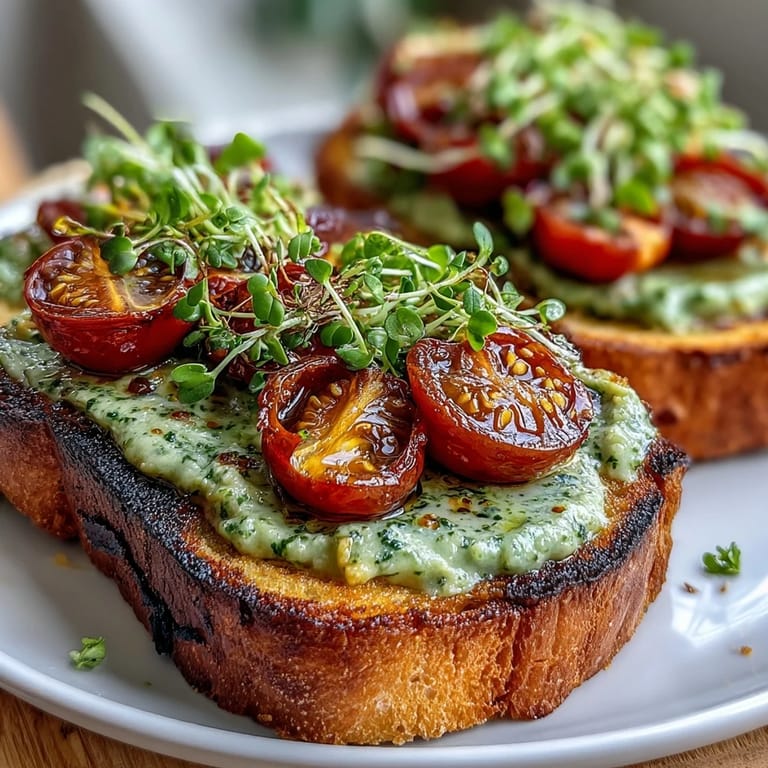
- Top each slice with your halved cherry tomatoes and a generous handful of microgreens, letting them pile up a little so the toast looks abundant and alive. The contrast between the creamy pesto and the crisp, fresh toppings is what makes this sing.
- Finish with intention:
- Sprinkle flaky sea salt and a few grinds of black pepper over the top and serve immediately while the toast is still warm and the microgreens are still crisp. If you wait too long, the toast will start to soften and lose its character.
 Save to Pinterest
 There was one morning when a friend who's usually rushing through breakfast actually sat down and took her time eating this, and afterward she said it was the first time in weeks she'd felt calm before noon. That's when I realized this recipe is about more than the ingredients—it's about giving yourself permission to make something intentional, even on an ordinary Tuesday.
The Case for Great Sourdough
The bread you choose sets the entire tone for this dish, and I learned this the hard way by making it with a sad supermarket loaf that turned to mush under the weight of the toppings. A real sourdough, with its open crumb structure and tangy depth, actually holds up to the moisture from the tomatoes and pesto while adding flavor that elevates everything else on the plate. If your bakery has a choice between a tighter and airier crumb, go for the airier one—it toasts more evenly and won't get soggy in the center.
Building Better Pesto Without a Food Processor
If you don't have a food processor, you can absolutely make this pesto the traditional way using a mortar and pestle, which actually gives you more control over the final texture. Start by crushing the garlic and pine nuts together, then add the basil and work it gently so you're bruising rather than pulverizing it—bruised basil tastes more vibrant than blended basil. Stir in the avocado, cheese, and lemon juice last, folding rather than mashing, so the avocado stays creamy instead of becoming a paste.
Making It Your Own
The beauty of this recipe is how forgiving it is to personalization, and the best meals come from understanding what flavors make you happy rather than following instructions robotically. I've made it with mint instead of basil on days when I wanted something more summery, added a poached egg when I needed more protein, and even stirred in a spoonful of harissa paste when I wanted heat. The core idea stays the same—creamy base, bright toppings, good bread—but the details belong to whoever's making it.
- Try adding a fried egg or soft-boiled egg on top for extra richness and protein that turns this into a more substantial breakfast or brunch.
- A drizzle of hot sauce or a pinch of chili flakes will change the mood entirely if you're craving something with a kick.
- Fresh dill or tarragon can stand in for basil if that's what you have growing or what appeals to you in the moment.
 Save to Pinterest
 This toast has become my quiet answer to mornings when I need to remember that good food doesn't need to be complicated to matter. Make it for someone you love, or make it for yourself on a morning when you deserve a little extra care.
Recipe FAQs
- → How do I prepare the avocado pesto?
Blend ripe avocado, fresh basil, pine nuts, garlic, Parmesan cheese, lemon juice, and olive oil until smooth. Season with salt and pepper to taste.
- → Can I use different bread types?
Yes, multigrain or rye bread works well as alternatives to sourdough, adding varied textures and flavors.
- → What are good substitutions for pine nuts?
Walnuts or almonds can be used instead of pine nuts, offering a similar nutty richness.
- → How should I toast the bread for best results?
Brush both sides with olive oil and toast in a skillet or toaster until golden and crisp to enhance flavor and texture.
- → How can I make this dish dairy-free?
Simply omit the Parmesan or substitute it with nutritional yeast to maintain a savory depth without dairy.