 Save to Pinterest
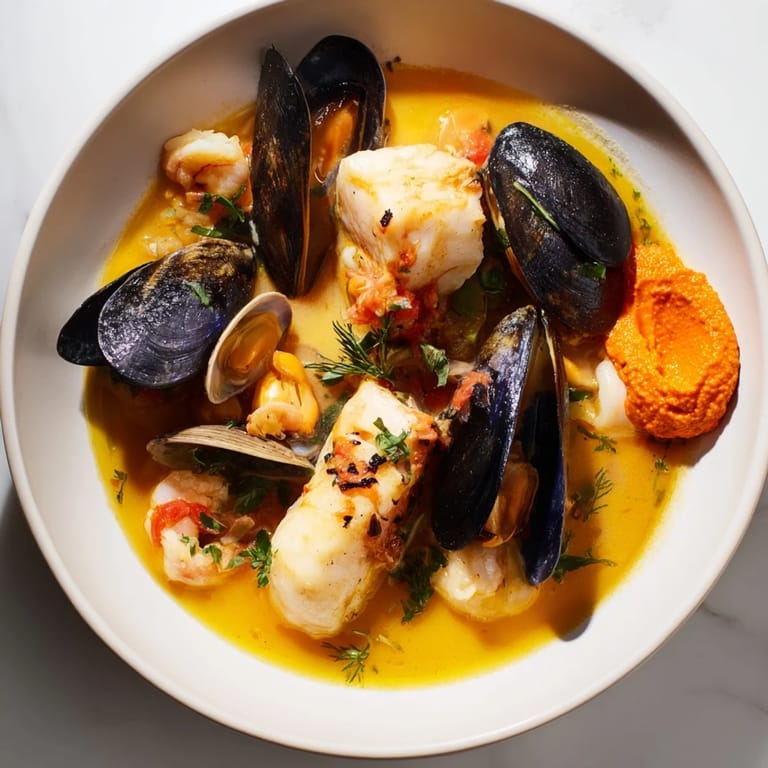
 The first time I tasted authentic bouillabaisse, I was sitting at a small waterfront bistro in Marseille, watching fishermen unload their catch just meters away. The bowl arrived steaming, a glossy golden broth studded with chunks of sea bass, mussels gaping open, and shrimp curled pink in the heat. One spoonful and I understood why this humble fisherman's stew had become legendary—it tasted like the Mediterranean itself, saffron and fennel weaving through the sweetness of tomato and the brine of fresh seafood. That afternoon, I decided I had to learn to make it, to bring that moment home to my own kitchen.
I made this for my sister the night she moved into her new apartment overlooking the harbor. She was nervous about the new job, the new city, everything unfamiliar. We stood in her mostly empty kitchen, and I layered the broth with fish while she toasted bread and stirred the rouille. By the time we sat down with steaming bowls, her shoulders had dropped, and we were laughing about something ridiculous. Food has that power sometimes—to make you feel anchored when everything else is shifting.
Ingredients
- Firm white fish fillets (monkfish or sea bass): These are the backbone of your broth—they dissolve slightly during cooking, creating that silky, rich base.
- Oily fish fillets (red mullet or mackerel): Don't skip these; they add depth and that authentic Provençal flavor that makes bouillabaisse unmistakable.
- Mussels, shrimp, and scallops: Buy the freshest you can find—your fishmonger's recommendation matters here more than anywhere else.
- Olive oil: Use a good one; this is not the place to cut corners.
- Onion, leek, fennel, and carrot: These are your aromatic foundation, and the longer they soften, the sweeter they become.
- Tomatoes: Fresh or canned are both fine, but if using canned, choose whole tomatoes you can crush by hand.
- Orange zest: This is the secret whisper that lifts the whole dish—don't omit it.
- Saffron threads: Yes, they're expensive, but a little goes a long way, and this dish deserves them.
- Fennel seeds and bay leaf: These create the herbal backbone that makes bouillabaisse taste like Provence itself.
- Fish stock: Homemade is ideal, but a good quality store-bought stock will do; water is your backup, though the depth will be less.
- Dry white wine: Something you'd drink—not cooking wine, but not your finest bottle either.
Tired of Takeout? 🥡
Get 10 meals you can make faster than delivery arrives. Seriously.
One email. No spam. Unsubscribe anytime.
Instructions
- Build your aromatic base:
- Heat olive oil in a large heavy pot and add your sliced onion, leek, fennel, carrot, and minced garlic. Let them soften gently for 8–10 minutes, stirring occasionally, until they smell sweet and fragrant but haven't taken on any color. This is the moment where the magic starts—your kitchen will smell like a Provençal market.
- Layer in the flavor builders:
- Add the chopped tomatoes, orange zest, bay leaf, thyme, parsley, saffron, fennel seeds, and peppercorns to the pot. Stir everything together and let it cook for 5 minutes so the spices wake up and the herbs release their oils.
- Deglaze and simmer the broth:
- Pour in the white wine and let it bubble for a couple of minutes, scraping up any flavorful bits stuck to the bottom. Then add your fish stock or water and bring it to a gentle boil, then lower the heat and let it simmer uncovered for 25 minutes. This is where the broth becomes golden and complex.
- Strain for clarity and smoothness:
- Pour the broth through a fine sieve into a clean pot, pressing on the solids with the back of a spoon to extract every last drop of flavor. Discard the solids and taste the broth—adjust the salt and pepper now, because this is your foundation.
- Cook the seafood gently:
- Bring the broth back to a gentle simmer and add the firm white fish first, cooking for 5 minutes. Then add the oily fish, mussels, shrimp, and scallops all at once, and simmer for another 5–6 minutes until the mussels open and everything is just cooked through. Discard any mussels that refuse to open.
- Make the rouille:
- While the seafood cooks, combine the egg yolk, minced garlic, chopped chili, and saffron (with its soaking water) in a bowl along with the Dijon mustard. Whisk until smooth, then drizzle in the olive oil drop by drop at first, whisking constantly, as if you're making mayonnaise—because you are, essentially. Once it thickens and emulsifies, you can add the oil a little faster.
- Bring it all together:
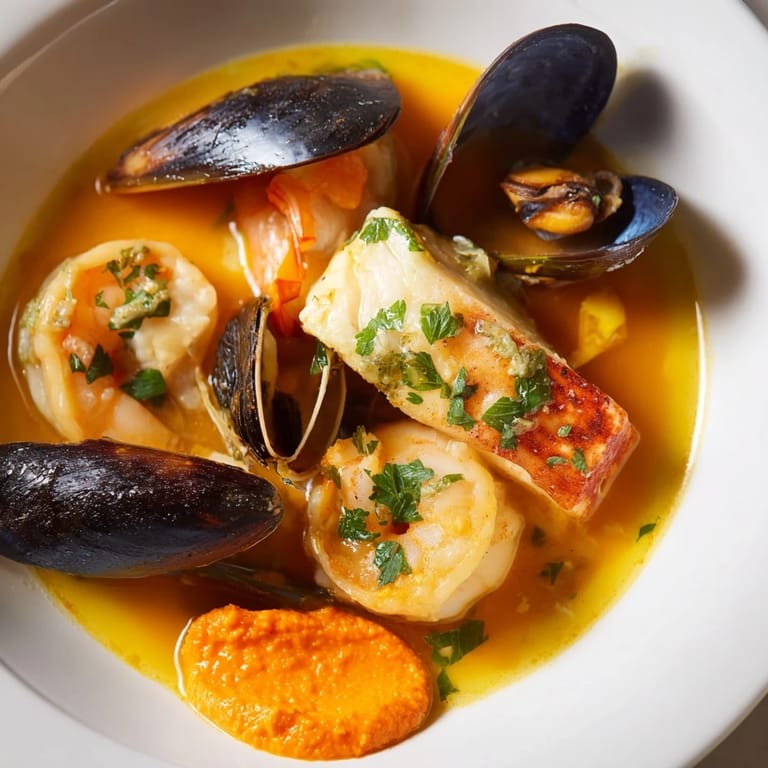
- Ladle the steaming bouillabaisse into warm bowls, top with fresh parsley, and serve with toasted baguette slices and a generous spoonful of rouille on the side or stirred in. Let each person adjust their bowl to their taste.
 Save to Pinterest
 There's a moment near the end of cooking bouillabaisse when the kitchen transforms. The windows fog with steam, the smell of saffron and sea hangs in the air, and suddenly your home smells like somewhere you've always wanted to be. That's when you know you're doing it right.
Choosing Your Fish
Traditional bouillabaisse uses whatever the boats brought in that morning, so flexibility is actually authenticity here. The key is variety and freshness—aim for at least three different types if you can. A mix of firm white fish, oily fish, and shellfish creates layers of flavor that a single type never could. Talk to your fishmonger; they'll guide you toward what's best that day, and they'll appreciate being asked. I've discovered some of my favorite combinations simply by asking what came in fresh and what they'd use at home.
The Rouille: Your Secret Weapon
Rouille is where bouillabaisse goes from good to unforgettable. It's essentially a saffron and garlic mayonnaise that sits on the edge of each bowl, and a spoonful stirred into the broth adds richness and a subtle heat. Make it ahead if you like—it keeps for a day in the refrigerator and actually improves as the flavors marry. The first time I made it, I was terrified of breaking the emulsion, but I learned that patience and a steady hand matter far more than perfection. If it does break, don't throw it away; start with a fresh yolk and whisk the broken rouille back in slowly.
Serving and Pairing
Bouillabaisse is meant to be shared, lingered over, savored. Serve it in warm bowls with plenty of toasted baguette, and let everyone build their own experience by stirring in as much rouille as they like. A chilled Provençal rosé or crisp white wine is the only accompaniment you need—something light and mineral that won't compete with the delicate seafood. The beauty of this dish is that it tastes fancy enough for guests but feels comforting enough to make for yourself on a quiet evening.
- Toast your baguette slices right before serving so they stay crispy and don't absorb the broth too quickly.
- Warm your serving bowls by ladling a bit of broth into them first, then pouring it out—warm bowls keep the stew at the perfect temperature longer.
- If anyone at your table is hesitant about seafood, let the broth speak for itself first; many converts have started with a simple spoonful of that golden liquid.
 Save to Pinterest
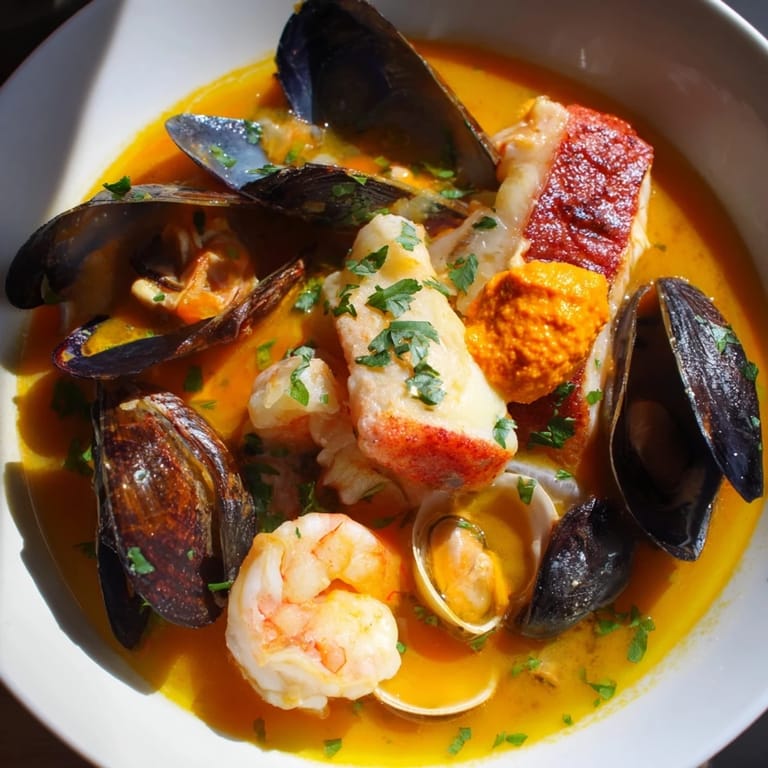
 Bouillabaisse taught me that some of the best meals come from understanding where food comes from and honoring it in the cooking. This stew asks you to slow down, to taste as you go, and to trust that simplicity and good ingredients are always enough.
Recipe FAQs
- → What types of fish work best for bouillabaisse?
Firm white fish like monkfish or sea bass and oily fish such as red mullet provide great texture and flavor diversity in the stew.
- → How is the saffron used in the dish?
Saffron threads are added to infuse the broth with its distinctive golden color and subtle floral notes, enhancing the overall aroma and taste.
- → What is rouille and how is it made?
Rouille is a creamy garlic sauce made by whisking together egg yolk, garlic, chili, saffron, mustard, and olive oil into a thick, smooth condiment served alongside the stew.
- → Can I prepare bouillabaisse ahead of time?
Yes, the broth and sautéed vegetables can be prepared in advance, but seafood should be added fresh just before serving to maintain texture and flavor.
- → What’s the best way to serve bouillabaisse?
Serve the stew hot with a sprinkle of fresh parsley, a dollop of rouille, and slices of toasted crusty bread brushed with olive oil to soak up the flavorful broth.