 Save to Pinterest
 My sister called me halfway through her afternoon, breathless about a bakery in Barcelona she'd just discovered tucked between two narrow streets. She couldn't stop talking about their candied orange almond cake—the way the citrus shimmered on top like jewels, how it tasted delicate but substantial all at once. That phone call stuck with me, and weeks later I found myself standing in my kitchen with oranges and almonds, determined to chase that same magic she'd described.
Last spring I made this for my book club, and I remember being nervous because one of the members had recently gone gluten-free and I wanted to prove it didn't mean sacrificing anything delicious. When she took her first bite, the way her eyes lit up made all that careful candying of the oranges completely worth it. She came back for thirds and asked for the recipe before she even left.
Ingredients
- Candied oranges (2 medium, thinly sliced): These are the soul of the cake, turning translucent and jammy as they cook down in the syrup, so don't rush them or slice them too thick.
- Granulated sugar (1 cup, divided between candying and batter): The sugar for candying needs to be weighed, not guessed, or you'll end up with either crystallized fruit or syrup that never thickens.
- Water (1 cup for candying): Just enough to barely cover the orange slices; if you add too much the fruit takes forever to become translucent.
- Almond flour (2 cups, finely ground): Buy pre-ground if you can find it, because grinding your own almonds can turn them oily if you're not careful with a food processor.
- Eggs (4 large): Room temperature eggs whip up lighter and create more volume, which means a fluffier cake.
- Extra virgin olive oil or melted unsalted butter (1/2 cup): Olive oil keeps this dairy-free and adds a subtle richness; butter works beautifully too if you prefer that traditional depth.
- Vanilla extract (1 tsp): A small amount but it rounds out the almond flavor and adds complexity.
- Orange zest (from 1 orange): Use a microplane for the finest, most fragrant zest that distributes evenly throughout the batter.
- Salt (1/2 tsp): This amplifies the citrus notes and prevents the cake from tasting flat or one-dimensional.
- Baking powder (1 tsp, gluten-free): Check that it's certified gluten-free because some regular brands are processed on shared equipment.
- Sliced almonds and powdered sugar for garnish: These finish the cake with elegance, though they're truly optional if you're eating it just for yourself.
Tired of Takeout? 🥡
Get 10 meals you can make faster than delivery arrives. Seriously.
One email. No spam. Unsubscribe anytime.
Instructions
- Get your oven ready and prep your pan:
- Preheat to 350°F (175°C) while you grease a 9-inch springform pan and line the bottom with parchment paper. This matters because the parchment will help you lift the cake out cleanly later, and greasing everything prevents sticking when you invert it.
- Candy those oranges with patience:
- In a wide saucepan, combine 1 cup sugar and 1 cup water over medium heat, stirring until the sugar dissolves completely. Add your orange slices in a single layer and adjust the heat so they're barely bubbling—you want a gentle simmer that lasts 15 to 20 minutes until the fruit turns glassy and translucent, not a rolling boil that breaks them apart. Turn them once or twice halfway through, then slide them onto a wire rack to cool while you keep that precious syrup in the pan.
- Layer the oranges as your cake's crown:
- Arrange the cooled candied oranges on the bottom of your prepared pan in whatever pattern makes you happy. They'll be on top when you flip the cake, so this is your moment to arrange them like you're decorating.
- Whisk eggs and sugar until the magic happens:
- In a large bowl, whisk together 4 eggs and 1 cup sugar—around 2 minutes of whisking—until the mixture is pale, thick, and falls from your whisk in ribbons. This aeration is what gives the cake its tender crumb, so don't skip this step even though your arm gets tired.
- Build the wet ingredients:
- Whisk in your oil or melted butter, 1 tsp vanilla extract, the orange zest, and 1/2 tsp salt until everything is completely smooth and the zest is distributed evenly throughout.
- Fold in the almond flour gently:
- Add 2 cups almond flour and 1 tsp baking powder, then fold everything together with a rubber spatula using slow, deliberate strokes—folding rather than stirring keeps the batter light and prevents overdeveloping the gluten structure even though there is none. Stop folding as soon as you don't see any streaks of flour.
- Pour and smooth the batter:
- Pour the batter over those candied orange slices and use an offset spatula or the back of a spoon to smooth the top gently without pressing down on the fruit.
- Bake until golden and set:
- Bake for 45 to 50 minutes until the top is deep golden brown and a toothpick inserted into the center of the cake—not into an orange slice—comes out clean with just a few moist crumbs. The cake should smell intensely fragrant and feel springy to the touch.
- Cool before the big flip:
- Let the cake sit in the pan for exactly 15 minutes—this gives the structure enough time to set so it won't crumble when you turn it out. Run a thin knife around the edges of the springform to make sure nothing's stuck.
- Invert with confidence:
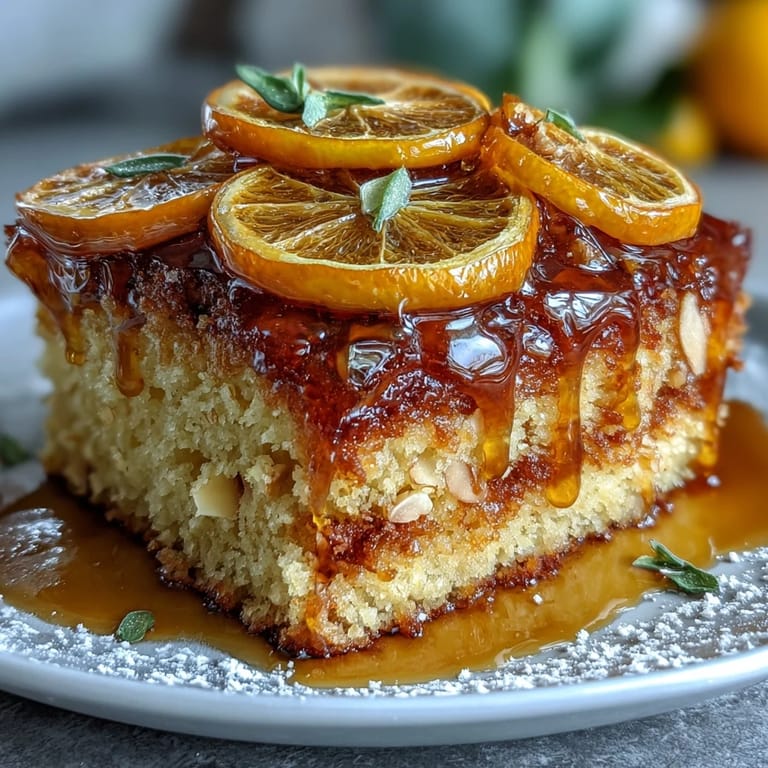
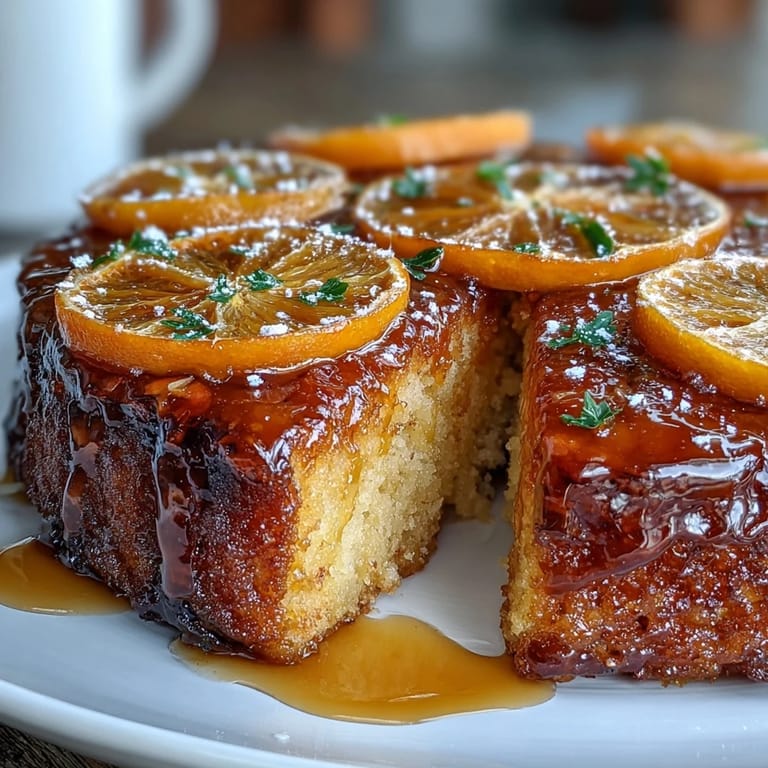
- Open the springform, place a serving plate upside down on top of the cake, take a breath, and flip it all together in one smooth motion. The candied oranges should be gleaming on top.
- Finish with shine and elegance:
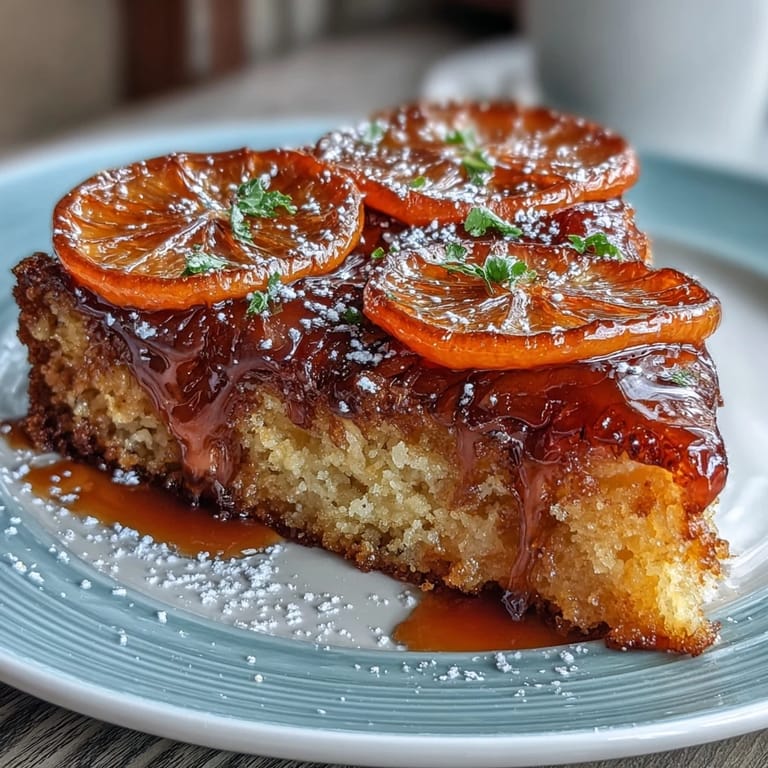
- Brush the orange syrup you reserved across the top of the cake so it glistens and adds extra citrus flavor to each bite. Scatter a few sliced almonds and a dusting of powdered sugar over the top if you're feeling fancy, though the cake is beautiful naked too.
 Save to Pinterest
 There's something about serving a slice of this cake with the candied orange on top that makes people pause before they eat it, taking a moment to appreciate how beautiful it looks. Then they taste it and their whole face changes, and you realize you've made something that's touched them a little bit.
Why This Cake Works Without Gluten
Almond flour has enough fat and protein in it that the cake stays moist and tender without any wheat flour to anchor it. The eggs do the heavy lifting here, creating structure through aeration, and the oil keeps everything luxuriously soft. This isn't a cake that tries to mimic traditional baking—it celebrates what almonds can do on their own.
The Citrus Question
I've played around with switching one of the oranges for a lemon when I want something brighter and more tart, and it absolutely works. The flavor becomes sharper and less sweet, which some people love. You could even use a combination of both if you want that complex citrus note that makes people wonder what you did.
Storage and Keeping
This cake actually improves after a day because the flavors have time to meld and the crumb stays impossibly moist. It sits beautifully on the counter covered with a cake dome or loosely tented with foil for up to three days, and I've found that serving it at room temperature brings out the orange flavor more than anything cold. A slice with whipped cream or Greek yogurt transforms it into something elegant enough for a proper dessert, and the tartness of the yogurt plays off the sweetness of the candied oranges.
- Don't refrigerate it or the almond cake will dry out faster than you'd expect.
- Slice it with a sharp, slightly damp knife for clean edges that showcase those beautiful orange slices on top.
- Wrapped well, it also freezes beautifully for up to a month, and honestly tastes nearly identical after thawing.
 Save to Pinterest
 This cake has a way of becoming a signature dish, the one thing people ask you to bring to gatherings or want you to make for celebrations. It's beautiful enough to impress and easy enough that you'll actually want to make it again and again.
Recipe FAQs
- → How do candied oranges affect the cake's texture?
Candied oranges add a tender, slightly chewy texture and infuse the cake with citrus sweetness that brightens each bite.
- → Can olive oil replace butter in the batter?
Yes, olive oil can be used instead of butter for a dairy-free version, keeping the cake moist and flavorful.
- → Is almond flour gluten-free?
Almond flour is naturally gluten-free, making it a great choice for gluten-sensitive diets when combined with gluten-free baking powder.
- → What is the purpose of reserving orange syrup?
The reserved syrup is brushed over the cooled cake for extra shine and a boost of concentrated citrus flavor.
- → How should this cake be stored to maintain freshness?
Store the cake covered at room temperature for up to three days to retain moisture and flavor.