 Save to Pinterest
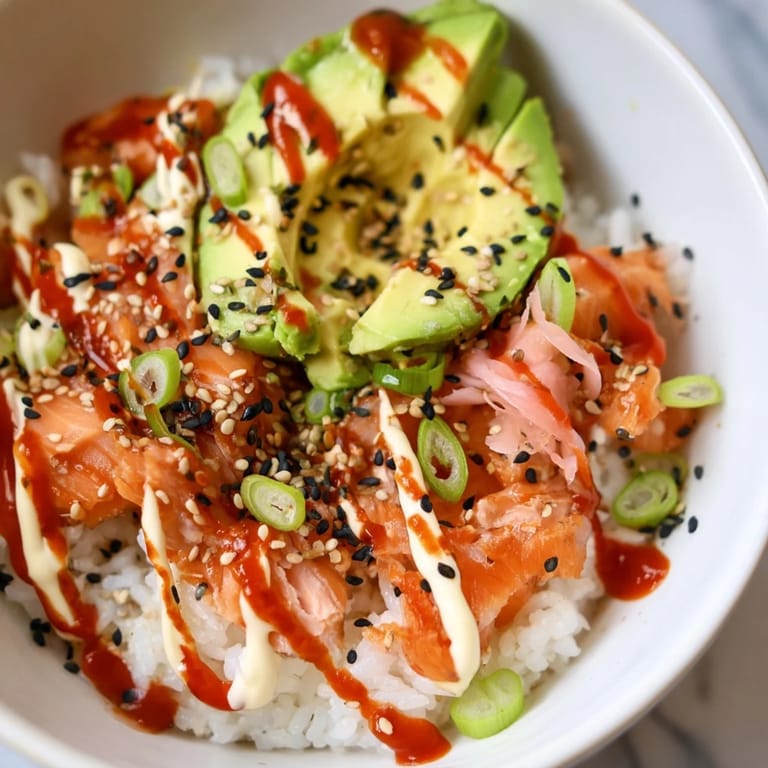
 I discovered this bowl on my phone at 11 PM on a Tuesday, scrolling through videos of people eating with their eyes closed in pure contentment. The simplicity caught me off guard—just salmon, rice, and a handful of toppings coming together in what looked like the easiest dinner ever. I made it the next night when I had leftover salmon from Sunday and some rice sitting in the fridge, and it became the kind of meal I now crave without warning, especially when I need something that feels both comforting and a little bit fancy.
My roommate walked in while I was arranging avocado slices on top and asked what restaurant I was getting delivery from. When I told her I'd made it in my microwave, she was genuinely shocked—the kind of shocked where she immediately asked for the recipe. Watching someone discover this bowl through your own hands is oddly satisfying, like you've shared a small secret that actually works.
Ingredients
- Cooked salmon fillet (about 170 g / 6 oz): The protein that makes this bowl feel substantial; flaking it with a fork creates a texture that's different from slicing and somehow more satisfying.
- Cooked white rice (2 cups, preferably leftover and chilled): Day-old rice works beautifully here because the grains stay separate and don't get mushy when warmed.
- Soy sauce (1 tablespoon): The seasoning that ties everything together without being heavy; it brings out the subtle richness of the salmon.
- Sesame oil (1 teaspoon): Just a whisper of this, because a little goes a long way and it adds a toasted, almost nutty depth.
- Japanese mayonnaise, like Kewpie (1 tablespoon): Creamier and sweeter than regular mayo, it adds richness without overpowering the fish.
- Sriracha or chili sauce (1 teaspoon, optional): For heat if you want it; the spice plays beautifully against the creamy elements.
- Avocado (1, sliced): The textural contrast that makes you want to keep eating, and it catches the seasoning oils in the best way.
- Roasted seaweed / nori sheets (1 sheet, cut into squares): Use them as edible scoops instead of utensils for a different kind of eating experience.
- Toasted sesame seeds (1 teaspoon): They add a gentle crunch and a warm, toasted aroma that you'll notice the moment they hit the bowl.
- Spring onions (2, thinly sliced): Fresh and sharp, they cut through the richness with a whisper of allium sharpness.
- Pickled ginger (optional): A palate cleanser between bites that brings brightness and a subtle bite.
- Lemon or lime wedges (optional): Squeeze these over at the end for acidity that pulls everything into focus.
Tired of Takeout? 🥡
Get 10 meals you can make faster than delivery arrives. Seriously.
One email. No spam. Unsubscribe anytime.
Instructions
- Flake and layer:
- Put your salmon in a microwave-safe bowl and use a fork to break it into tender, uneven pieces. Pour the rice on top—the contrast in temperatures will help it warm faster, and you'll love how the cold rice melts slightly into the warm salmon.
- Hydrate and warm:
- If your rice is from yesterday, sprinkle just a few drops of water over it to bring it back to life. Cover the bowl and microwave on high for 1–2 minutes until everything's warm and the rice has absorbed some of the salmon's moisture.
- Season generously:
- Add your soy sauce and sesame oil while everything's still hot so the rice drinks in the flavor. Mix it all together with the back of your fork, making sure the salmon and rice are evenly coated.
- Add the creamy element:
- Drizzle the mayonnaise over the top and add Sriracha if you're in the mood for heat. The mayo will warm slightly and become almost sauce-like as it mingles with the hot rice.
- Top with intention:
- Layer on your avocado, spring onions, sesame seeds, and any pickled ginger you have. The order doesn't matter, but layering means every bite gets a little bit of everything.
- Serve with toppings on the side:
- Put the nori sheets and lemon wedges nearby so you can use them however feels right—squeeze the citrus if you want brightness, tear the seaweed into scoops if you want texture and a new way to eat.
 Save to Pinterest
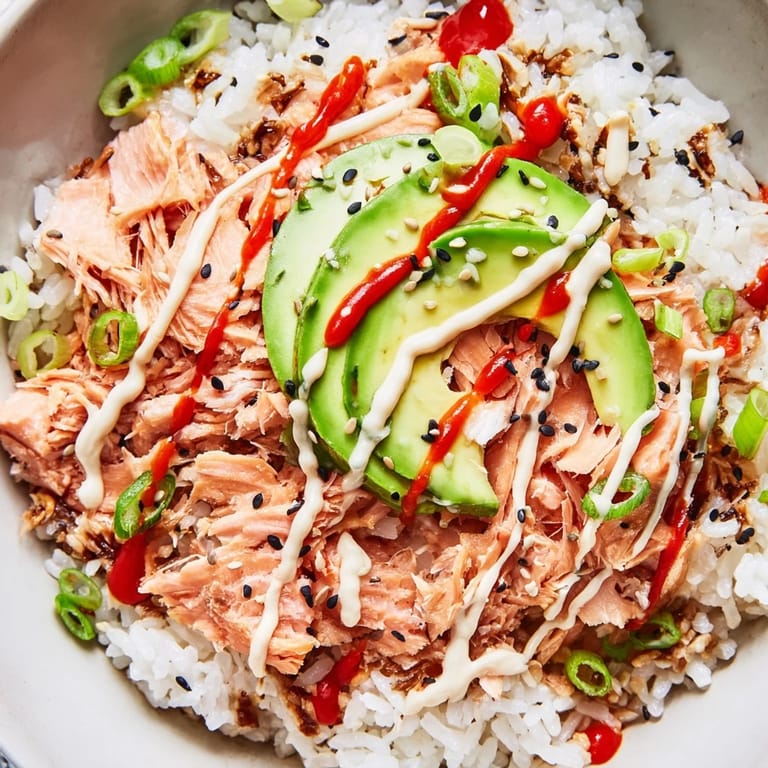
 There's a moment right after you finish assembling it where the steam is still rising off the rice and you catch the scent of sesame and soy, and suddenly this bowl feels like it belongs in a restaurant kitchen. That's when you know you've made something worth eating again and again.
Why This Became My Go-To Bowl
The real magic is how forgiving it is—salmon cooked last night, rice from the day before, avocado you picked because it felt right. Nothing needs to be fresh or planned, yet the result tastes like you meant to make it this way. It's the kind of meal that feels like self-care without requiring any actual effort, which is honestly why I make it at least twice a week now.
Playing with Toppings and Swaps
I've learned that the base of salmon and rice is almost like a blank canvas—the soy sauce and sesame oil hold everything together while you customize around it. My favorite version includes crispy shallots and a drizzle of sriracha, but my friend adds cucumber ribbons and calls it lighter. Another person I know uses smoked salmon when they're short on time, and it honestly works just as well, bringing a different but equally delicious kind of depth.
Making It Work for Your Kitchen
The beauty of this bowl is how it adapts to what you have and what you're craving on any given day. Some nights I add kimchi for funky, spicy depth; other times I top it with shredded carrots for sweetness and crunch. You really can't mess it up once you understand that the salmon, rice, and soy-sesame base are non-negotiable, and everything else is just you deciding what makes you happy.
- If you're cooking for someone with allergies, tamari swaps in seamlessly for soy sauce and keeps everything gluten-free without any loss of flavor.
- Brown rice works if you want more texture and fiber, though you might need an extra splash of water when reheating since it absorbs more moisture.
- Canned salmon is genuinely useful in a pinch and deserves respect as a legitimate shortcut that saves you money and time.
 Save to Pinterest
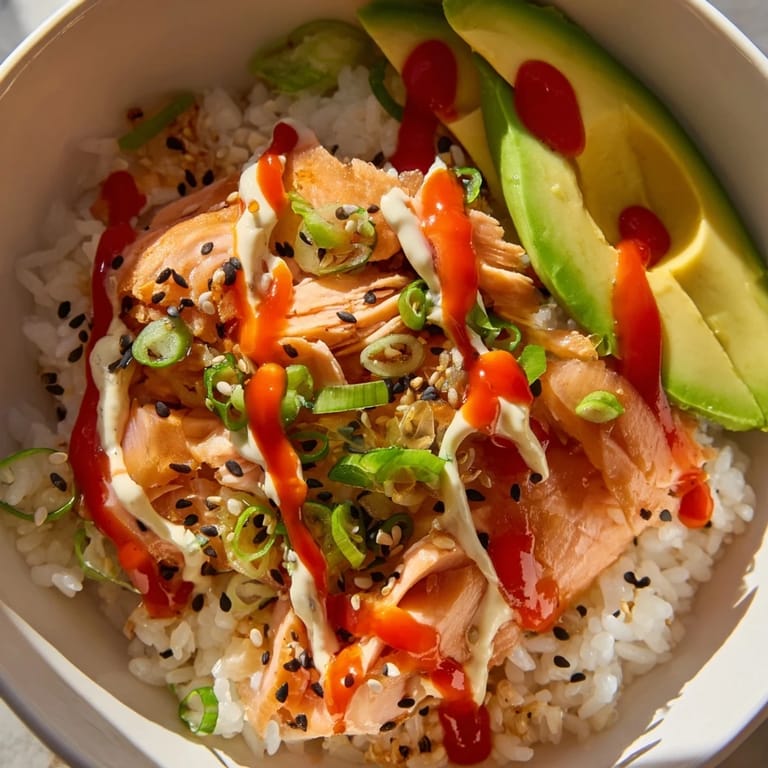
 This bowl has become my answer to the question I used to ask myself at 6 PM when I was tired and hungry and wanted something that felt like more than just dinner. It's proof that simple, intentional cooking doesn't require hours or fancy ingredients.
Recipe FAQs
- → Can I use brown rice instead of white?
Yes, brown rice adds extra fiber and a nuttier flavor, making the dish more wholesome.
- → What are good alternatives for soy sauce?
Tamari works well as a gluten-free substitute and maintains a similar savory depth.
- → How to store leftovers properly?
Keep leftovers in an airtight container in the fridge for up to 2 days to maintain freshness.
- → Can I prepare this without a microwave?
Yes, gently reheat salmon and rice in a pan over low heat until warm throughout.
- → What are some extra toppings to try?
Consider kimchi, shredded carrots, or cucumber slices for added crunch and freshness.