 Save to Pinterest
 My tía made brazo gitano the night before every family celebration, and I'd sneak into the kitchen to watch her work, mesmerized by how she'd roll that delicate cake so confidently. Years later, I finally understood why she never wrote down the recipe—it wasn't about measurements as much as touch and timing, knowing when the meringue had that glossy peak, feeling the warmth of the cake as it came out of the oven. The first time I made it alone, I was terrified I'd ruin something so beautiful, but somehow the combination of fluffy sponge, tart guava, and sweet meringue kept forgiving my small mistakes. Now it's become my answer to almost any occasion that calls for something special.
I brought this to a potluck once where someone else had also made a fancy rolled cake, and I remember feeling genuinely nervous as I set mine down on the table. But when people tasted it and their eyes lit up at that first bite of guava, I realized it wasn't about competing—it was about sharing something that made them pause and smile. That's when dessert stops being just dessert.
Ingredients
- Eggs: The foundation here—you need 7 total (4 for the cake, 3 for the meringue), and keeping them at room temperature makes a real difference in how well they whip up. Separate them carefully because even a tiny bit of yolk will fight you when you're trying to get those whites fluffy.
- Granulated sugar: About 250g total split across the cake and meringue, but what matters more than the amount is when you add it—beat it with the yolks until they're pale and thick, then fold it gently into the whites so you don't deflate all that air you just worked for.
- Vanilla extract: Just 1 teaspoon, but it's the quiet flavor that makes everything taste less clinical and more like something someone actually made.
- All-purpose flour: 120g sifted before you fold it in, and please don't skip the sifting—it keeps the cake light instead of dense and heavy.
- Salt: A quarter teaspoon in the cake, which sounds tiny but keeps the sweetness from becoming cloying and helps stabilize those egg whites.
- Guava paste: 225g of this is your filling, and I learned the hard way that letting it soften slightly with 2 tablespoons of water makes it spreadable without being runny.
- Cream of tartar: Optional but honestly useful—half a teaspoon helps those egg whites hold their shape longer and gives you more time to work without everything falling apart.
Tired of Takeout? 🥡
Get 10 meals you can make faster than delivery arrives. Seriously.
One email. No spam. Unsubscribe anytime.
Instructions
- Get your pan ready and heat the oven:
- Set your oven to 180°C (350°F) and line a 10x15 inch jelly roll pan with parchment paper, letting it come up the sides a bit. A light grease under that parchment helps it all stay in place without sticking.
- Build the yolk mixture:
- Beat those 4 egg yolks with half the sugar (about 75g) and your vanilla until the mixture is pale, thick, and ribbony—this takes longer than you think, maybe 3-5 minutes with an electric mixer. You're aerating as you go, which is what gives the cake its tender crumb.
- Whip the whites into clouds:
- In a completely clean bowl (any grease ruins everything), beat those 4 egg whites with the remaining 75g sugar and salt until stiff peaks form—they should look glossy and hold their shape. If you're using cream of tartar, add it when the whites are foamy but not yet peaked.
- Fold everything together with care:
- Gently fold the whites into the yolks in thirds so you keep that precious air you just created, then sift the flour right in and fold just until no white streaks remain. Overmixing here is the enemy of a tender cake.
- Bake until springy and golden:
- Pour the batter into your prepared pan, smooth the top, and bake for 12-15 minutes until the top springs back when you touch it lightly. You're not looking for brown, just set and barely golden.
- Roll while it's warm:
- Flip the hot cake onto a clean kitchen towel dusted with sugar, peel away the parchment carefully, and roll it up tightly from the short end, towel and all. Let it cool completely this way—the towel helps it hold its shape as it sets.
- Soften the guava for spreading:
- Heat that 225g of guava paste with 2 tablespoons of water in a small saucepan over low heat, stirring until it's smooth and spreadable but not soupy. This step is worth the extra minute because cold guava paste fights you when you try to spread it evenly.
- Unroll and fill:
- Once the cake is cool, gently unroll it and spread the guava filling evenly across the surface, leaving a small border so nothing squishes out when you roll. Don't be timid here—the cake is sturdier than it looks.
- Roll it back up tight:
- Roll the cake up again, this time without the towel, and transfer it to your serving platter seam side down. If it cracks slightly, don't panic—the meringue covers everything.
- Make the meringue topping:
- Beat 3 egg whites in a clean bowl until soft peaks form, then add 100g of sugar gradually while continuing to beat until you have stiff, glossy peaks that could hold a shape. Cream of tartar here helps too if you want extra insurance.
- Crown it with meringue:
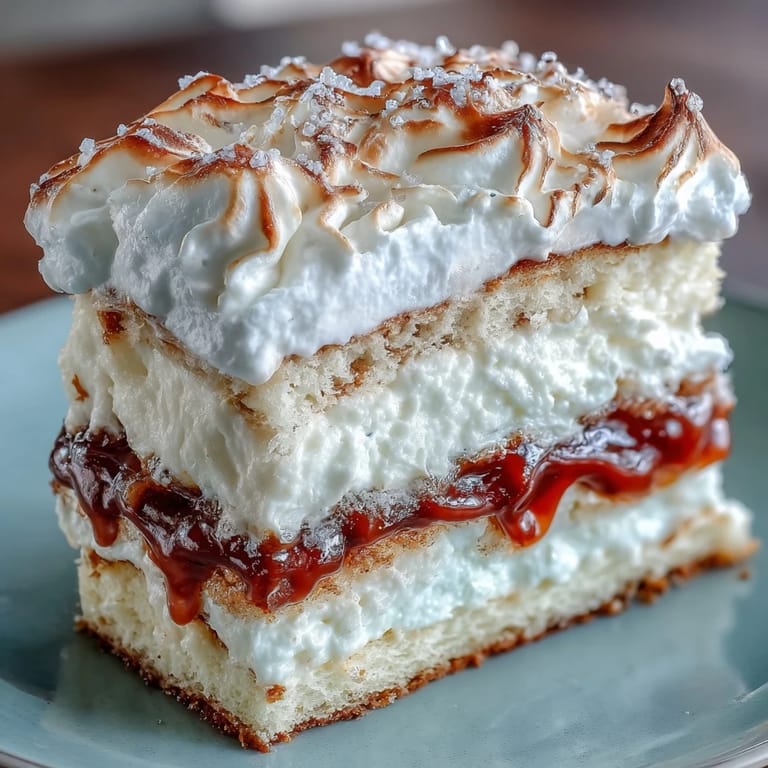
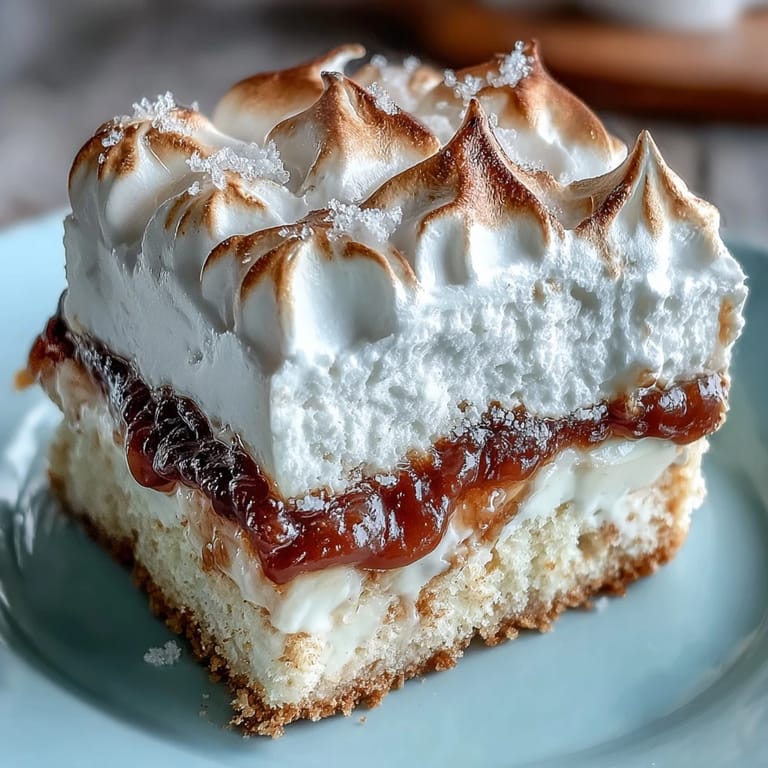
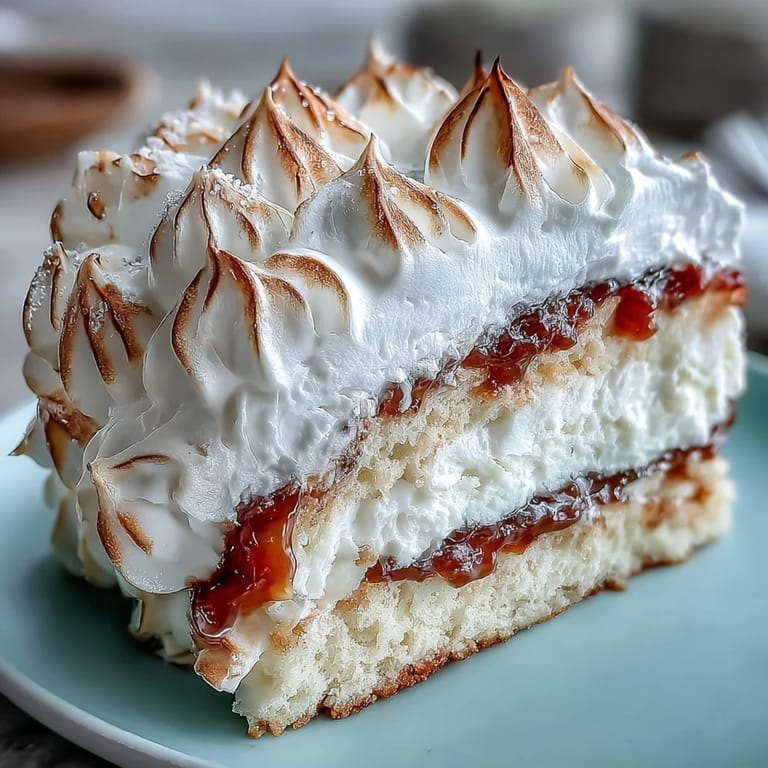
- Spread or pipe the meringue over the top and sides of your roll, making it look as rustic or polished as you want. The peaks and swirls get golden and beautiful, whether you torch them or broil them.
- Finish with heat if you'd like:
- Use a kitchen torch to lightly toast the meringue for a caramelized finish, or broil it briefly under high heat, watching constantly so it browns without burning. This step is optional but turns it from pretty to restaurant-worthy.
- Chill and serve:
- Refrigerate for at least 30 minutes before slicing so the layers set and the flavors meld. Serve it cold or at room temperature, and watch people's faces when they bite into it.
 Save to Pinterest
 My partner took a photo of the first brazo gitano I made for him, and he still shows people that picture like I'd done something remarkable—it's just a rolled cake, but he tasted the care in it. That's the moment I stopped worrying about perfection and started focusing on whether it brought someone joy.
The Magic of Proper Folding
Folding is honestly where most people lose their nerve with this recipe, but think of it as a conversation between the airy whites and the heavier yolk mixture rather than a battle to win. Use a rubber spatula and cut down through the center, sweep along the bottom, and turn the bowl as you go—you're trying to combine without deflating, which is totally possible if you move deliberately instead of frantically. The flour goes in last because it's the safest ingredient; even if you're slightly rough, it won't hurt anything the way overworking eggs would.
Guava Paste: The Heart of the Matter
Guava paste is sold in blocks or tubes, and choosing a good one makes the difference between decent and memorable. I learned to warm it slightly with water because cold paste is stiff and hard to spread evenly, creating bumps under the cake that look unpolished. The paste also mellows and becomes more flavorful when it's slightly warm, mingling better with the cake's vanilla notes.
Variations and Swaps You Can Make
This recipe is flexible in ways that feel dangerous until you realize the structure is what matters, not the exact flavors. Mango paste, raspberry jam, or even a thin layer of dulce de leche work beautifully in place of guava, and some people add a thin spread of whipped cream under the meringue for even more richness.
- Swap the guava for any fruit paste or jam you love, keeping quantities about the same so the roll doesn't get soggy or overstuffed.
- Skip the meringue entirely and dust with powdered sugar if you want something lighter, or use whipped cream instead for a totally different vibe.
- Toast the meringue under a broiler instead of with a torch if you don't have one—just watch it like a hawk because it goes from golden to burnt in seconds.
 Save to Pinterest
 This dessert has become my answer to almost every celebration because it tastes like you spent hours in the kitchen when really you were done in under an hour. Make it once and you'll understand why my tía never needed to write anything down—it becomes part of your hands and your memory, and that's when food stops being a recipe and becomes a story you get to tell.
Recipe FAQs
- → Why is it called Brazo Gitano?
The name translates to 'gypsy arm' in Spanish, referring to the rolled shape resembling an arm. This dessert has Spanish origins and was adopted into Puerto Rican and Latin American cuisine.
- → How do I prevent the cake from cracking when rolling?
Roll the warm cake immediately with a kitchen towel dusted with sugar. This technique, called training, helps the cake 'remember' the rolled shape as it cools. Don't wait until it's completely cool or it may crack.
- → Can I make Brazo Gitano ahead of time?
Yes, you can prepare it up to 24 hours in advance. Store in the refrigerator covered loosely with plastic wrap. The meringue may weep slightly over time but will still taste delicious. For best results, add the meringue topping the same day you plan to serve.
- → What can I use instead of guava paste?
Mango paste, membrillo (quince paste), or even thick fruit preserves like raspberry or apricot work well. Just ensure the filling is thick enough not to make the sponge soggy.
- → Do I need a kitchen torch for the meringue?
No, it's optional. You can broil the meringue briefly for a golden finish, though watch closely as it browns quickly. Alternatively, skip torching entirely—the meringue is delicious and stable without browning.
- → How should I store leftovers?
Wrap tightly in plastic wrap and refrigerate for up to 3 days. The meringue may soften slightly but remains tasty. Avoid freezing as the texture of both sponge and meringue will suffer.