 Save to Pinterest
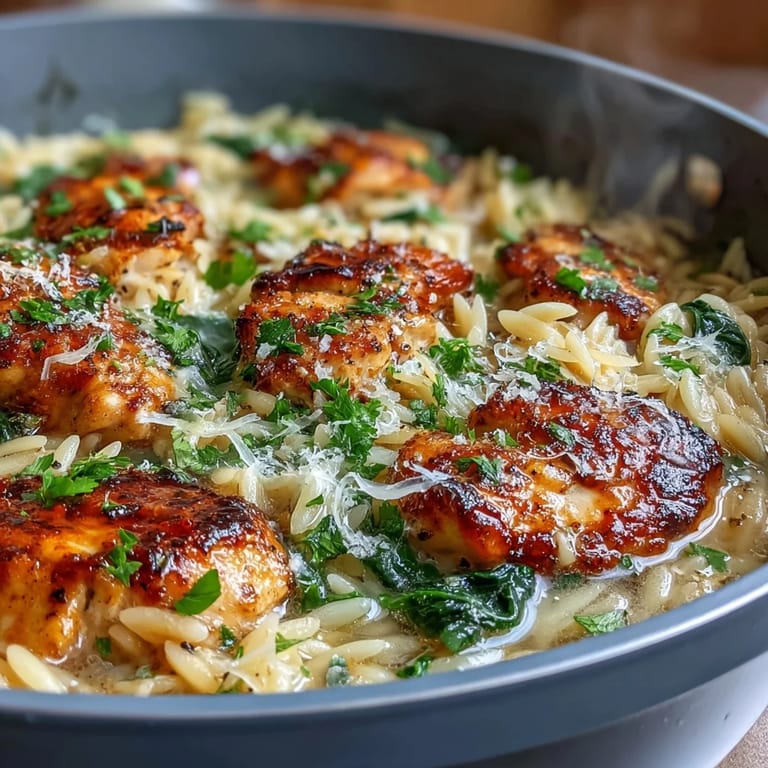
 There's something about the smell of lemon and garlic hitting hot oil that just makes a kitchen feel alive. I stumbled onto this one-pot wonder on a Tuesday evening when I had chicken thighs, a lemon going soft on the counter, and absolutely no patience for washing multiple pans. What started as creative laziness turned into something I now make constantly—bright, silky, and somehow elegant enough to serve when people drop by unannounced.
I made this for my friend Maya on a rainy spring afternoon, and she sat at my kitchen counter nursing a glass of wine while I cooked, asking questions about every step. When that first spoonful hit her mouth, she went completely quiet—the kind of quiet that means something's really working. She's asked me for the recipe every few months since, and I always tell her the same thing: the secret is not rushing the garlic.
Ingredients
- Chicken thighs or breasts: Thighs are more forgiving and juicier, but breasts work fine if that's what you have—just don't walk away while they're cooking or they'll tighten up.
- Olive oil: Use something you don't mind tasting, because you absolutely will; good olive oil makes a real difference here.
- Fresh lemon: Not the bottled stuff—the juice and zest are the backbone of this whole dish, so choose a lemon that feels heavy and bright.
- Garlic: Mince it yourself if you can; the fragrance when it hits the pan is part of the ritual.
- Orzo pasta: Those tiny rice-shaped noodles soak up all the broth and become creamy without any cream—it's magic.
- Low-sodium chicken broth: You're building flavor here, so don't use the super salty kind or you'll end up with something one-dimensional.
- Dry white wine: Optional but worth it; it adds a subtle complexity that makes people ask what your secret ingredient is.
- Fresh baby spinach: Tender enough to wilt in seconds, so save it for the very end to keep those bright green notes alive.
- Parmesan and fresh parsley: These aren't afterthoughts—they're the final flourish that makes this feel intentional and whole.
Tired of Takeout? 🥡
Get 10 meals you can make faster than delivery arrives. Seriously.
One email. No spam. Unsubscribe anytime.
Instructions
- Season and sear the chicken:
- Pat your chicken pieces dry with a paper towel—this matters more than you'd think for getting that golden crust. Season generously with salt and pepper and let it sit for just a minute while your pan heats up.
- Build the base:
- Once the chicken's golden and set aside, cook your onion until it starts turning translucent and sweet, then add that garlic and lemon zest. Listen for the sizzle—that moment when everything gets fragrant is when you know you're on the right track.
- Toast the orzo:
- This step sounds small but it changes everything; toasting the dry pasta for just a minute or two gives it a subtle nuttiness that makes the whole dish taste more intentional.
- Deglaze and simmer:
- When you pour in the wine and scrape up those caramelized bits stuck to the bottom, you're capturing all the flavor that wants to stick around. Don't skip this step even though it feels fussy.
- Bring it together:
- Add the broth and lemon juice, then nestle the chicken back in with any juices that pooled on the plate. The liquid should mostly cover everything; cover and let it do its thing on medium-low heat.
- Finish with green:
- When the orzo's almost tender and the chicken's cooked through, stir in that spinach and watch it transform from a pile of leaves to something silky in under three minutes. Remove from heat, fold in the Parmesan and parsley, taste, and adjust with extra lemon juice or salt if it needs waking up.
 Save to Pinterest
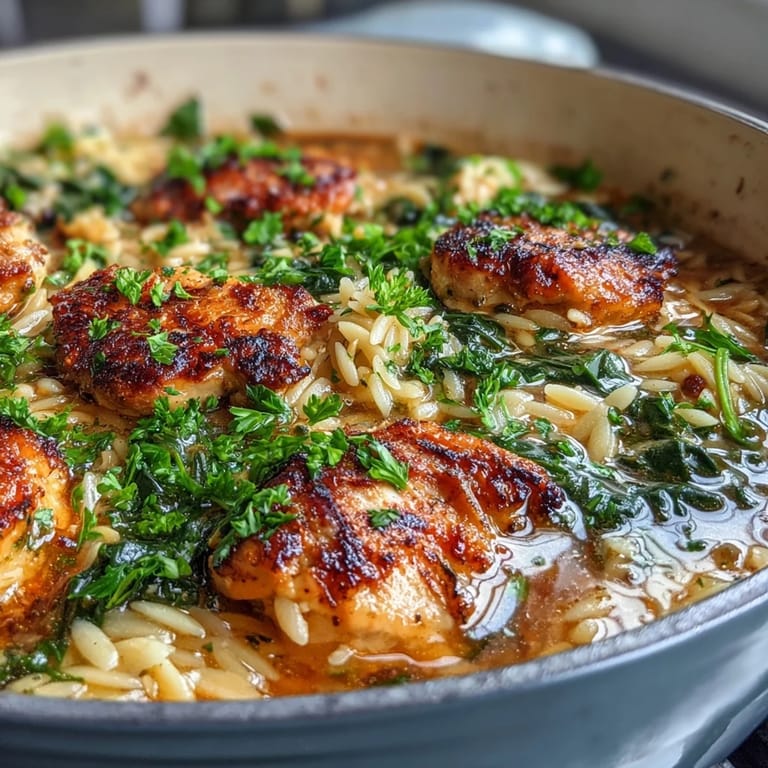
 My mom tasted this once and immediately started strategizing how to fit it into her weekly rotation, and I realized this was the kind of recipe that wins people over not through effort but through genuine deliciousness. It's the one I reach for when I want to cook something that feels thoughtful without any of the stress.
The Magic of One-Pot Cooking
There's real wisdom in building a dish in layers within a single vessel—each element contributes to the next, and by the time you're serving, you've got this unified, cohesive flavor that couldn't happen if you made things separately. The broth picks up the golden bits from the chicken, the orzo absorbs all that seasoned liquid, and everything becomes part of the same story.
Flexibility Without Apology
This recipe genuinely doesn't need much tweaking, but it also won't protest if you do—swap the spinach for kale if that's what lives in your crisper, use rotisserie chicken if you're short on time, or add a splash of cream if you want something richer. The bones of the dish are strong enough to handle whatever you throw at it.
When to Serve This and Why It Works
This is the kind of meal that works on a weeknight when you want something faster than takeout but more interesting than pasta with jarred sauce, and it's also elegant enough to set on the table when you've invited people over and want them to feel like you spent all day thinking about dinner. It's proof that weeknight cooking and impressive cooking don't have to be different things.
- Make it ahead: It actually tastes better the next day when the flavors have had time to get to know each other.
- Leftovers stay creamy: Unlike some pasta dishes that seize up in the fridge, this one reheats beautifully with just a splash of broth and a minute on the stove.
- Pair it with a simple green salad: Something dressed with just olive oil and lemon juice to echo what's already on the plate.
 Save to Pinterest
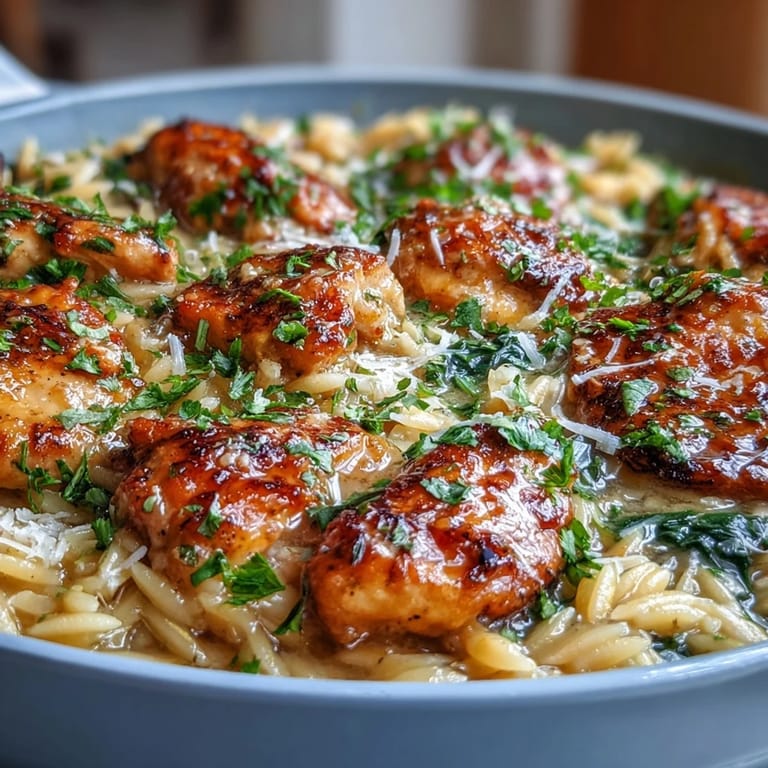
 This is the meal I return to again and again because it never lets me down, and it always tastes like I tried harder than I actually did. Make it soon, and make it often.
Recipe FAQs
- → Can I use chicken breasts instead of thighs?
Yes, both chicken thighs and breasts work well. Thighs offer more juiciness, while breasts cook slightly faster. Cut into bite-sized pieces for even cooking.
- → What can I substitute for orzo if unavailable?
Rice, couscous, or small pasta shapes make good alternatives. Adjust cooking time accordingly to reach desired tenderness.
- → Is white wine necessary for this dish?
The white wine adds depth and slight acidity but can be omitted or replaced with additional broth without sacrificing flavor.
- → How do I make the dish creamier?
Stir in a couple tablespoons of heavy cream at the end of cooking to enrich the texture and add a silky finish.
- → Can I swap fresh spinach for other greens?
Kale or arugula are excellent alternatives, offering different textures and flavors while maintaining nutritive value.