 Save to Pinterest
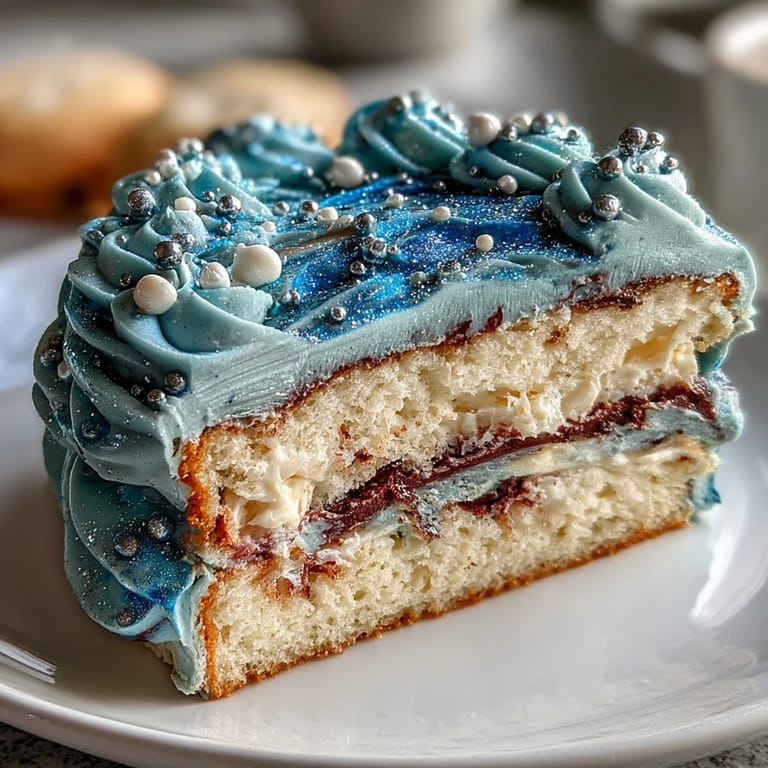
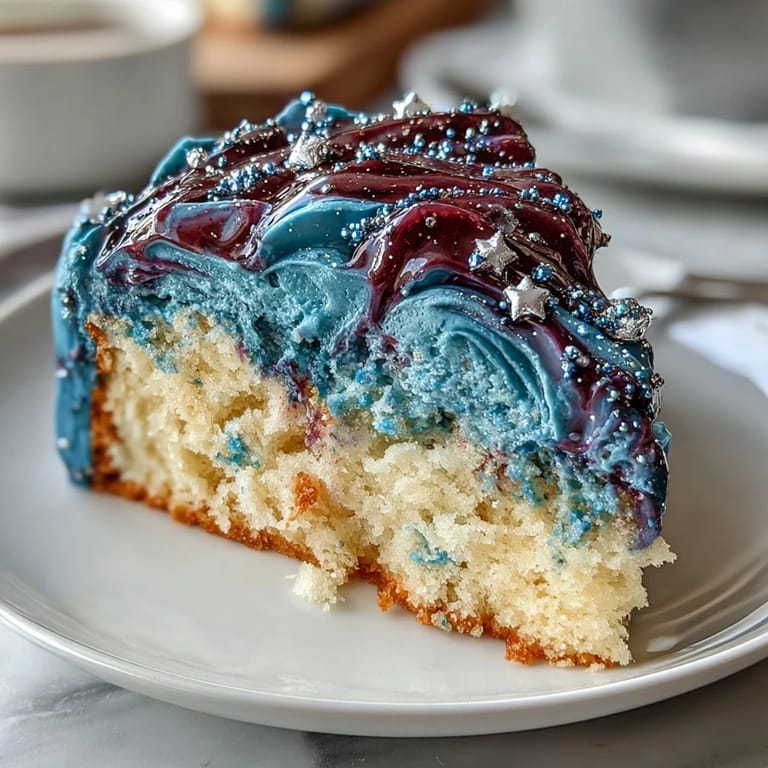
 My friend texted me a zodiac chart at midnight asking if I could make her a Pisces cake for her birthday dinner, and somehow I said yes without thinking it through. What started as panic about whether I could actually pull off something celestial turned into the most fun afternoon in my kitchen, swirling blues and purples together like I was painting a night sky on edible canvas. The first time I held that spatula and watched the colors blend into a galaxy, I understood why people get obsessed with decorative baking. This cake became less about following a recipe and more about creating something that made her feel seen.
I'll never forget the moment her face lit up when she walked into the dining room and saw that shimmering cake sitting under the soft lamplight. It wasn't just dessert; it was like I'd captured something about her personality—dreamy, creative, a little bit magical—and put it on a plate. That's when I realized this recipe wasn't really about following instructions; it was about turning butter and sugar into something that made someone feel celebrated.
Ingredients
- All-purpose flour (2 ½ cups): Measuring by weight instead of volume changed everything for me—no more dense cakes from overpacking flour into cups.
- Baking powder (2 ½ tsp): Fresh baking powder matters more than you'd think; old powder sitting in your cabinet since last year won't give you that light, fluffy crumb.
- Unsalted butter (1 cup for cake, 1 ½ cups for frosting): Room temperature butter creams into the sugar like butter should, creating tiny air pockets that make the cake tender rather than dense.
- Granulated sugar (2 cups): Don't skip the creaming step with butter—those 3-4 minutes of beating actually incorporate air that makes the cake rise beautifully.
- Eggs (4 large): Room temperature eggs blend smoothly without creating lumps, and they won't shock the batter when you add them.
- Pure vanilla extract (1 tbsp plus 2 tsp): The real stuff tastes like vanilla should; imitation extract sometimes gets lost in the sweetness.
- Whole milk (1 cup plus ¼ cup): Room temperature milk incorporates into the batter without seizing the butter, and whole milk creates a richer crumb.
- Powdered sugar (5 cups): Sifting the powdered sugar before adding it prevents lumpy buttercream that refuses to smooth out no matter how hard you beat it.
- Gel food coloring (navy blue, purple, black, teal): Gel colors give you the deep, saturated hues that make a real galaxy effect; liquid food coloring waters down your buttercream.
- Edible glitter (silver, blue, or iridescent): This is where the magic happens—choose quality edible glitter that actually shimmers instead of looking dull and flat.
Tired of Takeout? 🥡
Get 10 meals you can make faster than delivery arrives. Seriously.
One email. No spam. Unsubscribe anytime.
Instructions
- Prepare your stage:
- Preheat your oven to 350°F and get those three 8-inch cake pans greased and lined with parchment paper. Having everything ready before you start mixing means you won't be frantically hunting for pans while batter sits waiting.
- Combine your dry ingredients:
- Whisk together the flour, baking powder, and salt in a medium bowl. This small step distributes the leavening evenly so every bite rises at the same rate.
- Cream butter and sugar into clouds:
- Beat room-temperature butter and sugar together for 3-4 minutes until it looks light and fluffy like pale clouds. You'll see it transform from grainy to smooth and airy, which is exactly what you want.
- Add eggs with care:
- Add each egg one at a time, beating well after each addition so they blend completely instead of creating streaky bits in your batter. Once all eggs are in, mix in the vanilla extract.
- Alternate wet and dry:
- Start with the flour mixture, then add some milk, then more flour, ending with flour—this prevents overmixing which can make the cake tough. Mix just until combined; you're not trying to create a smooth soup here.
- Bake with patience:
- Divide batter equally among the three pans and bake for 25-30 minutes until a toothpick inserted in the center comes out clean. Every oven runs differently, so start checking at 25 minutes.
- Cool properly:
- Let cakes cool in the pans for 10 minutes first (they're fragile when hot), then turn them out onto wire racks to cool completely. Rushing this step means warm frosting melting into warm cake.
- Make your galaxy buttercream:
- Beat room-temperature butter until creamy, then gradually add sifted powdered sugar, milk, and vanilla. Beat until it's smooth and fluffy enough to hold peaks on your spatula.
- Create your color palette:
- Divide buttercream into four bowls and tint each with gel coloring—navy blue, purple, teal, and black. Use toothpicks to add color gradually so you don't overshoot and end up with muddy tones.
- Build and swirl:
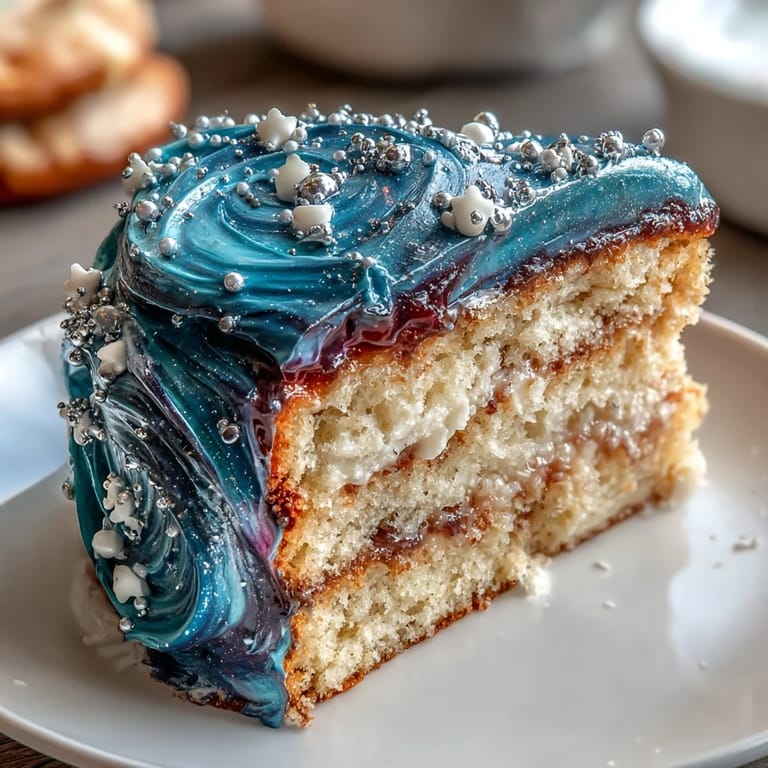
- Place one cake layer on your serving plate, then dollop alternating spoonfuls of each colored buttercream across the top and sides. Use an offset spatula to swirl gently, creating that cosmic, swirled effect without overworking the colors into brown.
- Add the sparkle:
- Sprinkle edible glitter generously all over the cake while the buttercream is still soft enough to hold it. If you want even more shimmer, use a food-safe paintbrush to lightly brush clear vodka or alcohol before the glitter lands.
- Chill before slicing:
- Refrigerate for at least 30 minutes so the buttercream sets and holds its galaxy swirls when you cut into it. This makes serving much cleaner and lets the design really show.
 Save to Pinterest
 Months later, my friend still talks about that cake like it was the best birthday gift anyone could have given her. I learned that baking isn't just about measurements and timing—it's about showing someone you care enough to spend an afternoon creating something beautiful just for them.
The Secret to Smooth Buttercream
The first time my buttercream looked grainy and uncooperative, I thought I'd ruined everything. I discovered that sifting the powdered sugar actually makes a difference—lumps hide in unsifted sugar and refuse to blend no matter how long you beat. Now I sift it, beat in the butter slowly, and listen for that moment when it sounds smooth instead of sandy. Room temperature butter is the other half of the equation because cold butter won't cream properly with the sugar.
Working with Gel Food Coloring
Gel coloring seemed intimidating until I realized I was just being impatient with it. A tiny toothpick dipped in gel color goes further than you'd expect, so add a little, mix it thoroughly, then add more if needed. Liquid food coloring waters down buttercream and makes it harder to spread, but gel stays concentrated and vibrant. The first time I made galaxy buttercream, I used liquid coloring and ended up with pale, watery purple; switching to gel made the difference between a pretty cake and a stunning one.
Timing and Temperature Matter
I used to rush through baking and wonder why my cakes came out uneven. Now I let ingredients come to room temperature before mixing because chemistry actually works better that way—cold ingredients don't incorporate air as easily, and they mix unevenly. Cooling the cakes completely before frosting prevents buttercream from melting into a puddle, and chilling the finished cake before slicing keeps those beautiful swirls intact instead of smearing them across the plate.
- Let all ingredients sit out for 30 minutes before you start so everything is genuinely room temperature, not just cool.
- Cool cakes completely on a wire rack, not on the counter or a plate where steam gets trapped and makes them soggy.
- Chill the finished cake for at least 30 minutes in the fridge so the buttercream sets hard enough to slice cleanly.
 Save to Pinterest
 This cake taught me that baking is actually an act of generosity—you're spending your time and skill to create something that makes someone's day better. Make it with people you love in mind, and it'll taste even better.
Recipe FAQs
- → What ingredients create the galaxy effect?
Gel food coloring in navy blue, purple, teal, and black create the vibrant galaxy swirls in the buttercream.
- → How is the vanilla sponge kept moist?
The sponge combines butter and milk with vanilla extract, balanced with precise flour and baking powder ratios for a tender crumb.
- → What enhances the shimmer on the cake?
Edible glitter is sprinkled over the buttercream, and optional clear alcohol can be brushed to intensify the sparkle.
- → Are there any decoration options included?
White fondant can be shaped into Pisces symbols or stars, and silver star sprinkles add extra celestial charm.
- → Can substitutions be made for dietary preferences?
Gluten-free flour substitutes can be used for gluten sensitivity, and almond extract offers a flavor variation.