 Save to Pinterest
 There was a Wednesday evening last winter when I stood at the stove, craving something warm but light, creamy but clean. I had cod in the fridge and a can of coconut milk in the pantry, and somehow the idea of poaching fish in spiced broth instead of plain water just made sense. The kitchen filled with the smell of ginger and lime as the broth simmered, and I realized I'd stumbled onto something I'd want to make again and again. It wasn't fancy, but it felt nourishing in a way that went beyond hunger.
I made this for a friend who was recovering from a cold, and she sat at my kitchen counter wrapped in a blanket, slurping noodles and telling me it was exactly what she needed. The steam rose from the bowl, carrying the scent of coriander and chili, and I watched her face relax with each bite. Since then, it's become my go-to for anyone who needs comfort without heaviness. There's something about the way the broth cradles the fish that feels like care in a bowl.
Ingredients
- Cod fillets: Choose fillets that are firm and smell like the ocean, not fishy, and pat them dry before poaching so they hold together beautifully.
- Neutral oil: Canola or sunflower works perfectly here because you want the aromatics to shine, not the oil.
- Onion: Slice it finely so it melts into the broth and adds a sweet, savory base without chunks.
- Garlic and ginger: These two are the backbone of the broth, so mince and grate them fresh for the most vibrant flavor.
- Red chili: Slice it thin and leave the seeds in if you like heat, or remove them for just a hint of warmth.
- Red curry paste: A tablespoon is enough to add depth and a gentle kick without overwhelming the delicate fish.
- Coconut milk: Use full-fat for richness, and shake the can before opening to mix the cream and liquid evenly.
- Fish or vegetable stock: This thins the coconut milk just enough to make it silky and spoonable, not heavy.
- Fish sauce and soy sauce: Together they add umami and salt, balancing the sweetness of the coconut and the brightness of the lime.
- Lime juice: Squeeze it fresh right before adding, because bottled juice just doesn't have the same zing.
- Udon noodles: Fresh udon are slippery and satisfying, and they soak up the broth like a dream.
- Baby spinach: It wilts in seconds and adds a pop of green without any bitterness.
- Carrot: Julienne it thin so it stays crisp-tender and adds a subtle sweetness and color.
- Shiitake mushrooms: Slice them evenly so they cook at the same rate and bring an earthy, meaty note to the bowl.
- Spring onions and coriander: These are the final flourish, adding freshness and a bit of bite right before serving.
Tired of Takeout? 🥡
Get 10 meals you can make faster than delivery arrives. Seriously.
One email. No spam. Unsubscribe anytime.
Instructions
- Build the aromatic base:
- Heat the oil in a large saucepan over medium heat, then add the onion and let it soften for about 3 minutes, stirring occasionally. Stir in the garlic, ginger, and chili, and cook for just a minute until the kitchen smells incredible and your mouth starts watering.
- Bloom the curry paste:
- Add the red curry paste and stir it around for a minute, letting it toast slightly and release all those warm, spicy notes. This step makes all the difference in deepening the flavor of the broth.
- Create the broth:
- Pour in the coconut milk and stock, then bring everything to a gentle simmer, stirring occasionally. Add the fish sauce, soy sauce, and lime juice, then taste and adjust if you want more salt, tang, or heat.
- Poach the cod:
- Slide the cod fillets gently into the simmering broth, cover the pan, and let them poach for 6 to 8 minutes until they turn opaque and flake easily with a fork. The low, steady heat keeps the fish tender and prevents it from falling apart.
- Prepare the noodles:
- While the fish poaches, cook the udon noodles according to the package instructions, then drain and divide them among 4 serving bowls. They'll be ready and waiting to catch all that fragrant broth.
- Add the vegetables:
- Toss the spinach, carrots, and shiitake mushrooms into the broth and let them simmer for 2 to 3 minutes until just tender. They should still have a bit of bite and vibrant color.
- Assemble the bowls:
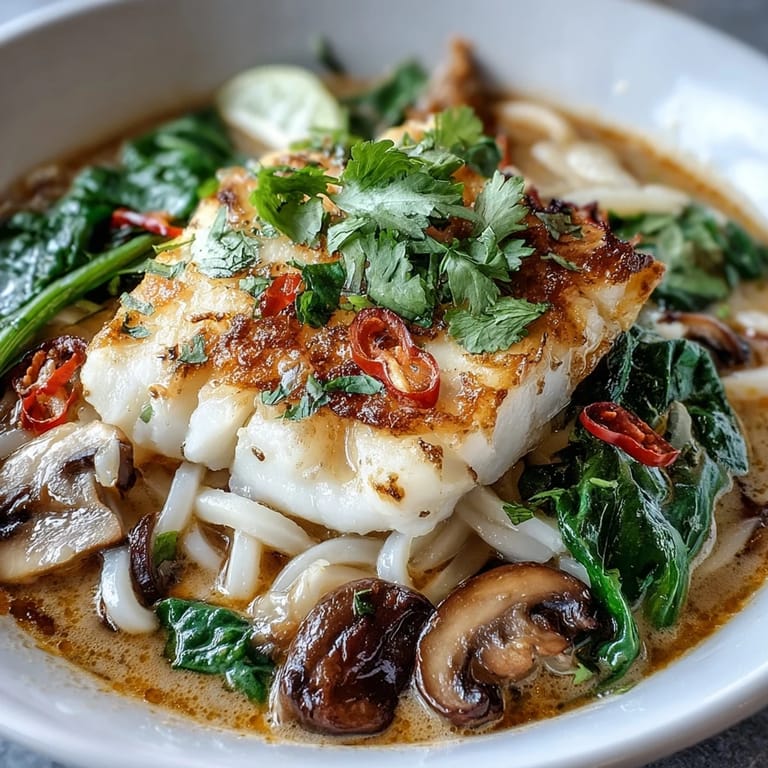
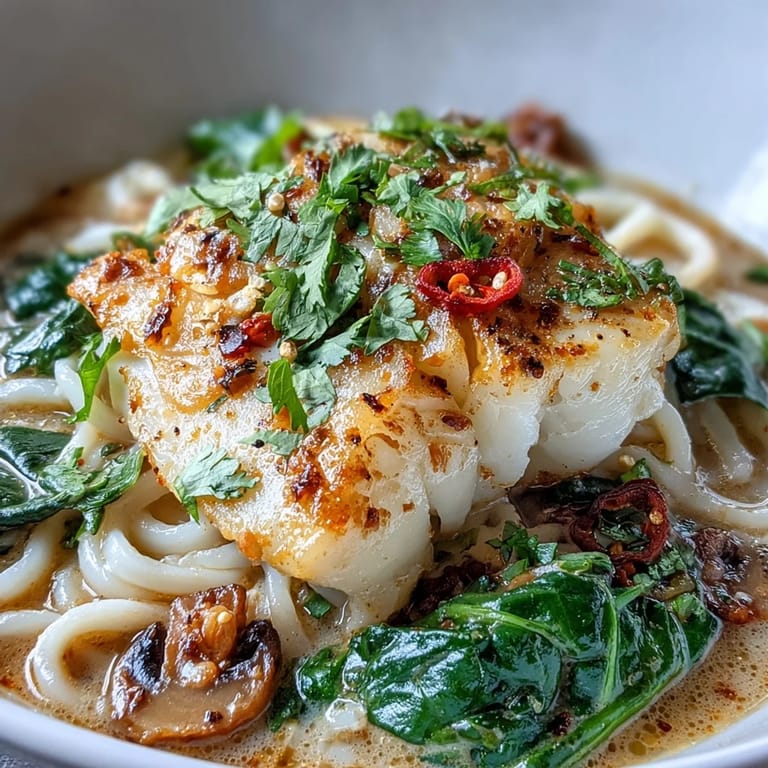
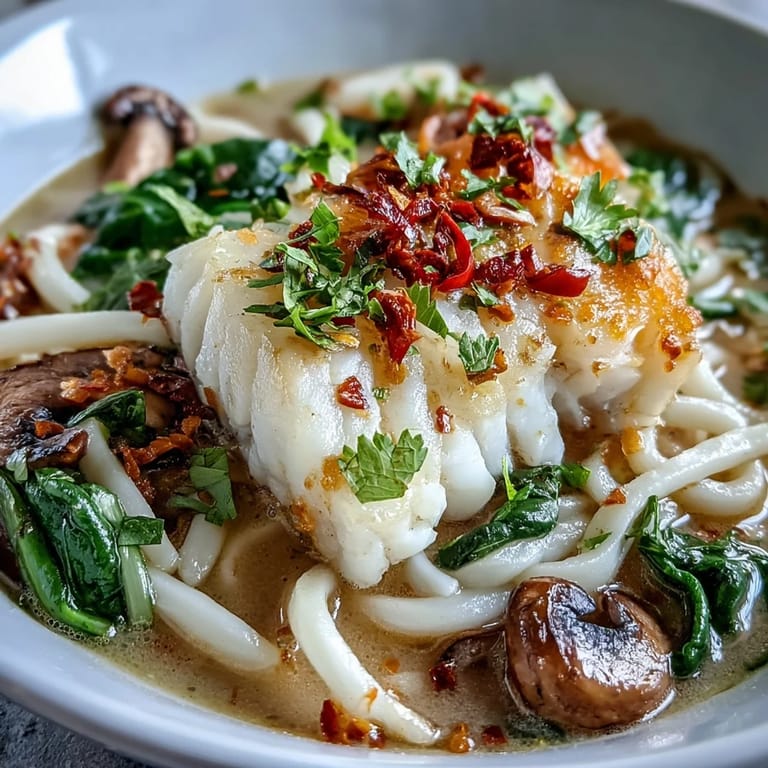
- Carefully lift the poached cod out of the broth and set it aside, then ladle the hot broth and vegetables over the noodles in each bowl. Top each serving with a piece of cod, then scatter spring onions and coriander leaves over the top and serve immediately while everything is steaming hot.
 Save to Pinterest
 One evening I made this for myself after a long day, and as I sat alone at the table with my bowl, I felt the tension in my shoulders ease with each spoonful. The broth was warm and fragrant, the fish melted on my tongue, and the noodles were just slippery enough to make me slow down and savor. It reminded me that cooking for yourself with care is never wasted effort. Sometimes the best meals are the quiet ones.
Choosing Your Fish
Cod is mild and forgiving, but you can swap it for haddock, halibut, or even sea bass if that's what looks best at the market. I've learned that any firm white fish works as long as it's fresh and not previously frozen, because freezing can make the flesh watery and prone to breaking apart. The key is to handle it gently and not overcook it, so the fish stays moist and flaky. If you're feeling adventurous, try this with salmon for a richer, more robust bowl.
Making It Your Own
This recipe is a template, not a rule, and I've tweaked it dozens of ways depending on what I have on hand. Sometimes I add bok choy or snap peas instead of spinach, or throw in a handful of cherry tomatoes for a pop of acidity. I've made it with rice noodles when I couldn't find udon, and it was just as satisfying. The broth is the star, so as long as you keep that balance of creamy, spicy, and bright, you can play with the rest.
Serving and Storing
Serve this immediately while the broth is hot and the noodles are still slippery, because it's at its best right out of the pot. If you have leftovers, store the broth, fish, and noodles separately in the fridge, because the noodles will soak up the liquid and turn mushy if left together. Reheat the broth gently on the stove, warm the noodles in hot water, and add the fish at the last moment so it doesn't overcook.
- Drizzle chili oil over the top if you want extra heat and a glossy finish.
- Pair it with a crisp Riesling or Sauvignon Blanc to balance the richness of the coconut.
- Double the broth recipe and freeze half for an even quicker meal next time.
 Save to Pinterest
 This dish has become my answer to the question of what to make when I want something special but don't have the energy for anything complicated. It's proof that comfort and elegance can live in the same bowl.
Recipe FAQs
- → Can I use a different type of fish instead of cod?
Yes, you can substitute cod with other firm white fish such as haddock, halibut, sea bass, or even tilapia. Just ensure the fish is fresh and adjust poaching time slightly based on fillet thickness.
- → How can I make this dish gluten-free?
To make this gluten-free, replace udon noodles with rice noodles and use tamari instead of soy sauce. Always check that your fish sauce and curry paste are also certified gluten-free.
- → What can I substitute for udon noodles?
Rice noodles, ramen noodles, or even soba noodles work well as alternatives. For a low-carb option, try zucchini noodles or shirataki noodles, though cooking times will vary.
- → How do I know when the cod is properly cooked?
The cod is done when it turns opaque throughout and flakes easily with a fork. This typically takes 6-8 minutes of gentle poaching. Avoid overcooking, as the fish will become dry and tough.
- → Can I prepare the broth in advance?
Yes, you can make the coconut broth up to 2 days ahead and store it in the refrigerator. Reheat gently before poaching the fish and adding the vegetables for the freshest results.
- → What vegetables can I add or substitute?
Bok choy, snap peas, bell peppers, or bean sprouts all work beautifully in this dish. Add heartier vegetables earlier in the cooking process and delicate greens near the end to maintain texture.