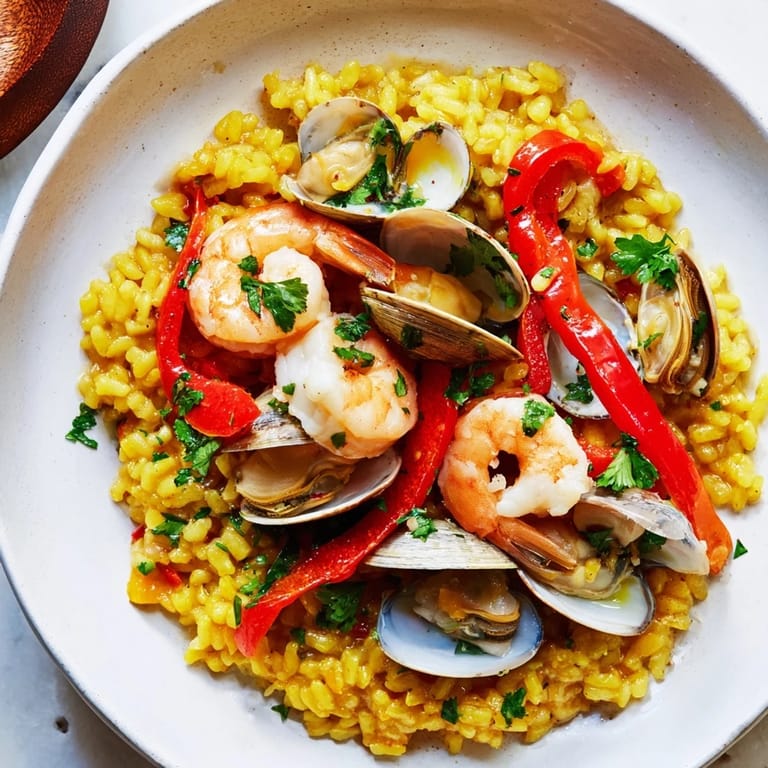
 Save to Pinterest
 The first time I made paella, I was standing in a Barcelona kitchen with my partner's grandmother, watching her move around that enormous pan like she was conducting an orchestra. She barely glanced at measurements, just felt the rice, listened to the sizzle, knew when to stop stirring by some invisible instinct I couldn't quite grasp. Years later, I finally understood what she was doing—it wasn't magic, just confidence built on repetition. This version is my tribute to that afternoon, when the smell of saffron and seafood made everything feel possible.
I remember cooking this for my sister during a particularly rough month, and she walked into the kitchen halfway through, stopped dead, and just breathed in. She didn't say anything, just sat down at the counter. By the time it was done, she'd already poured wine and we'd talked through half her problems. That's when I realized paella isn't really about the rice—it's about giving yourself permission to slow down and feed the people you care about.
Ingredients
- Large shrimp (12, peeled and deveined): These cook quickly, so don't overcrowd the pan or they'll steam instead of caramelize.
- Mussels and clams (12 each, scrubbed and debearded): Buy them the day you're cooking if possible—living shellfish taste entirely different, and they'll tell you if something's wrong by staying closed.
- Short-grain paella rice (1 1/2 cups): Bomba rice won't turn to mush even if your timing is off, which is why Spanish cooks swear by it; Arborio works fine too.
- Onion and garlic (1 medium onion, 2 cloves): This is your flavor foundation—don't skip the slow sauté, it mellows everything into something rounded and deep.
- Bell peppers (1 red, 1 green, sliced into strips): They should soften just enough to surrender some sweetness without falling apart completely.
- Saffron threads (1/4 teaspoon): It's expensive because it's worth it—steep it in warm stock for a few minutes to release that golden color and subtle floral bite.
- Fish or seafood stock (4 cups): Homemade is ideal, but quality store-bought works; the stock carries the whole dish, so taste it first and adjust seasoning.
- Smoked paprika (1 teaspoon): This gives that distinctive earthy warmth that makes people think you've cooked it for hours.
- Olive oil, salt, pepper, tomato: Use good olive oil here since there's not much of it, and grate your tomato by hand if you have time—the texture matters.
- Fresh parsley and lemon wedges: The brightness at the end cuts through the richness and reminds you why you're eating seafood in the first place.
Tired of Takeout? 🥡
Get 10 meals you can make faster than delivery arrives. Seriously.
One email. No spam. Unsubscribe anytime.
Instructions
- Warm the saffron-infused stock:
- Pour your fish or seafood stock into a saucepan and drop in those saffron threads, then let them steep over low heat while you prep everything else. You'll notice the water turning golden—that's the magic happening, so don't rush it.
- Build your flavor base:
- Heat olive oil in your paella pan over medium heat and sauté the chopped onion for about two minutes until it softens and turns translucent. Add the minced garlic and cook just until you can smell it—another 30 seconds, maybe a minute—because garlic burns faster than you'd think.
- Add the vegetables:
- Stir in your bell pepper strips and let them cook for three to four minutes until they lose their raw edge but still have a little snap to them. Then add your grated tomato and let that bubble away until most of the liquid evaporates, which should take another couple of minutes.
- Toast the rice:
- Pour in your rice and stir constantly for a minute or two, coating every grain with the oil and the vegetables. You'll hear it clicking slightly against the pan—that's the rice toasting, which adds a subtle nuttiness you can't get any other way.
- Pour in the stock (and then stop stirring):
- Pour your warm saffron stock over the rice in one motion, sprinkle with smoked paprika, salt, and pepper, and then here's the hard part—put your spoon down and don't touch it. This is when faith takes over; the rice needs undisturbed heat to develop that crispy bottom layer called socarrat.
- Nestle in your seafood:
- After about 10 minutes, when the rice has absorbed some stock and softened slightly, arrange your shrimp, mussels, and clams over the top. Cover loosely with foil or a lid and let everything cook together for another 20 to 25 minutes until the rice is tender and the shells have opened.
- Let it rest:
- When the rice is done and the shellfish have opened (discard any that stubbornly stayed closed), pull it off the heat and leave it covered for five minutes. This resting time lets everything settle and the flavors integrate.
 Save to Pinterest
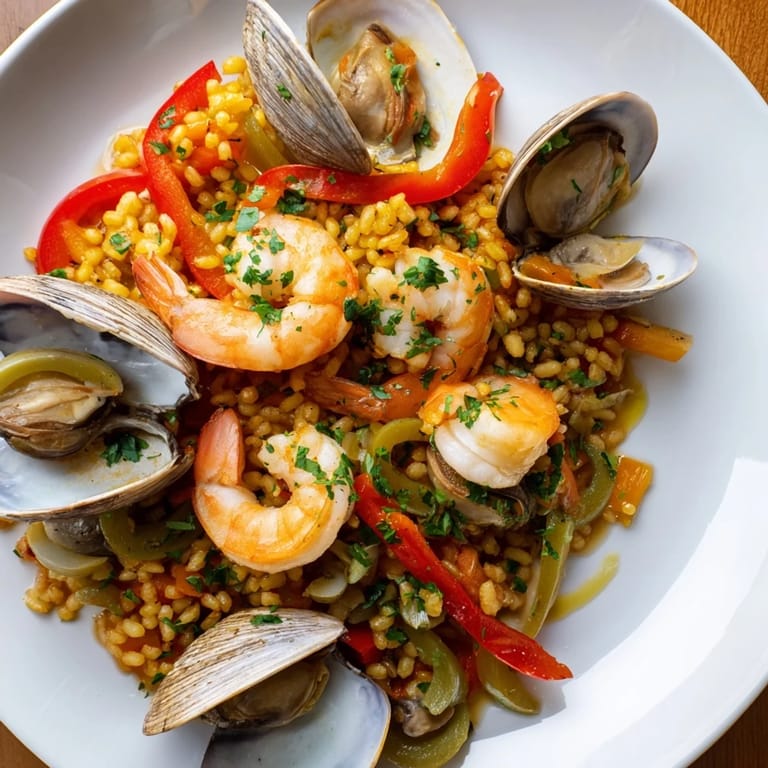
 There's a moment when you lift that foil and steam pours out carrying the smell of saffron and ocean, and you suddenly understand why people gather around food. That's the moment paella stops being a recipe and becomes something you want to remember.
Why Saffron Matters (and How to Use It Right)
Saffron is expensive, which makes people nervous about using it, but a quarter teaspoon in a full pot of stock is actually not much money—it's just concentrated flavor and color. The trick is steeping it in warm liquid first, not throwing it raw into the pan; that's when it releases its personality and turns your rice that unmistakable golden hue. Think of it as waking up the spice before asking it to do its job.
Seafood Selection and Timing
The seafood cooking times are all slightly different, which is why paella can seem tricky at first—shrimp cook in about five minutes, while clams and mussels take closer to 10 or 12. The trick is arranging them based on size and thickness, with the thickest pieces closest to the heat and the quick-cooking shrimp more toward the edges. Buy live shellfish the day you're cooking if you possibly can; there's no substitute for that fresh ocean taste, and you'll know immediately if something's off because they'll feel heavy and smell like the sea, not like fish left in the sun.
Variations and Wine Pairings
Paella is forgiving enough to adapt to what you have on hand—frozen peas add color and sweetness if you want them, calamari or firm white fish can stand in for some of the shellfish, and some cooks add chorizo or saffron-soaked chicken for depth. The classic Spanish wines for this are crisp whites like Albariño or Verdejo, which cut through the richness of the seafood and saffron without competing with them.
- If you're short on time or budget, use fewer types of shellfish and make up the difference with firm white fish like halibut or sea bass.
- Adding a handful of frozen peas in the last few minutes gives you color and a touch of sweetness without any extra prep.
- Always serve with fresh lemon wedges so people can adjust the brightness to their taste.
 Save to Pinterest
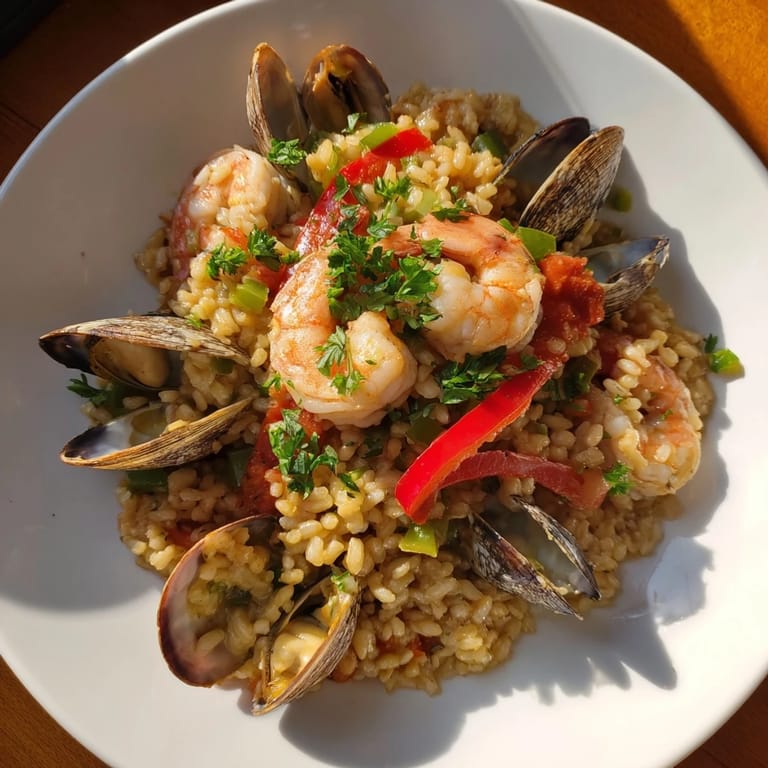
 Make this when you want to feel accomplished, when you want to feed people something that tastes like you care, or when you just want an excuse to slow down and listen to a pan hiss while something beautiful happens. That's what paella taught me.
Recipe FAQs
- → What type of rice is best for Spanish seafood paella?
Short-grain paella rice like Bomba or Arborio is ideal because it absorbs liquid well while remaining firm.
- → How do I prevent the rice from becoming mushy?
Do not stir after adding the broth; let the rice cook undisturbed to develop a perfect texture.
- → Can I substitute other seafood for the shellfish listed?
Yes, firm white fish or calamari can be used to replace some or all shellfish for variation.
- → Why is saffron used in this dish?
Saffron adds a distinct aroma and rich golden color, enhancing the overall flavor complexity.
- → How do I know when the seafood is cooked properly?
Mussels and clams open when done; discard any that remain closed. Shrimp should be pink and opaque.
- → Is it necessary to use seafood stock?
Seafood stock intensifies the flavors, but fish stock or a well-seasoned broth can be good alternatives.