 Save to Pinterest
 There's something almost magical about opening a pantry and finding exactly what you need for dinner without a trip to the store. That's when I discovered the power of a good can of salmon, a jar of sriracha, and whatever vegetables were lingering in my crisper drawer. What started as a lazy Thursday night solution turned into one of my most-requested meals—the kind where people ask for seconds before they've even finished their firsts. The beauty of this bowl is that it comes together faster than takeout, tastes infinitely fresher, and costs a fraction of what you'd pay at a rice bowl spot downtown. It's become my go-to when I need something that feels both comforting and exciting.
I made this for a friend who'd just moved into their first apartment, armed with nothing but a dorm-sized hot plate and big dreams. Watching their face light up when they realized how simple it was to make something this good, right there in their tiny kitchen, reminded me why I love cooking in the first place. They've texted me the photo twice since, which tells you everything you need to know.
Ingredients
- Jasmine or sushi rice (1 cup uncooked): This matters more than you'd think—jasmine rice has just enough starch to hold together without being gluey, and it actually tastes faintly floral, which plays beautifully with the sriracha heat.
- Water (2 cups): Use filtered if your tap water is heavily chlorinated, since you'll taste it in something this simple.
- Canned salmon (6 oz), drained and flaked: Look for varieties with bones included if you can find them—they're softer than you'd expect and give you a calcium boost without any funky texture.
- Mayonnaise (2 tablespoons): This is the binding agent that makes the whole thing creamy; don't skip it or use salad dressing as a substitute.
- Sriracha sauce (1–2 teaspoons): Start with one teaspoon and taste as you go—sriracha brands vary wildly in heat, and what's perfect for one person makes another person's eyes water.
- Soy sauce (1 teaspoon): Use low-sodium if sodium is a concern for you, since it'll taste less salty without affecting the umami punch.
- Toasted sesame oil (½ teaspoon): Never skip toasting—it's the difference between flat and fragrant, and a little goes a long way since this oil is intensely flavored.
- Shredded carrot (½ cup): The slight sweetness balances the spice and keeps things visually interesting, plus it's naturally crunchy right out of the bag.
- Cucumber, thinly sliced (½ cup): This adds cooling relief on your palate and keeps the whole thing from feeling too heavy despite the creamy mayo.
- Avocado (½ avocado), sliced: Add this just before serving so it doesn't brown; that pale-green color makes the bowl look restaurant-ready.
- Scallions (2 tablespoons), sliced: They provide a whisper of onion flavor and a little bite that wakes everything up.
- Toasted sesame seeds (1 teaspoon): Toast your own if you have time—the difference between pre-toasted and freshly toasted is genuinely noticeable.
- Nori sheets (optional): Cut into strips just before serving for maximum crispness and that umami-rich ocean flavor.
Tired of Takeout? 🥡
Get 10 meals you can make faster than delivery arrives. Seriously.
One email. No spam. Unsubscribe anytime.
Instructions
- Rinse and cook the rice:
- Run your rice under cold water in a fine-mesh strainer, stirring it gently with your fingers until the water runs clear—this removes the starch and prevents mushiness. Combine with fresh water in a saucepan, bring to a rolling boil, then cover and drop the heat to low for 12 to 15 minutes, until all the water is absorbed and the grains are tender but not mushy.
- Make the sriracha mayo:
- In a bowl, combine the drained salmon with mayo, sriracha, soy sauce, and sesame oil, stirring until everything is evenly coated and the salmon breaks into small, manageable flakes. Taste it and adjust the sriracha—you want it to warm your mouth without making you regret your choices.
- Prep your vegetables:
- Cut your cucumber into thin, even slices or julienne strips so they're all the same thickness and cook evenly on your tongue. Slice the avocado lengthwise around the pit, twist gently to separate, scoop out, and slice into thin wedges that won't immediately turn brown.
- Build your bowls:
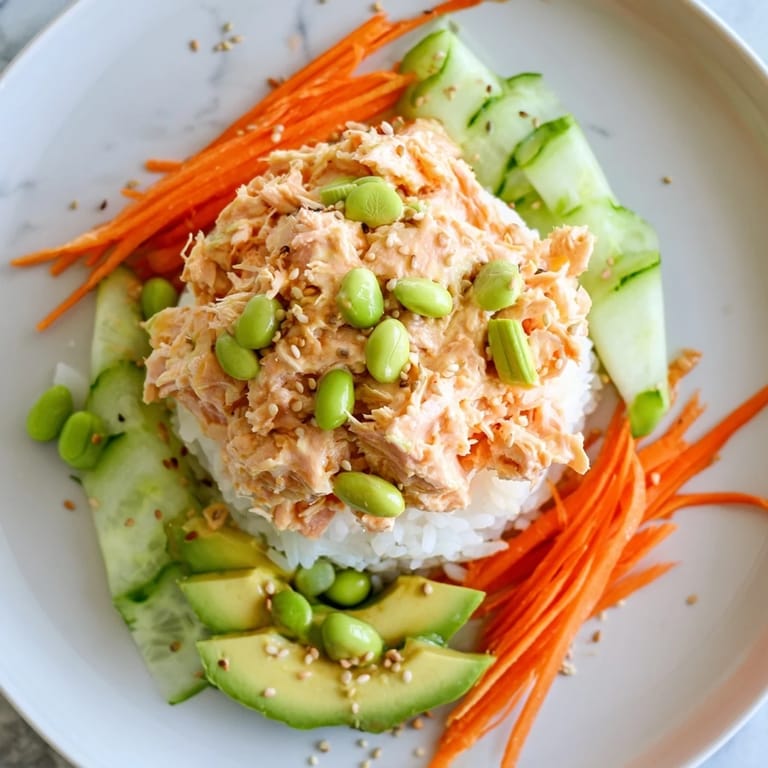
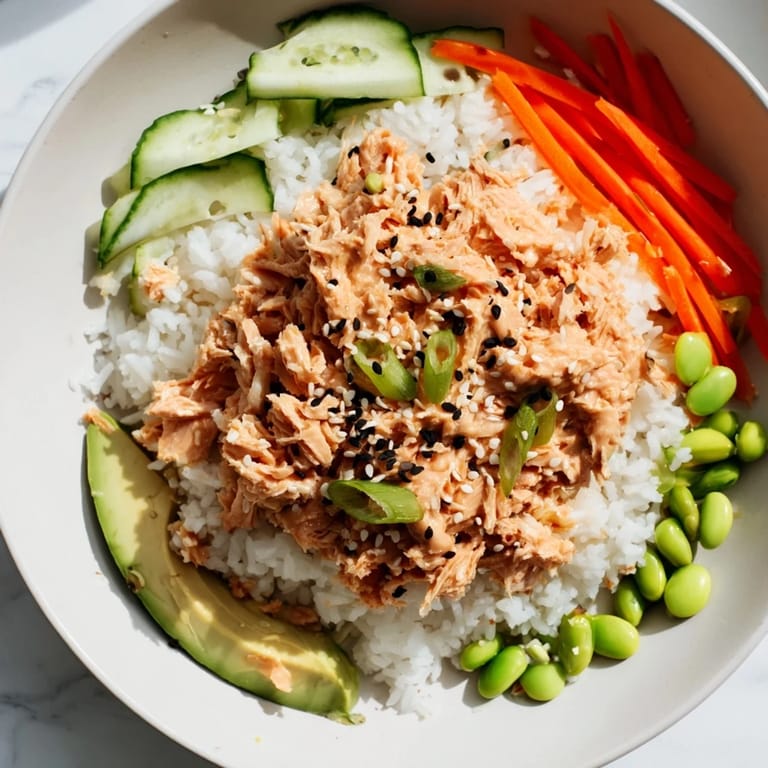
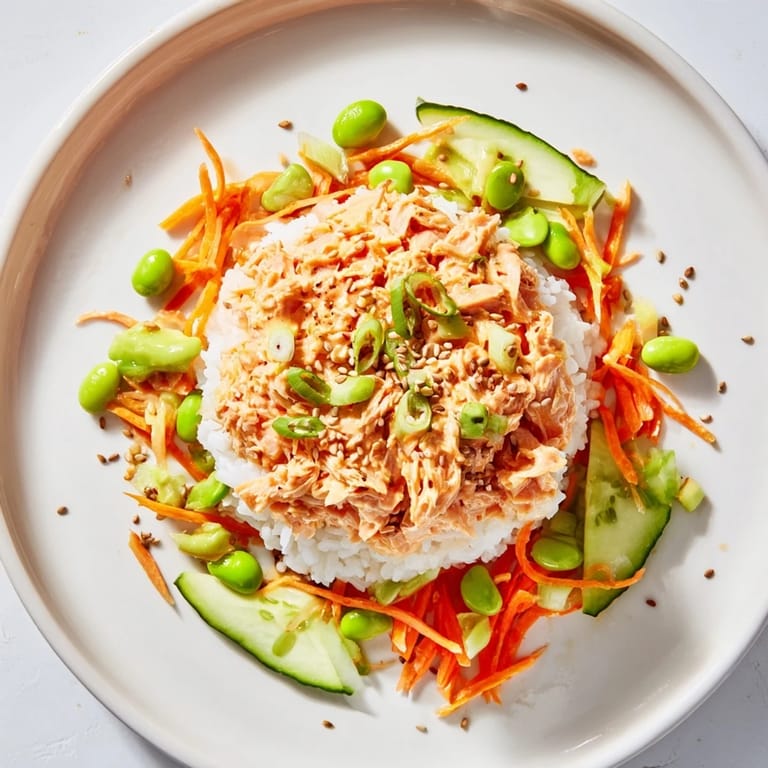
- Divide the warm rice between two bowls and top each with half of the spicy salmon mixture, letting it nestle slightly into the rice so the flavors mingle. Arrange your carrot, cucumber, avocado, and any edamame around the salmon in whatever pattern feels right—this is the fun part where it becomes your bowl, not just a recipe.
- Add the finishing touches:
- Sprinkle with scallions and sesame seeds, tear some nori strips over the top if you're using them, and serve immediately while the rice is still warm and the vegetables are still crisp. Have extra sriracha and soy sauce on the table so everyone can adjust their own spice level.
 Save to Pinterest
 The moment someone told me they'd made this bowl three times in one week because they finally felt like they could cook something healthy without it feeling like a chore, I knew I'd accidentally created something important. It's not just about the salmon or the sriracha—it's about proving that good food doesn't require hours of your life or an ingredients list that reads like a chemistry exam.
Why Canned Salmon is Secretly Better Than You Think
For years I was a fresh-salmon snob, convinced that anything from a can was a compromise. Then I learned that canned salmon is often flash-frozen and canned at peak freshness, meaning it sometimes has better nutritional retention than fresh salmon that's been sitting in a grocery store case for days. The omega-3 content is legitimate, the bones (when included) provide absorbable calcium, and since it's already cooked, you're essentially just flavoring and assembling, not really cooking. Now I keep multiple cans in my pantry like someone might hoard fancy pasta.
The Art of Not Overseasoning
There's a tightrope between enough sriracha to make your mouth happy and enough to make you cry. I learned this the hard way the first time I made this, and now I taste the mayo mixture on a tiny piece of rice before I commit to the whole batch. The soy sauce and sesame oil also carry salt and deep flavor, so go easy on the sriracha at first—you can always add more, but you can't take it back.
Timing and Temperature Matter More Than You'd Expect
Warm rice against cool, crisp vegetables creates this textural tension that makes eating it more interesting than if everything were the same temperature. The heat from the rice also slightly warms the mayo, making it coat the salmon more evenly. Start your rice first, and by the time it's done, you'll have plenty of time to prep vegetables without anything sitting around getting sad.
- Toast your sesame seeds in a dry pan for about two minutes on medium heat, stirring constantly, until they smell nutty and turn golden—this transforms them from barely noticeable to absolutely necessary.
- If you're adding edamame, steam them for three to four minutes if frozen, or just warm them through if they're pre-cooked, since they're meant to be tender, not mushy.
- Slice your avocado as close to serving time as possible, and if you must slice it earlier, press plastic wrap directly onto the cut surface to minimize browning.
 Save to Pinterest
 This bowl taught me that the best meals aren't the ones requiring fancy equipment or hard-to-find ingredients, but the ones that feel like someone made them for you with exactly what they had on hand. That's the real magic.
Recipe FAQs
- → Can I use fresh salmon instead of canned?
Fresh salmon can be cooked and flaked as an alternative, but canned salmon offers convenience and a consistent texture for this dish.
- → What type of rice works best here?
Jasmine or sushi rice is preferred for its fluffy texture, but brown rice or cauliflower rice are good substitutes for a healthier option.
- → How spicy is the sriracha mayo mixture?
The spice level can be adjusted by varying the amount of sriracha; start with less and add to taste for a milder or spicier bowl.
- → Are there any common allergens in this dish?
This bowl contains fish, eggs in mayonnaise, and soy from soy sauce and edamame; sesame seeds and oil may also be allergens.
- → Can I add other vegetables to the bowl?
Yes, radish, pickled ginger, or additional fresh veggies can be included for extra crunch and flavor variety.