 Save to Pinterest
 There's something about the first warm day of spring that makes you crave green—not salad green, but the kind that comes in a steaming bowl. I was standing in my kitchen on one of those in-between mornings, half-awake, watching sunlight pour across my counter, when I noticed my spinach was starting to wilt and my pantry had a forgotten can of white beans. Instead of tossing either one, I thought: what if I built something? This soup emerged almost by accident—a celebration of every green thing I could reach for, blended into something so silky and nourishing it became the thing I make whenever I need to feel both grounded and alive.
I brought this soup to a friend's apartment on an unexpectedly cold evening, carried it in a thermos that fogged up the whole stairwell. When she opened the door and smelled it—that bright, herbaceous warmth—she actually paused and just breathed it in. We sat on her worn kitchen stools, and she told me it reminded her of what healthy could actually taste like, which somehow felt like the highest compliment. That moment taught me that good food isn't about perfection; it's about showing up with something nourishing and watching people's faces soften.
Ingredients
- Olive oil: Just enough to build the flavor base without weighing things down—use something you actually like tasting.
- Yellow onion, garlic, leek, and celery: This is your aromatic foundation; don't skip the leek, because it brings a subtle sweetness that white beans adore.
- Broccoli florets and zucchini: Both add body and a gentle earthiness; if your broccoli looks tired, this is its moment to shine.
- Fresh baby spinach and parsley: These go in near the end to preserve their bright color and fresh taste—the soul of the whole soup.
- Fresh chives: Don't mistake these for optional; they're what makes you stop and say that's good.
- White beans: Canned and rinsed is perfect; they dissolve slightly into the broth while adding creaminess and staying whole enough to feel substantial.
- Vegetable broth and water: The water keeps things light; if you used all broth, the soup would taste a bit one-note.
- Dried thyme, black pepper, and sea salt: Season gradually and taste often—salt is the thing that makes every other flavor show up and introduce itself.
- Lemon juice: This is the final note that makes the whole bowl come alive; never skip it.
Tired of Takeout? 🥡
Get 10 meals you can make faster than delivery arrives. Seriously.
One email. No spam. Unsubscribe anytime.
Instructions
- Warm and soften the base:
- Pour your olive oil into a large pot over medium heat and add the diced onion, sliced leek, sliced celery, and minced garlic. Let them cook gently for about five minutes, stirring now and then—you want them soft and fragrant, releasing their sweetness into the oil without browning.
- Build the vegetable layers:
- Stir in your broccoli florets and diced zucchini, then let everything cook together for three more minutes. You're not trying to cook them through; you're just waking them up and letting their flavors mingle.
- Simmer everything together:
- Pour in your vegetable broth and water, then add the drained white beans, dried thyme, salt, and pepper. Bring it to a gentle boil, then turn the heat down and let it simmer uncovered for about twelve minutes until the vegetables are completely tender. You should be able to pierce anything with a fork without resistance.
- Add the greens and herbs:
- Stir in the fresh spinach, parsley leaves, and chopped chives, then simmer for just two more minutes until the greens have softened and released their color into the broth. The kitchen should smell impossibly green at this point.
- Blend to silky smoothness:
- Remove the pot from heat. If you have an immersion blender, insert it and blend until the soup is completely smooth and creamy—this takes about one to two minutes of patient blending. If using a countertop blender, work in batches and be careful with the heat; return the blended soup to the pot.
- Finish with brightness:
- Stir in the lemon juice and taste carefully. Add more salt, pepper, or lemon if needed—this final seasoning is what makes someone say wow instead of just okay.
- Serve with intention:
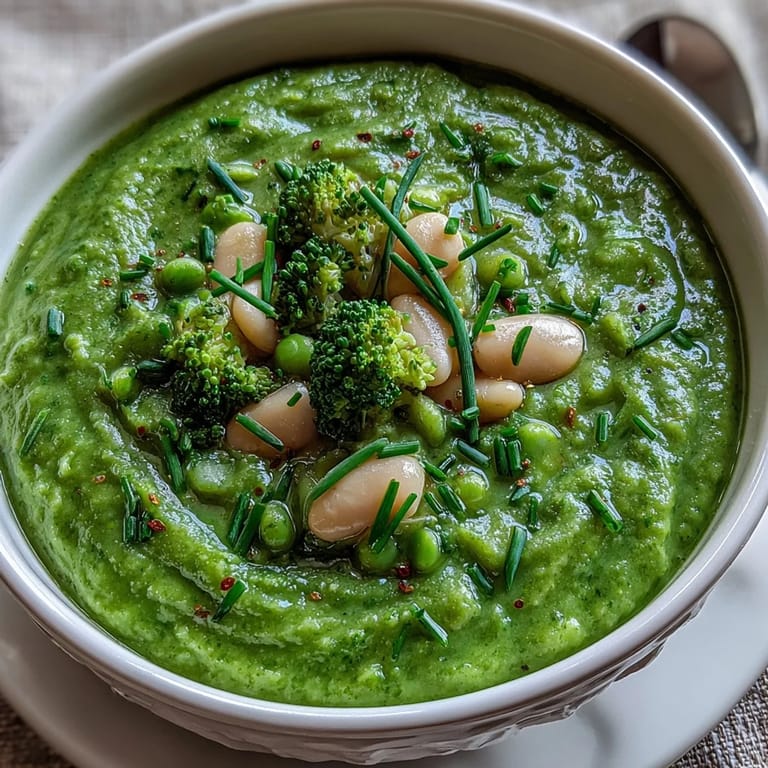
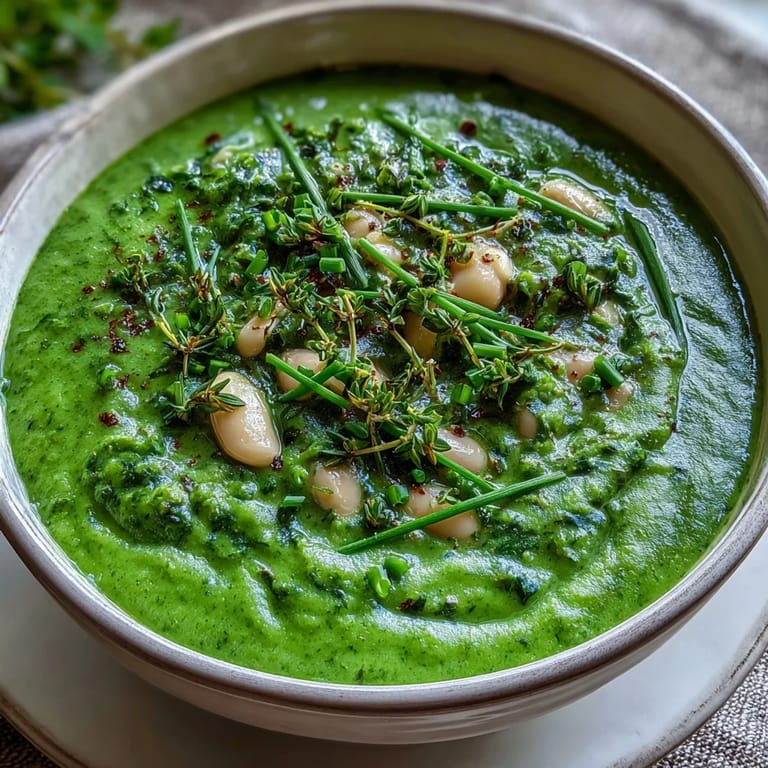
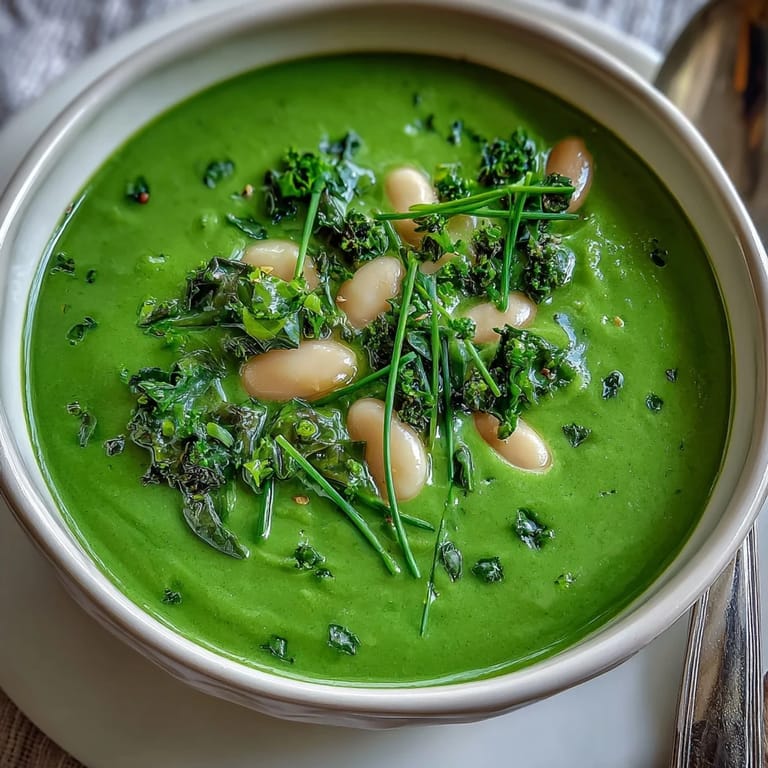
- Ladle the soup into bowls and top each one with a few fresh chives and perhaps a drizzle of olive oil. The bowl should be warm enough to hold, but the chives should still be crisp.
 Save to Pinterest
 There was a Tuesday night when my mom was worried about something, stress etched into her face, and I heated this soup for her without asking. She came into the kitchen at the sound of the blender, drawn by the color and the smell, and by the time she sat down with a bowl, something in her shoulders had released. I realized then that certain foods have a quiet power—not in making problems disappear, but in creating a moment where you can breathe and remember that good things still exist.
Making It Your Own
This soup is a canvas, really. I've made it with frozen spinach on nights when fresh wasn't available, and honestly, it works beautifully. I've added a quarter cup of coconut milk right before blending when I wanted richness, or a spoonful of Greek yogurt when I felt like something creamy but less heavy. Some versions have landed on cilantro instead of parsley, or a whisper of cumin if I was chasing something earthier. The bones of the recipe stay solid; the variations just let you meet yourself where you are.
Storage and Reheating
This soup keeps beautifully in the fridge for up to four days, maybe five if you trust yourself. I've found that it actually tastes deeper the next day, as though the flavors had time to know each other better. Reheat it gently on the stove over medium heat, stirring occasionally, or in a microwave if you're in a hurry. If it's thickened in the fridge, just thin it back to your liking with a splash of broth or water—it's forgiving that way.
Serving Suggestions and Pairings
Serve this with something textured alongside it—crusty gluten-free bread works wonderfully, or even toast with a thin scrape of good butter. A simple green salad with lemon vinaigrette on the side makes the whole meal feel intentional. I've also stirred a handful of toasted seeds or nuts into my bowl for crunch, which changes the experience entirely. The soup itself is quite complete, but it loves a little companionship on the plate.
- A drizzle of quality olive oil on top transforms it from good to memorable.
- For protein, consider adding white fish, chickpeas, or marinated tofu if you want to make it a main course.
- Leftover soup freezes beautifully for up to two months in an airtight container.
 Save to Pinterest
 This soup has become the thing I make when I want to feel like I'm taking care of myself, or when someone I love needs a quiet reminder that nourishment matters. It asks almost nothing of you, yet gives back everything—brightness, warmth, a moment to pause and notice what you're eating.
Recipe FAQs
- → Can I use dried beans instead of canned for this soup?
Yes, but dried beans must be soaked overnight and cooked until tender before adding to the soup. This ensures they are soft and blend well.
- → How can I make the soup creamier without dairy?
Adding coconut milk or blending a portion of the soup more thoroughly provides extra creaminess without dairy.
- → What are good garnishes to complement this green soup?
Fresh herbs like chives or parsley, a drizzle of olive oil, or a swirl of coconut cream add freshness and richness.
- → Is it possible to prepare this soup vegan?
Absolutely, use plant-based vegetable broth and omit any dairy toppings to maintain a fully vegan dish.
- → Can I adjust the texture for a chunkier soup?
Yes, blend only half the soup and stir in the remaining vegetables for a heartier texture.
- → How long can leftovers be stored safely?
Store leftovers in an airtight container in the refrigerator for up to 3 days. Reheat gently before serving.