 Save to Pinterest
 There's something about the first warm day of spring that makes you crave vegetables you haven't seen in months. I was standing at the farmer's market last April, holding a bunch of asparagus still damp from the morning mist, when the vendor mentioned she'd just started carrying fresh peas again. That afternoon, I threw together this minestrone almost by accident—whatever looked bright and promising in my kitchen—and it turned into the kind of soup that feels less like cooking and more like capturing a season in a bowl.
I made this soup for my neighbor who'd just moved in, and she stood at my kitchen counter eating it straight from the pot while we talked about her garden plans. Something about serving it in mismatched bowls with crusty bread made her linger longer than I expected, and we ended up making plans to split a CSA box that summer. Food has a way of doing that—turning a polite gesture into an actual friendship.
Ingredients
- Olive oil: Just one tablespoon is enough to build your flavor base without making the broth feel heavy or slick.
- Onion, carrots, and celery: This holy trinity softens down into the backbone of the soup, so dice them roughly even-sized so they cook at the same pace.
- Garlic: Two cloves minced fine enough that it disappears into the broth and seasons everything.
- Zucchini: A small one keeps the texture light; too much and the soup becomes watery.
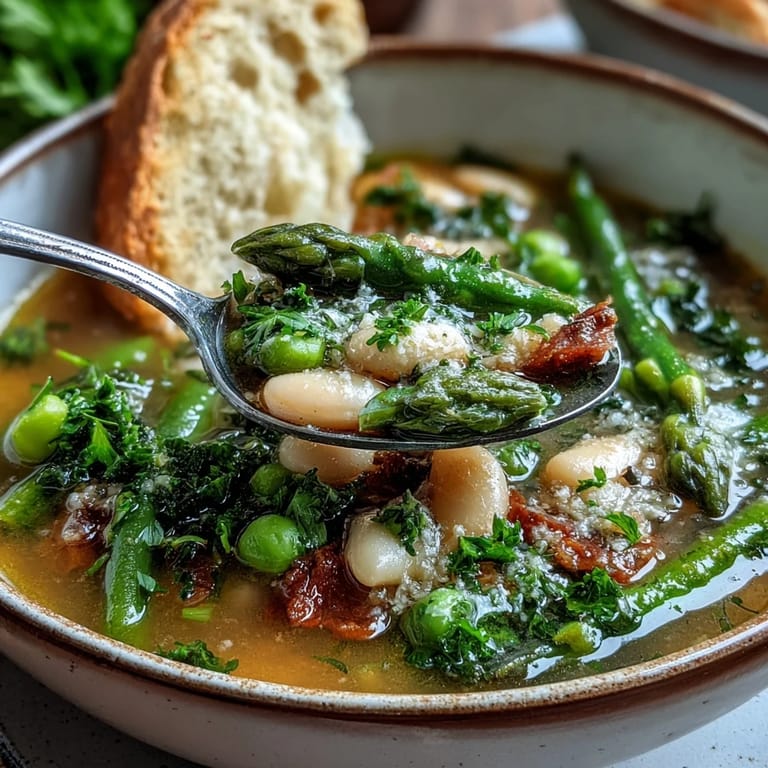
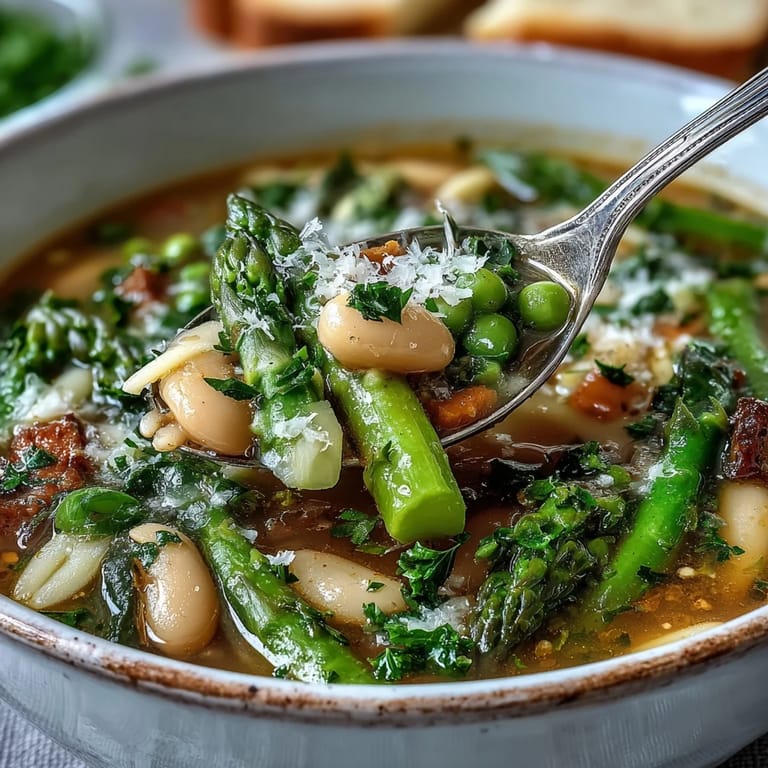
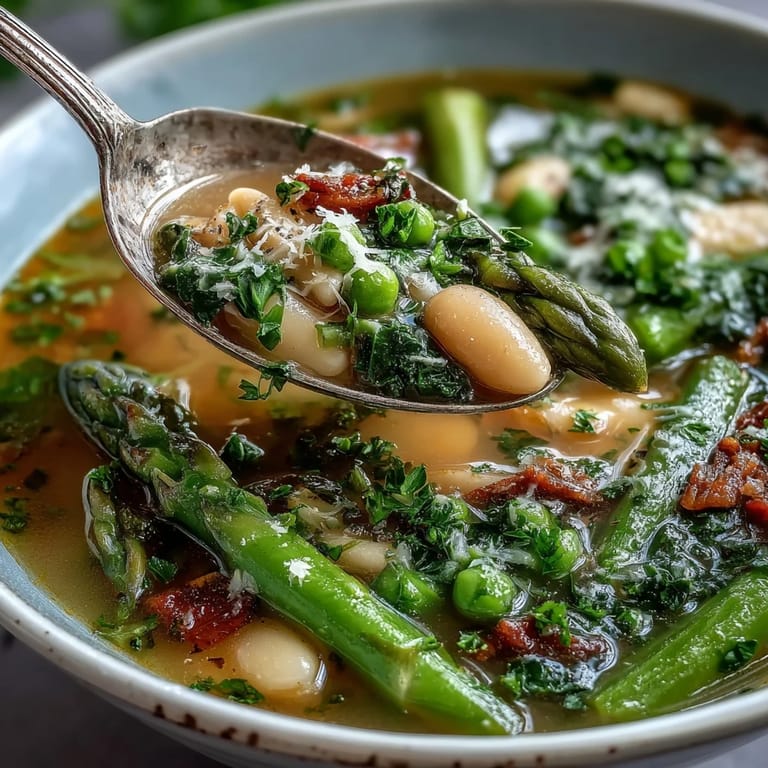
- Asparagus: Add it halfway through cooking so it stays slightly firm and doesn't turn to mush—about 200 grams gives you plenty of those tender tips.
- Frozen or fresh peas: Frozen actually work better here because they hold their shape and sweetness, but fresh spring peas are magic if you can get them.
- Baby spinach or Swiss chard: The greens wilt down to almost nothing at the end, so don't be shy with the amount—two cups looks like a lot until it hits the hot broth.
- White beans: One can, drained and rinsed well so you remove that starchy liquid that can cloud your broth.
- Small pasta: Ditalini or small shells work best because they don't overwhelm the vegetables or take forever to cook.
- Vegetable broth: Five cups at low-sodium means you control the salt and the soup doesn't taste like a bouillon cube.
- Dried thyme and oregano: A teaspoon each gives you that Italian backbone without making it taste medicinal.
- Bay leaf: One leaf, and you'll remember to fish it out before serving.
- Lemon zest and fresh parsley: These go in at the very end and transform the whole thing from good to memorable.
- Parmesan cheese and extra virgin olive oil: Optional, but that final drizzle of good oil and a scatter of cheese changes everything.
Tired of Takeout? 🥡
Get 10 meals you can make faster than delivery arrives. Seriously.
One email. No spam. Unsubscribe anytime.
Instructions
- Build your flavor foundation:
- Heat the olive oil in your largest pot over medium heat and add the diced onion, carrots, and celery all at once. Let them soften for about five minutes, stirring occasionally so nothing sticks to the bottom. You're not looking for color here—just tender vegetables that release their sweetness into the oil.
- Wake up the garlic:
- Stir in your minced garlic and let it cook for exactly one minute until the kitchen smells fragrant but the garlic doesn't brown. If it starts to darken, your heat is too high.
- Add the zucchini:
- Toss in the diced zucchini and cook for two more minutes, stirring gently. The zucchini releases moisture as it softens, and that's perfectly fine.
- Pour in the broth and seasonings:
- Add all five cups of vegetable broth along with the thyme, oregano, and bay leaf. Bring everything to a gentle boil—you're looking for small bubbles breaking the surface, not a rolling boil that will toughen your vegetables. This takes about five minutes.
- Add beans and pasta:
- Stir in the drained white beans and your small pasta, then reduce the heat to a simmer. Cook for ten minutes, stirring occasionally so the pasta doesn't stick to the bottom. The pasta will still be slightly firm at this point, and that's exactly where you want it.
- Finish with spring vegetables:
- Add the asparagus pieces and frozen peas and cook for another five to seven minutes until the pasta is tender and the asparagus has just lost its raw crunch. Taste a piece of asparagus—it should bend easily but still have a tiny bit of resistance.
- Bring in the greens and brightness:
- Stir in all your baby spinach or chopped Swiss chard, then add the lemon zest and fresh parsley. Season generously with salt and pepper—this is your last chance to balance the flavors. Cook for two more minutes until the greens are completely wilted and the herbs have released their fragrance.
- Finish and serve:
- Remove the bay leaf by fishing around with a spoon until you feel it. Ladle the soup into bowls and finish each one with a small scatter of Parmesan cheese and a thin drizzle of good olive oil if you like.
 Save to Pinterest
 My daughter once told me this soup tasted like spring looked, which I think is the best compliment a cook can get. It's not just food—it's a moment where everything feels new and possible again.
Why Spring Vegetables Matter
Spring vegetables taste different from their summer cousins because they're tender and haven't needed thick skins to survive. Asparagus especially has this delicate sweetness that disappears if you cook it too long, which is why it goes in so late in the game. The peas, whether frozen from last summer or fresh from the market, bring a brightness that winter vegetables just can't match. When you eat this soup in April or May, you're tasting the exact moment when the earth decides to feed you again.
Pasta Timing Is Everything
The biggest mistake people make with minestrone is adding the pasta too early or using pasta that's too big and clunky. Small shapes like ditalini cook in about ten minutes, which means they finish right around the same time as everything else in the pot. If you use larger pasta, it'll either be crunchy in the middle while the vegetables turn to mush, or it'll get soft and bloated while you're waiting. The soup should be a conversation between all its ingredients, not a one-note dish where one thing dominates.
Customizing for What You Have
This recipe is honestly just a template for whatever spring vegetables are calling to you at the market. I've made it with fava beans and green beans when asparagus looked sad, and with fresh mint instead of parsley because that's what was thriving in my windowsill. The structure stays the same—soft aromatics, then hard vegetables, then beans and pasta, then tender greens and bright finishes—and it works every single time.
- Swap the white beans for chickpeas or cannellini, or use fresh fava beans if you're feeling fancy and have an hour to shell them.
- Use whatever small pasta you have on hand, or skip it entirely for a brothier, lighter version.
- Save the lemon zest for the very end so it stays bright and doesn't cook out of the soup.
 Save to Pinterest
 This soup is the kind of thing that reminds you why cooking matters—it's nourishing and simple, but it tastes like someone cares. Serve it with crusty bread, a glass of something cold, and the knowledge that you've just made something seasonal and real.
Recipe FAQs
- → Can I make this soup vegan?
Yes, omit the Parmesan cheese or substitute it with a plant-based alternative to keep the dish fully vegan.
- → What pasta types work best for this soup?
Small pasta shapes like ditalini or small shells blend well, and gluten-free versions can be used to suit dietary needs.
- → How do I keep the asparagus tender but not mushy?
Add asparagus pieces towards the final minutes of cooking and simmer gently until just tender to preserve texture and color.
- → Can I substitute other vegetables for spring variations?
Yes, you can use green beans, fava beans, or other seasonal spring vegetables to customize the soup to your taste.
- → What seasoning enhances the flavor in this meal?
Dried thyme, oregano, bay leaf, fresh parsley, and a touch of lemon zest bring bright and herbal notes that complement the vegetables and beans.