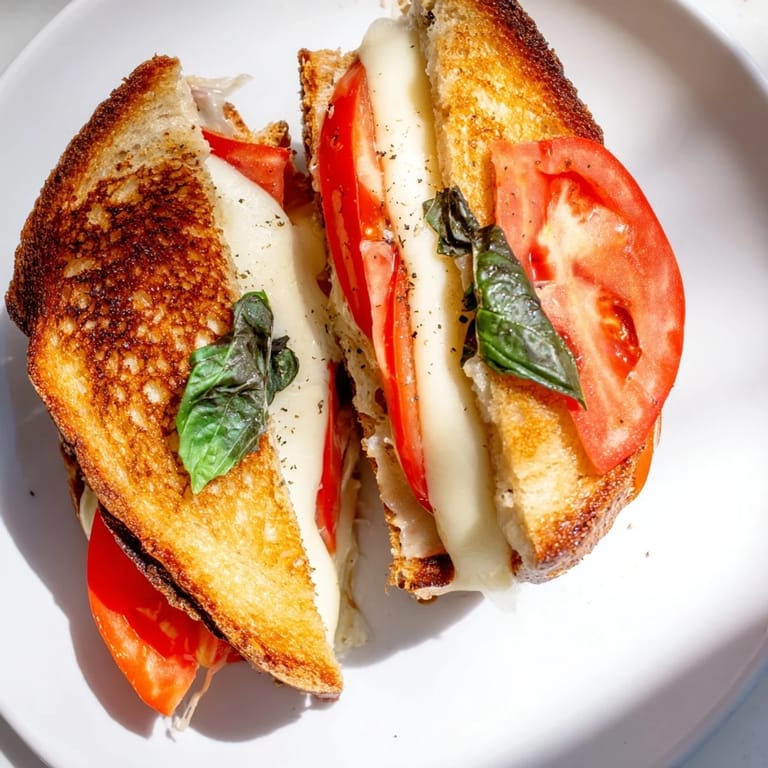
 Save to Pinterest
 There's something about the smell of butter hitting a hot skillet that makes everything feel possible, especially on a Tuesday afternoon when I needed comfort food fast. My best friend had just texted that she was stopping by, and all I had were tomatoes from the farmer's market, a handful of basil I'd been meaning to use, and some decent cheese. Within minutes, I'd created something that tasted like a fancy café lunch but came together in my own kitchen with zero fuss.
My friend bit into hers, closed her eyes for a moment, and said, "This is what I needed today." That's the exact moment I realized this wasn't just a sandwich—it was proof that the simplest ingredients, when treated with a little attention and care, can become something worth remembering.
Ingredients
- Sourdough or country-style bread (4 slices): The tang and structure matter here; avoid soft sandwich bread because it'll get soggy and won't crisp up right.
- Mozzarella cheese (4 oz, sliced or shredded): Fresh mozzarella is dreamy, but regular mozzarella works beautifully and melts more evenly.
- Unsalted butter (2 tbsp, softened): This is your golden-brown insurance policy—softened butter spreads without tearing the bread.
- One large ripe tomato, thinly sliced: Slice it right before assembly so it doesn't weep moisture into the bread and make everything soggy.
- Fresh basil leaves (8–10): Pick them off the stem gently; you want whole leaves for those beautiful flavor pockets.
- Salt and freshly ground black pepper: Don't skip the seasoning layer—it wakes up everything.
Tired of Takeout? 🥡
Get 10 meals you can make faster than delivery arrives. Seriously.
One email. No spam. Unsubscribe anytime.
Instructions
- Butter your canvas:
- Spread softened butter evenly on one side of each bread slice—this is what creates that golden, crispy exterior. Don't be shy with the butter; it's what makes the magic happen.
- Build the foundation:
- Place two slices buttered side down on your cutting board, then layer half the mozzarella on each. The cheese acts as a shield between the bread and the moisture from the tomatoes.
- Add the fresh stuff:
- Layer tomato slices on top of the cheese, then tuck basil leaves in between. A tiny pinch of salt and pepper on each layer makes all the difference.
- Top it off:
- Place remaining bread slices on top with the buttered side facing up. You've now created a little edible envelope.
- Heat your pan:
- Get your skillet or griddle to medium heat—this is the sweet spot where the bread toasts without burning while the cheese has time to melt.
- The sizzle:
- Place sandwiches in the hot pan and listen for that satisfying sizzle. Cook for 3–4 minutes per side, pressing gently with your spatula to encourage even toasting and cheese distribution.
- The finish:
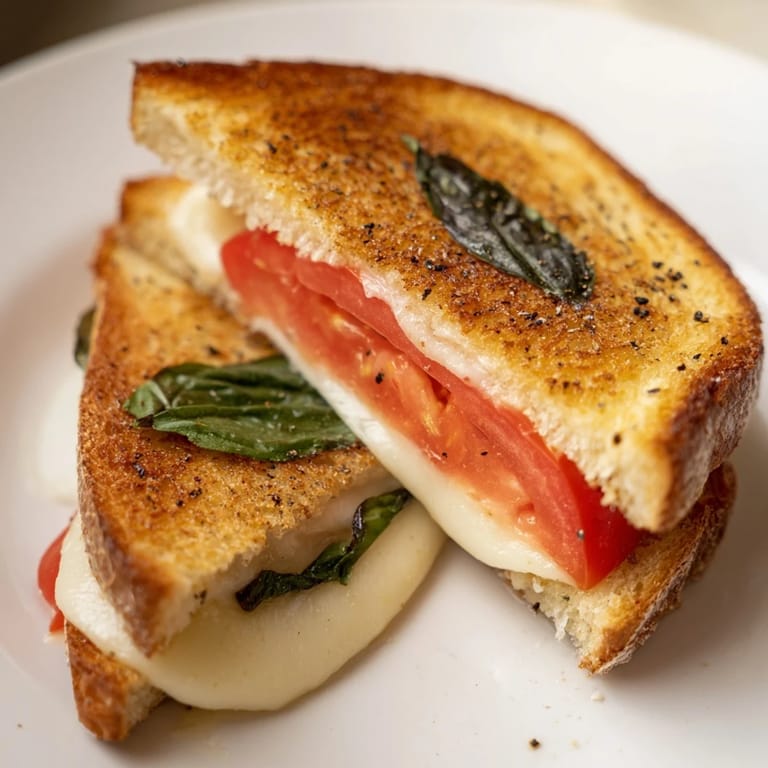
- Once both sides are golden brown and the cheese is visibly melted, transfer to a cutting board. Let it cool for a minute so it holds together when you slice it, then cut diagonally and serve warm.
 Save to Pinterest
 Years later, I still make this whenever someone needs picking up or when I need to prove to myself that good things don't require complexity. It's become my answer to "what should we eat?" on days when nothing else feels right.
The Basil Question
Fresh basil is a total game changer here, but it's also easy to overthink. You don't need a fancy variegated heirloom basil—regular grocery store basil works just fine, and honestly, so does farmer's market basil that's starting to look a little tired. The heat of the grilled cheese will warm the basil just enough to release its oils without completely wilting it into nothing. If you grab basil from the store, keep it in a glass of water on your counter rather than in the fridge—it'll stay fresher and more flavorful for longer.
Cheese Matters More Than You Think
I've made this with expensive fresh mozzarella, midrange shredded mozzarella, provolone, and even cheddar, and here's what I learned: the best cheese is the one that melts smoothly and tastes good to you. Fresh mozzarella creates a creamier texture and tastes brighter, while regular mozzarella gives you that classic melted-cheese-pull satisfaction. Provolone brings a subtle smokiness, and cheddar adds sharpness that plays nicely with the tomato and basil. Whatever you choose, let it hang out at room temperature for a few minutes before building your sandwich—cold cheese takes longer to melt.
Taking It Further
Once you've mastered the basic version, the fun really starts. The beauty of this sandwich is how it welcomes additions without losing its soul. A thin drizzle of balsamic glaze adds a gentle tanginess, a handful of baby spinach brings earthiness, and a few slices of thin red onion introduce a sharp note that cuts through the richness beautifully. You can even sneak in a thin layer of pesto or a spread of sun-dried tomato paste if you're feeling adventurous. The only rule is to not overload it—you still want the bread to stay crispy on the outside, and the cheese needs room to actually melt.
- A tiny bit of pesto or sun-dried tomato spread adds depth without weighing things down.
- Fresh arugula or baby spinach layers in between the cheese and tomato for an earthy contrast.
- A light brush of balsamic glaze on the finished sandwich transforms it from comfort food to something elegant.
 Save to Pinterest
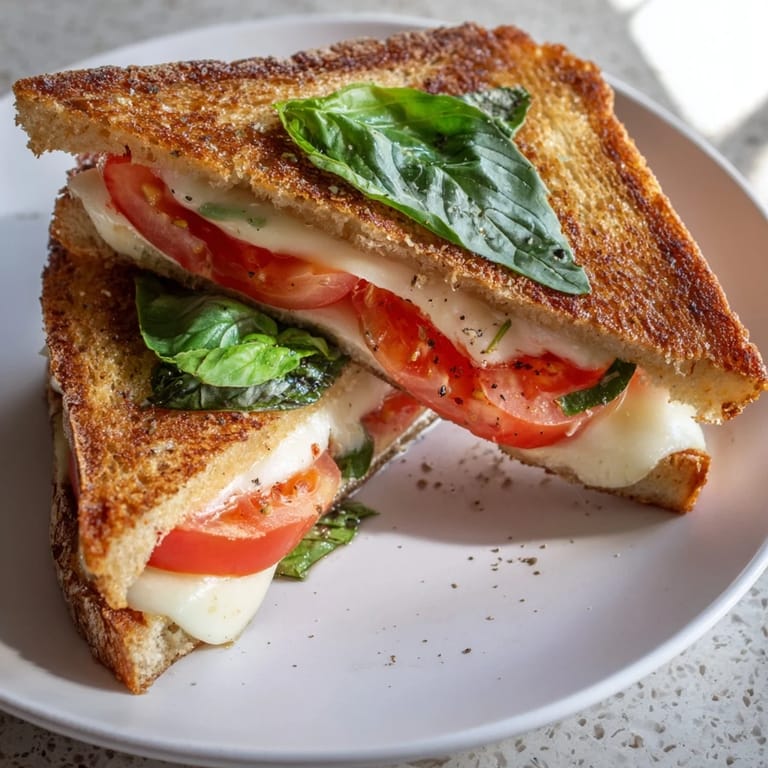
 This grilled cheese is proof that you don't need fancy ingredients or complicated techniques to create something memorable. It's the kind of sandwich that makes you feel like you know what you're doing in the kitchen, even on days when you really don't.
Recipe FAQs
- → What type of bread works best?
Sourdough or country-style bread is preferred for its sturdy texture and slightly tangy flavor that complements the fillings well.
- → Can I use other cheeses in this dish?
Yes, provolone or cheddar can be substituted for a different flavor profile, while still achieving a creamy melt.
- → How do I achieve a crispy, golden crust?
Cooking the sandwich on medium heat with softened butter spread generously on the bread promotes even browning and a crispy crust.
- → Are there optional ingredients to enhance flavor?
A drizzle of balsamic glaze adds tangy sweetness, and fresh greens like baby spinach or arugula can provide extra crunch and freshness.
- → What is the best way to melt the cheese evenly?
Pressing gently during cooking and flipping after 3-4 minutes allows the cheese to melt slowly without burning the bread.