 Save to Pinterest
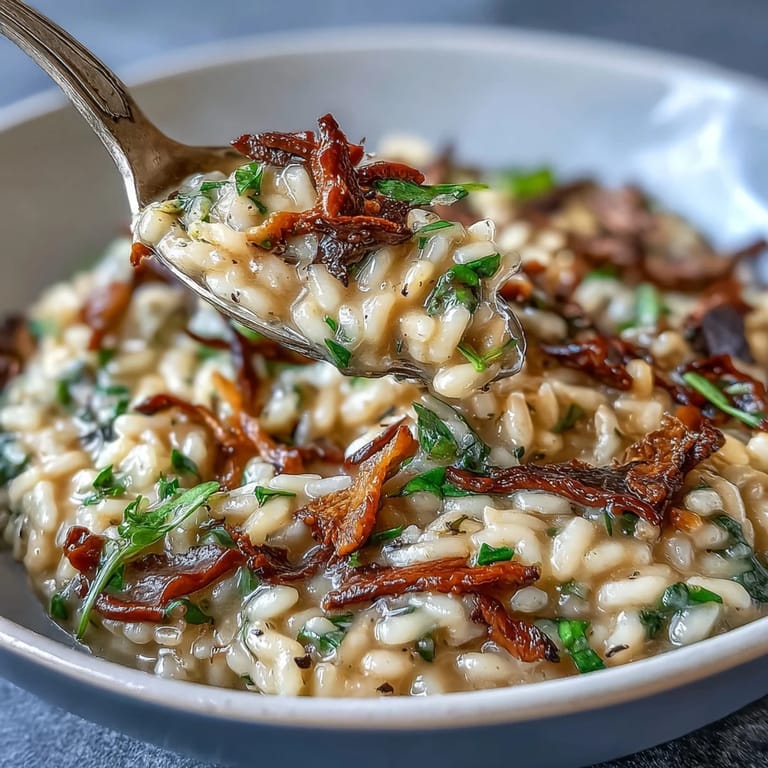
 The first time I made truffle risotto, it was because my partner mentioned offhand that they'd never had it, and something about that casual comment stuck with me. I spent an afternoon in the kitchen stirring patiently, watching the rice transform from hard grains into something silky and alive, and when I finally drizzled that precious truffle oil across the top, the smell that rose up was so intoxicating I almost forgot to plate it. That dish became the benchmark for every risotto I've made since—not because it was perfect, but because it taught me that luxury doesn't always require a restaurant kitchen, just attention and a little time.
I made this for four friends one spring evening when the conversation had turned melancholy, and I remembered that good food has a way of shifting the energy in a room. Watching them taste it—the moment their eyes widened when the umami hit—reminded me why I love cooking at all. It's one of those dishes that feels indulgent but somehow also generous, like you're sharing something personal.
Ingredients
- Arborio rice: This short-grain rice releases starch as it cooks, creating that signature creamy texture—don't substitute with long-grain varieties, which won't give you the same velvety result.
- Vegetable stock: Keep it warm in a separate pot; adding cold stock will shock the rice and interrupt the cooking process.
- Unsalted butter and olive oil: The combination gives you better flavor control than using just one, and butter brings that necessary richness to the aromatics.
- Onion and garlic: Finely chop them so they dissolve into the rice rather than remaining as distinct pieces.
- Dry white wine: It adds acidity and depth; don't skip this step or use something cheap that tastes like vinegar.
- Parmesan cheese: Freshly grated makes all the difference in texture and flavor—pre-grated versions contain anti-caking agents that muddy the creaminess.
- Heavy cream: Added at the end, this is what transforms good risotto into luxurious risotto.
- Truffle oil: A little goes a long way, and it's more accessible than fresh truffle while delivering serious flavor.
- Fresh black truffle: If you can source it, shaving it fresh over the finished dish is worth the splurge; otherwise, quality truffle paste works beautifully.
- Pea shoots: These tender, peppery greens provide textural contrast and a fresh finish that keeps the dish from feeling heavy.
Tired of Takeout? 🥡
Get 10 meals you can make faster than delivery arrives. Seriously.
One email. No spam. Unsubscribe anytime.
Instructions
- Warm your stock and gather everything:
- Pour your vegetable stock into a small pot and keep it simmering gently on another burner so it's ready when you need it. Having everything prepped and within arm's reach—butter, rice, wine, cheese, truffle oil—means you can focus on the most important part: the constant, gentle stirring that comes next.
- Build your flavor base:
- In a large, heavy saucepan over medium heat, let the butter and olive oil come together until the butter foams slightly. Add your finely chopped onion and let it soften and turn translucent, about 3-4 minutes, then add the garlic for just 1 minute more—you want it fragrant, not brown.
- Toast the rice:
- Stir the Arborio rice into the butter and oil, coating every grain, and cook for about 2 minutes while stirring almost constantly. You'll see the grains become slightly translucent around the edges, which signals they're ready for liquid.
- Deglaze with wine:
- Pour in the white wine and stir until it's mostly absorbed—this takes a few minutes and adds acidity that balances the richness to come. The rice will smell wonderful at this point, almost toasty.
- Add stock gradually and stir with intention:
- Use a ladle to add warm stock one scoop at a time, stirring frequently and waiting until each addition is mostly absorbed before adding the next. This steady pace, usually over about 18-20 minutes, is what creates the creaminess—don't rush it by dumping all the stock in at once.
- Finish with cream and cheese:
- When the rice is tender but still has a slight bite to it (al dente), remove the pan from heat and stir in the heavy cream and freshly grated Parmesan. Taste and season with salt and pepper, remembering that both the Parmesan and truffle oil add savory depth.
- Drizzle, fold, and plate:
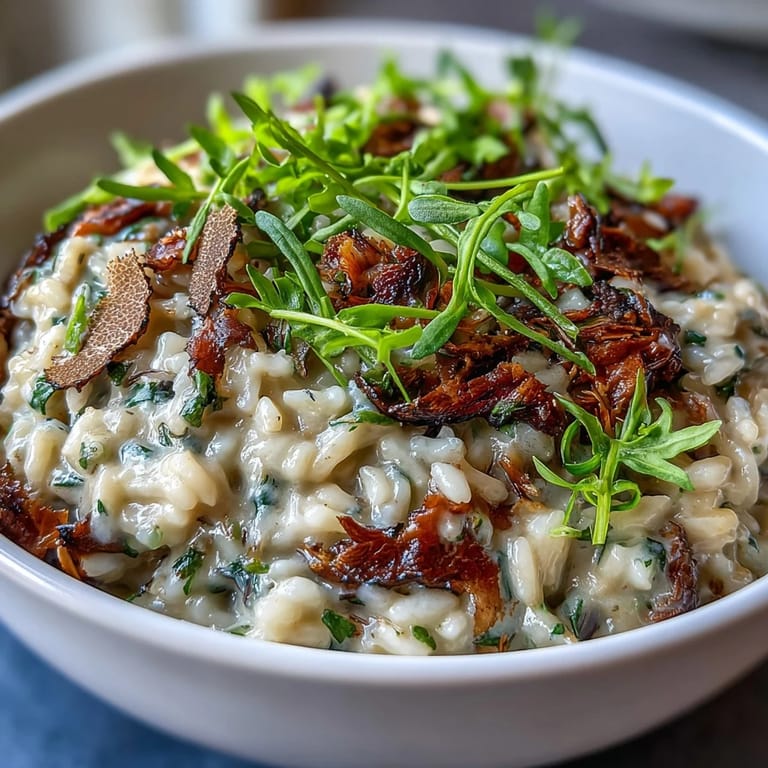
- Finish with a generous drizzle of truffle oil and gently fold in half the pea shoots so they stay somewhat intact and vibrant. Spoon the risotto into warm bowls, top with the remaining pea shoots and your shaved fresh truffle if using, and serve immediately while it's still creamy and steaming.
 Save to Pinterest
 There's something about watching risotto come together that feels almost alchemical—watching the rice go from hard grains to something smooth and luxurious, knowing that the only magic is time and attention. I've learned that cooking this dish is a conversation with the rice itself, reading its readiness with each stir and addition of stock.
The Right Rice Makes Everything
Arborio rice is cultivated specifically for risotto because of its high starch content and its ability to absorb liquid while maintaining its shape. When you cook it this way, you're not just rehydrating it; you're releasing that starch into the cooking liquid, which is what creates the signature creamy sauce. Once I understood this, I stopped thinking of risotto as a delicate technique and started seeing it as a collaboration between ingredient and intention.
Why Pea Shoots Matter More Than You'd Think
Pea shoots are the unsung hero of this dish because they do two things simultaneously: they add a peppery, almost peppercorn-like bite that cuts through the richness, and they provide textural contrast so the dish doesn't feel heavy or one-dimensional. I used to leave them out thinking they were just garnish, until I tried the dish without them and realized how much they contribute to the overall balance and finish. Now I always make sure to save some for a last-minute scatter on top, where they stay fresh and vibrant.
Truffle: Fresh vs. Oil vs. Paste
If you're splurging on fresh truffle, shave it right before serving so its aroma and delicate flavor shine through. If truffle oil is your choice, remember that a little truly goes a long way—it's concentrated and can easily overpower the dish if you're heavy-handed. Truffle paste sits somewhere in the middle and is a wonderful option when fresh truffle feels too expensive but you still want that earthy, umami complexity.
- Fresh truffle, when you can find it, adds an unmatchable depth that feels like a special occasion captured in a single spoonful.
- Truffle oil should always be added after cooking to preserve its flavor and prevent it from turning bitter in heat.
- Whichever you choose, quality matters—invest in the best you can afford because the entire dish hinges on this single ingredient.
 Save to Pinterest
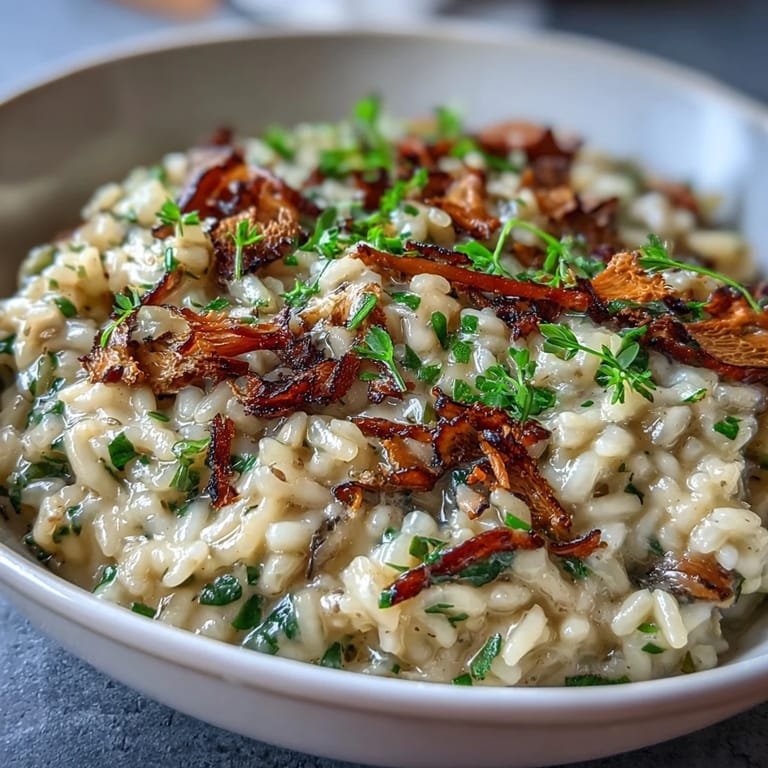
 Truffle risotto taught me that the most elegant dishes often come from patience and a few really good ingredients working in harmony. It's the kind of meal that feels like a celebration without requiring you to leave your kitchen.
Recipe FAQs
- → What type of rice is best for this dish?
Arborio rice is ideal for risotto due to its high starch content, creating a creamy texture while maintaining al dente firmness.
- → How does truffle oil affect the flavor?
Truffle oil imparts an earthy, aromatic essence that elevates the risotto, adding luxurious depth without overpowering other ingredients.
- → Can fresh pea shoots be substituted?
Yes, baby spinach or microgreens can be used for a similar fresh, slightly crisp finish, though pea shoots add a unique sweetness.
- → Why is warm vegetable stock used during cooking?
Warm stock prevents temperature shock, allowing the rice to cook evenly and absorb flavors gradually, resulting in a creamy consistency.
- → How can this dish be made vegan?
Use plant-based cream and vegan cheese alternatives, and ensure the stock is free of animal products to keep the richness intact.