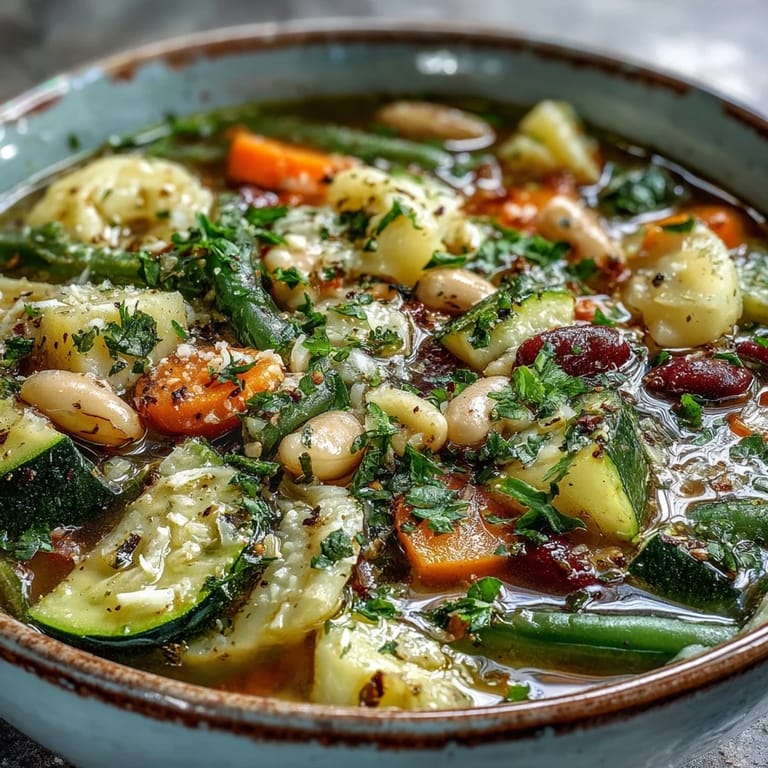
 Save to Pinterest
 Last autumn, when the farmers markets were bursting with seasonal vegetables, I found myself drawn to recreate my nonnas minestrone soup. The colorful array of produce reminded me of her Italian kitchen, where shed spend hours chopping vegetables while telling stories of her childhood in Tuscany. Standing at my cutting board that crisp Sunday afternoon, the familiar aromatic dance of onions, carrots, and celery in olive oil transported me across oceans and decades to those cherished moments.
The first time I served this minestrone to friends was during an impromptu dinner when a snowstorm trapped us all indoors. With the wind howling outside, we huddled around my dining table, steam rising from our bowls as conversation flowed freely. Someone dipped crusty bread into their soup, sighing with contentment, and in that moment, I understood why my nonna always said food made with love nourishes more than just the body.
Ingredients
- Olive oil: Use a good quality extra virgin olive oil as its the foundation flavor that carries through the entire soup.
- Seasonal vegetables: The beauty of minestrone lies in its adaptability, so feel free to swap in whatever looks freshest at the market.
- Cannellini beans: These creamy white beans add protein and a velvety texture that makes the soup more substantial.
- Small pasta: Tiny shapes like ditalini or elbows absorb the broth beautifully without overwhelming the vegetables.
- Vegetable broth: Homemade broth elevates this soup exponentially, but a good quality store-bought version works wonderfully in a pinch.
Tired of Takeout? 🥡
Get 10 meals you can make faster than delivery arrives. Seriously.
One email. No spam. Unsubscribe anytime.
Instructions
- Build the flavor base:
- Heat olive oil in a large pot over medium heat, then add diced onion, carrots, and celery. Watch as they begin to soften and release their sweet aromas after about 5 minutes, creating the foundation of your soup.
- Layer in more vegetables:
- Introduce the garlic, zucchini, potato, and green beans to the pot. Cook for another 3 minutes until the garlic becomes fragrant but not browned.
- Create your broth symphony:
- Pour in the diced tomatoes, cannellini beans, vegetable broth, dried herbs, and bay leaf. The liquid will start to take on a beautiful ruby hue as it comes to a gentle boil.
- Simmer to meld flavors:
- Reduce the heat, cover the pot, and allow everything to simmer for 20 minutes. Youll notice the broth deepening in color and the vegetables softening to perfect tenderness.
- Add the pasta:
- Stir in your choice of small pasta shapes and simmer uncovered for 8-10 minutes. The pasta will drink up some of the flavorful broth as it cooks to al dente perfection.
- Finish with greens:
- Remove the bay leaf, then add spinach or kale and watch it wilt into the hot soup. These late additions preserve their vibrant color and nutritional value.
- Season and serve:
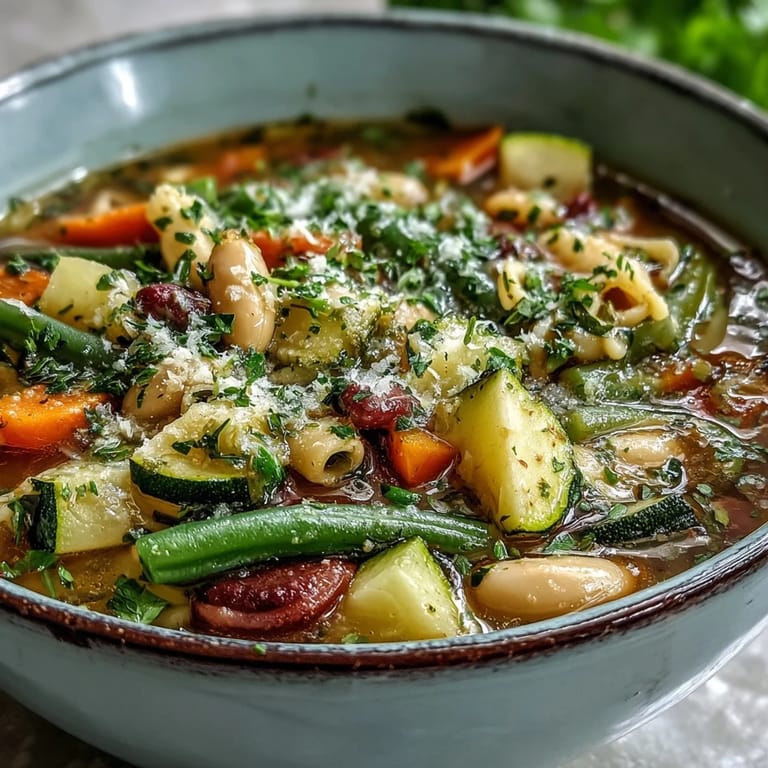
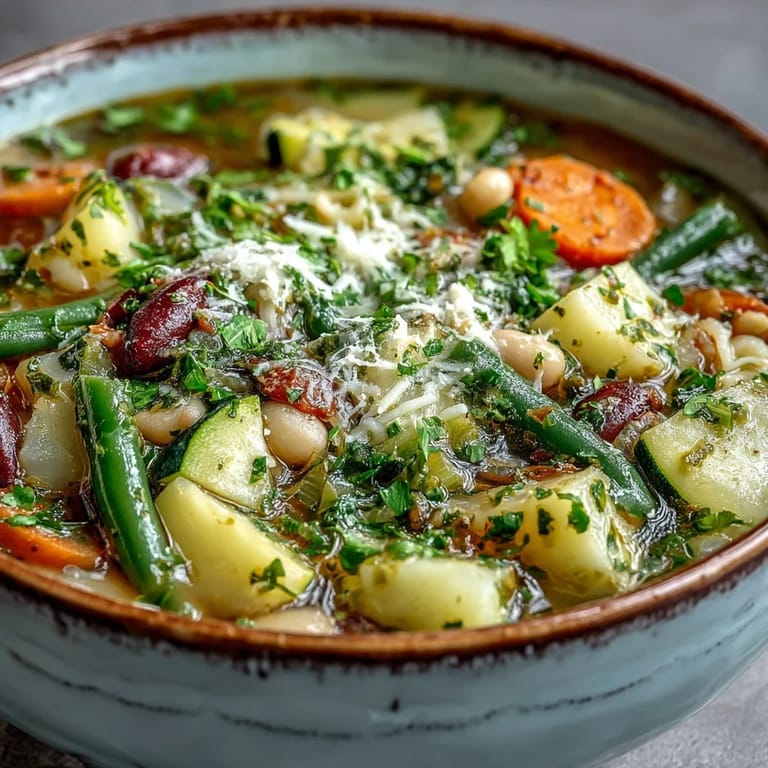
- Taste and adjust with salt and pepper, then ladle into bowls. Finish with a sprinkle of fresh parsley and Parmesan for a burst of color and flavor.
 Save to Pinterest
 My daughter, usually skeptical of anything green, first tried this minestrone when she was seven. I watched her cautiously dip her spoon in, take a tentative taste, then dive in for more. Later that evening, I found her handwritten note on my pillow saying this soupy veggie thing was actually pretty good. Its been our Wednesday night tradition ever since, a small victory in the realm of family meals that Ill cherish forever.
Seasonal Adaptations
Ive made this minestrone through every season, each bringing its own character to the pot. Spring versions sing with tender asparagus and fresh peas, summer iterations overflow with zucchini and green beans, autumn brings squash and hearty greens, while winter calls for root vegetables and cabbage. The recipe remains structurally the same while transforming completely, teaching me that flexibility in cooking mirrors the necessity of adaptability in life.
Serving Suggestions
Theres something magical about the ritual of accompaniments with minestrone. After years of experimentation, Ive found that a humble slice of toasted sourdough rubbed with garlic and drizzled with olive oil transforms the meal entirely. The bread becomes both utensil and accompaniment, perfect for capturing the last delicious drops from your bowl, turning what might be just another soup dinner into a thoughtful dining experience.
Storage and Leftovers
The lifecycle of minestrone in my household follows a predictable but delightful pattern. Day one brings the classic soup, day two offers a thicker, more concentrated version as the pasta continues absorbing liquid, and by day three, what remains often becomes a base for a completely new creation. Sometimes I blend the thickened leftovers with additional broth for a creamy vegetable soup, or use it as a sauce for baked pasta, discovering that transformed leftovers often surprise us with unexpected pleasures.
- Store cooled soup in airtight containers in the refrigerator for up to 5 days, remembering it will thicken considerably.
- For freezing, either omit the pasta during cooking and add when reheating, or accept that frozen and thawed pasta will have a softer texture.
- Rejuvenate leftover minestrone with a splash of fresh broth, a drizzle of olive oil, and new herbs when reheating.
 Save to Pinterest
 Minestrone isnt just a soup in my home its the edible embodiment of lifes philosophy that combining humble ingredients with attention and care creates something greater than the sum of its parts. May your kitchen fill with the same comforting aromas and your table with the warm conversations that this beloved Italian tradition has brought to mine.
Recipe FAQs
- → What vegetables go best in minestrone?
Traditional minestrone includes onions, carrots, celery, zucchini, potatoes, and green beans. You can adapt based on season—add cabbage in winter or fresh peas in spring. The beauty lies in using whatever vegetables you have on hand.
- → Can I make minestrone gluten-free?
Absolutely. Simply substitute regular pasta with your favorite gluten-free variety—rice pasta, corn pasta, or chickpea pasta all work beautifully. Double-check that your vegetable broth and other ingredients are certified gluten-free.
- → How long does minestrone soup last?
Stored in an airtight container in the refrigerator, minestrone keeps well for 4-5 days. The flavors actually improve overnight as the vegetables and herbs meld together. For longer storage, freeze individual portions for up to 3 months.
- → What pasta works best in minestrone?
Small shapes like ditalini, elbow macaroni, shells, or small tubes are ideal because they fit neatly on a spoon. Avoid long pasta like spaghetti or large shapes that might overwhelm the vegetables. The pasta should complement rather than dominate the soup.
- → Is minestrone suitable for vegetarians?
This version is completely vegetarian, using vegetable broth as the base. For a vegan option, simply omit the Parmesan cheese garnish or use a plant-based alternative. The protein from cannellini beans makes it substantial enough to be a main course.
- → Can I add a Parmesan rind?
Adding a Parmesan rind during simmering is a traditional Italian technique that infuses the soup with incredible depth and umami flavor. Simply remove the rind before serving—it will have softened and released its savory essence into the broth.