 Save to Pinterest
 My kitchen smelled like a spice market the afternoon I first simmered this broth—ginger and turmeric filling the air while I stood at the stove thinking about how my grandmother used to say bone broth was liquid gold. She wasn't wrong. Years later, when my joints started reminding me I wasn't twenty anymore, I finally understood what she meant, and this bowl became my weekly ritual, a slow-cooked promise to my body that I was paying attention.
I made this for a friend recovering from surgery, and watching her have a second bowl told me everything I needed to know about whether this recipe worked. She called me the next day just to say the broth had calmed her inflammation overnight, and suddenly I wasn't making soup anymore—I was sending healing in a bowl.
Ingredients
- Bone broth: This is your foundation; homemade is superior if you have time, but a high-quality store-bought version saves you hours and still delivers the collagen and minerals your body craves.
- Fresh ginger and turmeric: These rhizomes are anti-inflammatory powerhouses; fresh versions taste sharper and more alive than ground, though ground works in a pinch.
- Apple cider vinegar: It sounds strange but trust it—the acid helps extract minerals from the broth and brightens the entire bowl.
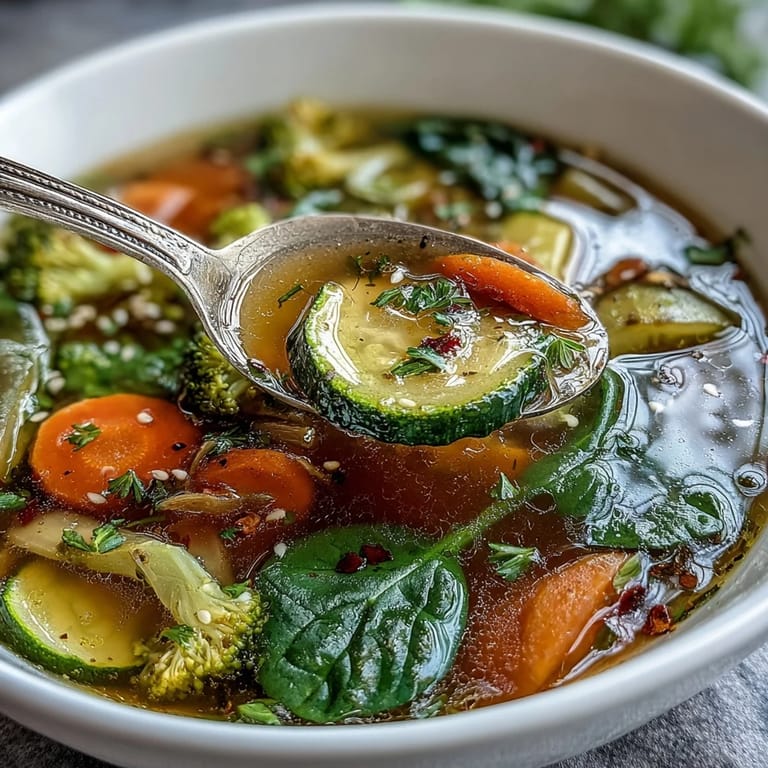
- Carrots, celery, and broccoli: These aren't just fillers; they add their own nutrients and create a gentle sweetness that balances the earthy spices.
- Spinach and zucchini: Add these at the end to preserve their vibrant color and delicate texture; they soften in seconds.
- Sesame seeds and fresh herbs: The garnishes matter—they add texture, freshness, and a final boost of flavor that makes you want another spoonful.
Tired of Takeout? 🥡
Get 10 meals you can make faster than delivery arrives. Seriously.
One email. No spam. Unsubscribe anytime.
Instructions
- Build your flavor base:
- Pour the bone broth into a large stockpot and add the quartered onion, smashed garlic, sliced ginger, turmeric, apple cider vinegar, peppercorns, and sea salt. The aromatics will start releasing their fragrance immediately, filling your kitchen with warmth and promise.
- Simmer low and slow:
- Bring everything to a gentle boil over medium-high heat, then lower the flame to barely a whisper and cover the pot. Let it sit undisturbed for 1.5 hours while the flavors marry and the broth deepens in color—this is when the real transformation happens.
- Strain with care:
- Set a fine mesh sieve over your pot and carefully pour the broth through, leaving behind all those spent solids that have already given their gifts. You'll be left with a clear, golden liquid that's even more potent than when you started.
- Add root vegetables first:
- Return the strained broth to the heat and slide in the carrot and celery slices, plus the broccoli florets. Simmer for about 10 minutes until they soften just enough to bite easily but still hold their structure.
- Finish with delicate greens:
- Add the zucchini and spinach at the very end, letting them warm through for 2 to 3 minutes until the spinach wilts into itself and the zucchini turns tender. Taste as you go and adjust the salt; this is your final chance to dial in the flavor.
- Serve with intention:
- Ladle the broth and vegetables into bowls and crown each one with fresh parsley or cilantro, a scatter of sesame seeds if you're feeling fancy, and a squeeze of lemon that brightens everything it touches.
 Save to Pinterest
 One winter evening, my daughter asked for a bowl of this broth when she was feeling under the weather, and I watched her shoulders relax as she drank it, like the warmth was doing more than just heating her from the outside. That's when I realized this wasn't just about collagen and anti-inflammatory compounds anymore—it was about permission to slow down and take care of yourself.
The Science of Slow Simmering
There's real chemistry happening in that pot during those 1.5 hours of simmering, and understanding it makes the wait feel less like a chore and more like witnessing transformation. The heat coaxes collagen from the bones into gelatin, breaks down cell walls in the vegetables to release their nutrients, and allows the ginger and turmeric to infuse deeply into every drop. Time is an ingredient here, just as essential as anything you measure.
Seasonal Substitutions That Actually Work
This broth sings with whatever your garden or farmers market is offering, and that flexibility is part of its charm. Spring calls for fresh peas and tender greens; summer wants zucchini and tomatoes; fall craves mushrooms and darker leafy vegetables; winter begs for root vegetables and heartier greens. The broth base stays constant, a reliable partner that makes whatever you add taste intentional and nourishing, so swap freely and cook what feels right for the season.
Ways to Build Your Bowl Beyond the Basic
This broth is a blank canvas that welcomes additions without losing its essence, so don't think of the recipe as a ceiling but as a floor to build from. Some days I add shredded rotisserie chicken for extra protein, other times I stir in cubed tofu for substance, and occasionally I top a bowl with a soft-boiled egg and crispy mushrooms just because I'm feeling celebratory. The core recipe stays true while each variation tells a different story.
- Add shredded cooked chicken or crumbled tofu for protein without weighing down the delicate broth.
- Stir in miso paste or tamari in the final minutes for depth and umami that makes you crave another bowl.
- Top with avocado slices, crispy mushrooms, or a poached egg for richness that turns soup into a complete meal.
 Save to Pinterest
 This broth bowl has become my answer when life feels chaotic and my body feels tired—something honest and simple that reminds me to pause and nourish myself intentionally. Once you taste how good it feels to drink something this thoughtfully made, you'll understand why it becomes a habit worth keeping.
Recipe FAQs
- → Can I make this vegetarian?
Absolutely. Substitute the bone broth with high-quality mushroom or vegetable broth for a plant-based version that still delivers rich umami flavor and nourishing benefits.
- → How long does this keep in the refrigerator?
Store in an airtight container for up to 4 days. The flavors actually deepen and improve after a day or two. Reheat gently on the stovetop to preserve the texture of the vegetables.
- → Can I freeze this broth bowl?
Yes, freeze for up to 3 months. Consider freezing the broth and vegetables separately so you can reheat the broth while adding fresh vegetables for better texture when serving.
- → What vegetables work best in this bowl?
Carrots, celery, broccoli, zucchini, and spinach are ideal, but feel free to use kale, mushrooms, bok choy, or green beans based on what's in season or available in your kitchen.
- → Do I need to peel the ginger and turmeric?
For the freshest flavor, gently scrape off the skin with a spoon rather than peeling completely. This preserves more of the beneficial compounds just beneath the surface.
- → Can I add protein to this bowl?
Certainly. Shredded cooked chicken, tofu cubes, or soft-boiled eggs make excellent additions. Simply add them during the last few minutes of reheating so they warm through without overcooking.