 Save to Pinterest
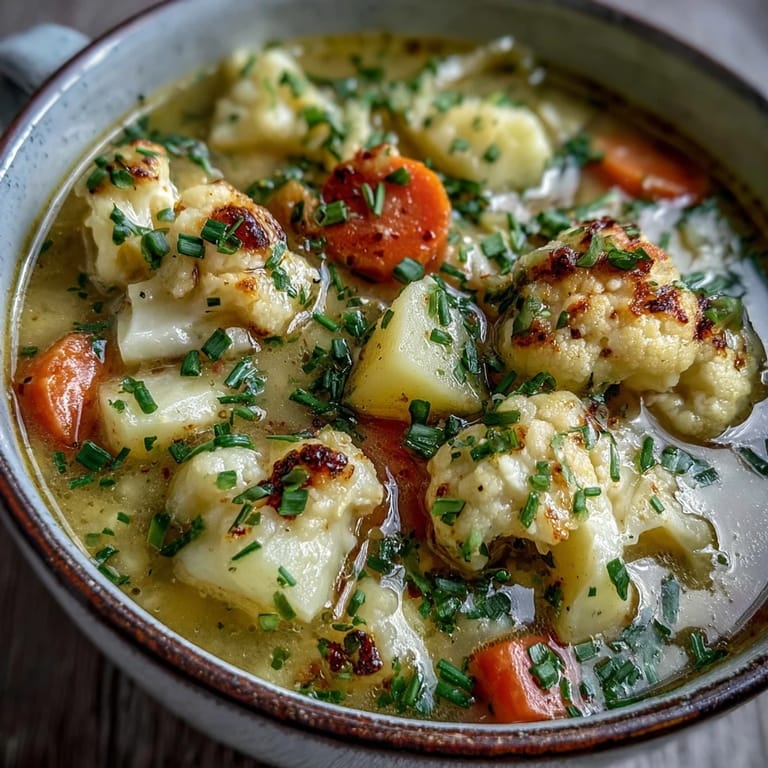
 The aroma of vegetarian cauliflower chowder bubbling on the stove takes me back to a particularly brutal winter in my small apartment. With frost climbing the windows and my heater struggling to keep up, I stumbled upon this recipe by pure necessity - having only cauliflower, potatoes, and a few basics left in my nearly empty fridge. What began as a desperate pantry cleanout transformed into my ultimate comfort food, each spoonful somehow managing to thaw not just my fingers but my mood.
I remember serving this chowder at an impromptu gathering when friends showed up unexpectedly during a snowstorm. The kitchen windows steamed up as we huddled around the table, the conversation flowing as easily as the second and third helpings. Someone actually photographed their bowl before eating - a first for my cooking - and the golden hue of the broth catching the low evening light made me unreasonably proud.
Ingredients
- Cauliflower: Look for tight, cream-colored heads without brown spots - I learned that smaller cauliflowers often have sweeter, more delicate flavors perfect for this chowder.
- Potatoes: Yukon golds create the perfect balance of starch and structure, breaking down just enough to thicken while maintaining tender chunks throughout.
- Smoked paprika: This unassuming spice works quiet magic, lending a subtle smoky depth that guests often cant quite identify but makes the vegetarian nature of this dish completely satisfying.
- Flour: Just two tablespoons transform this from soup to chowder - I once forgot it and ended up with tasty but thin cauliflower soup instead of the velvety chowder we love.
- Vegetable broth: The foundation of our flavor, either homemade or store-bought works brilliantly, though I prefer low-sodium varieties to control the salt levels myself.
Tired of Takeout? 🥡
Get 10 meals you can make faster than delivery arrives. Seriously.
One email. No spam. Unsubscribe anytime.
Instructions
- Build your flavor base:
- Heat your olive oil or butter in a large pot until it shimmers, then add the diced onion, carrot, and celery. The kitchen will fill with that gorgeous aromatic scent as they soften and become translucent.
- Create the roux:
- Sprinkle the flour over your softened vegetables and stir constantly for about two minutes. Youll notice it forming a paste that coats the vegetables - this brief cooking eliminates that raw flour taste.
- Add liquids gradually:
- Pour in your vegetable broth slowly while whisking, ensuring no flour lumps remain. This patient approach prevents the dreaded lumpy chowder syndrome that can happen with rushed addition.
- Veggie time:
- Add your cauliflower florets and diced potatoes, along with all seasonings. The pot will look very full but dont worry, everything will cook down beautifully.
- Simmer to tenderness:
- Let everything bubble gently for about 20 minutes, until a fork easily pierces the vegetables. The broth will have taken on a golden hue from all those lovely ingredients mingling together.
- Add creaminess:
- Stir in the milk and allow it to warm through without boiling. The chowder will transform before your eyes into something richer and more inviting.
- Blend for texture:
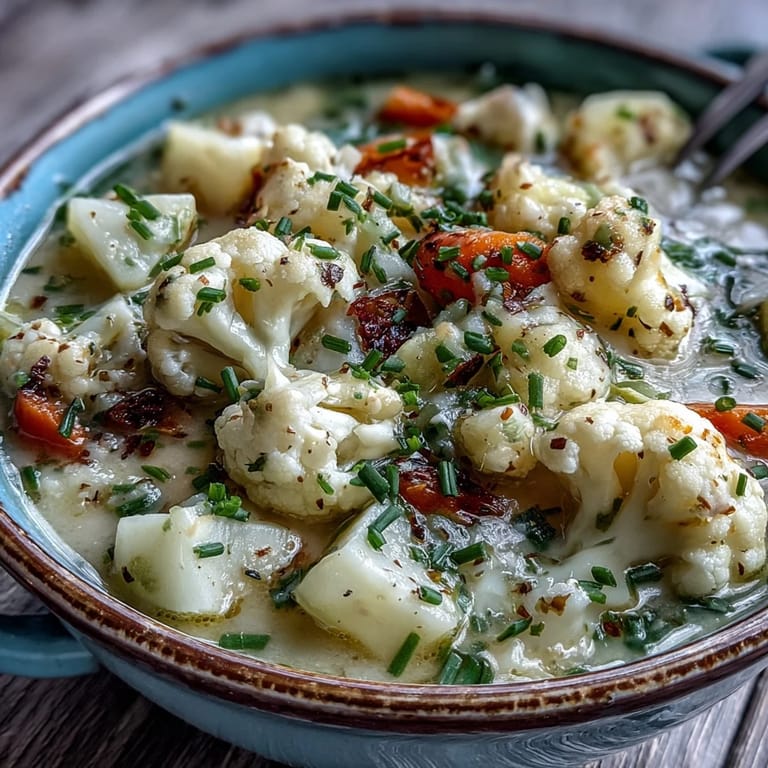
- Use an immersion blender to partially blend some of the vegetables while leaving plenty of chunks. This creates that perfect chowder consistency where each spoonful contains both silky broth and tender bites.
 Save to Pinterest
 My neighbor Elaine, who claims to dislike cauliflower with fierce conviction, stopped by one evening as this chowder was cooling. The aroma alone convinced her to try just one spoonful, which turned into a full bowl and a request for the recipe. Months later, she confessed it had become her go-to dinner party starter, though she strategically waits until after guests have raved about it to reveal its cauliflower-centric nature.
Make-Ahead Options
This chowder actually improves with a day of rest in the refrigerator, allowing the flavors to meld and deepen in ways that surprise me every time. I often make a double batch specifically to portion and freeze in individual containers for emergency comfort food moments - just thaw and gently reheat on the stovetop with a splash of extra milk to restore the perfect consistency.
Serving Suggestions
While this chowder stands confidently on its own, Ive found it reaches new heights when paired with crusty sourdough bread or homemade croutons that add textural contrast to each creamy spoonful. For dinner parties, I serve it in small mugs as a starter, sometimes with a tiny cheese crisp balanced on the rim - the presentation always earns appreciative murmurs before the first taste.
Customization Ideas
This recipe welcomes personal touches that make it uniquely yours without compromising its soul. During summer months, I fold in fresh corn kernels in the last 5 minutes of cooking for sweet pops of flavor, while winter variations might include a parmesan rind simmering alongside the vegetables for umami depth.
- For subtle heat that builds with each spoonful, add a pinch of red pepper flakes along with the other seasonings.
- Roasting the cauliflower before adding it to the pot creates deeper, more complex flavor notes for special occasions.
- Swapping one potato for a small sweet potato introduces gentle sweetness that pairs beautifully with the smoked paprika.
 Save to Pinterest
 This humble cauliflower chowder has taught me that true comfort food isnt about complexity or expensive ingredients, but rather about transformation - turning simple vegetables into something that feels like a warm embrace. In our house, its become the unofficial signal that someone needs nurturing, appearing on the stove almost instinctively when a bad day, cold symptoms, or heartache makes an appearance.
Recipe FAQs
- → Can I make this chowder vegan?
Yes, simply substitute whole milk with unsweetened plant-based milk and use olive oil instead of butter. The flavor remains delicious and creamy.
- → How long does this chowder keep in the refrigerator?
This chowder stores well for 3-4 days in an airtight container. The flavors often develop and improve after a day.
- → Can I freeze cauliflower chowder?
Yes, freeze for up to 3 months. Note that the texture may change slightly upon reheating, so add fresh milk when warming.
- → What vegetables work best in this chowder?
Cauliflower, potatoes, carrots, and celery form the classic base. You can also add corn, bell peppers, or leeks for variation.
- → How do I make the chowder thicker?
Mash some potatoes against the pot side, blend more portions, or add an extra tablespoon of flour while cooking.