 Save to Pinterest
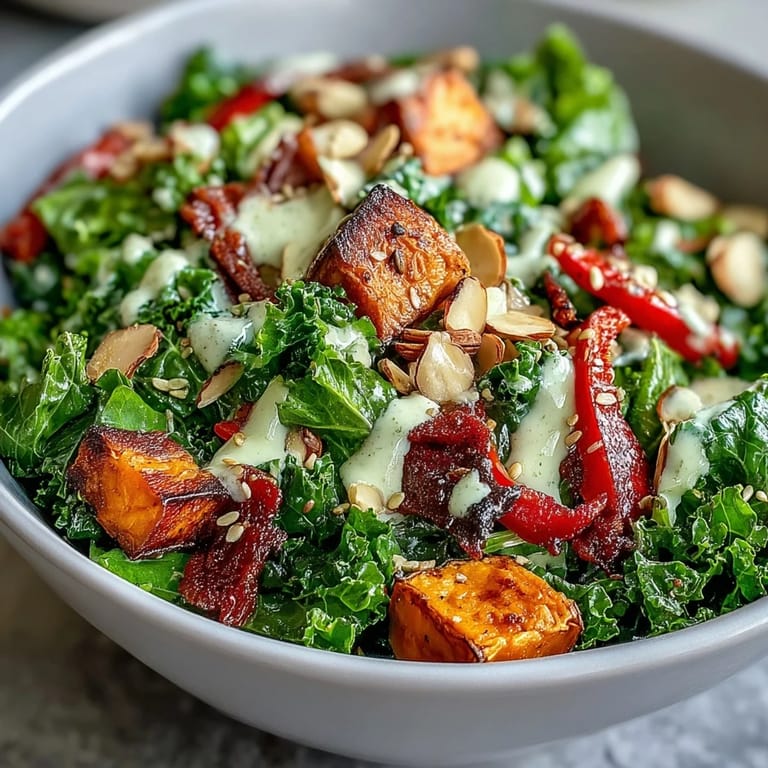
 My neighbor handed me a container of homemade kale salad last spring, and I was skeptical—I'd had enough sad, bitter kale to last a lifetime. But the moment I tasted it, something clicked. The kale was tender and bright, the roasted vegetables were caramelized and sweet, and that creamy tahini dressing tied everything together like it was all meant to be. I stood in my kitchen eating straight from the container, and by the time I finished, I was already mentally planning when I could make it again.
I made this for a potluck where someone had recently gone vegan, and I wasn't sure if a salad would feel like a real contribution. But watching people go back for thirds—including the skeptics—taught me that food doesn't need to be complicated or heavy to feel nourishing and complete. That salad became the thing people asked me to bring to every gathering after that.
Ingredients
- Kale (1 large bunch, about 200 g): Look for lacinato or curly kale, and don't be shy about the massage step—those few minutes of hand-work are what make kale edible and delicious.
- Sweet potato (1 medium, peeled and cubed): The slight sweetness balances the earthiness of kale and adds natural creaminess when it roasts down; butternut squash works beautifully as a swap if you're in the mood for something different.
- Red bell pepper, zucchini, red onion (1 each, sliced): These vegetables caramelize and soften during roasting, creating pockets of sweetness and texture throughout the bowl.
- Cherry tomatoes (1/2 cup, halved): Add these fresh and raw so they burst with acidity and brightness against the warm roasted vegetables.
- Roasted almonds (1/4 cup, roughly chopped) and seeds (2 tablespoons each pumpkin and sunflower): These provide crunch, healthy fats, and a protein boost that keeps you satisfied long after the meal ends.
- Tahini (1/4 cup): Choose a well-stirred jar or give it a good stir yourself to avoid separated oil; this is the soul of the dressing and worth using good quality.
- Lemon juice (2 tablespoons), maple syrup (1 tablespoon), garlic (1 minced clove): This trio brings brightness and depth to the tahini, creating a dressing that tastes both simple and sophisticated.
- Water (3–4 tablespoons) for the dressing: Add gradually and taste as you go—every tahini jar is slightly different, so you might need more or less to reach that perfect pourable consistency.
Tired of Takeout? 🥡
Get 10 meals you can make faster than delivery arrives. Seriously.
One email. No spam. Unsubscribe anytime.
Instructions
- Fire up the oven and prep your vegetables:
- Preheat to 400°F (200°C) and while it's warming, toss your sweet potato, red bell pepper, zucchini, and red onion with a tablespoon of olive oil and a pinch of salt. Spread everything on a baking sheet in a single layer so the vegetables have room to brown rather than steam.
- Get roasting:
- Slide the sheet into the oven for 20–25 minutes, stirring halfway through so everything caramelizes evenly on all sides. You'll know they're ready when the edges are golden and you can pierce them easily with a fork.
- Massage that kale like you mean it:
- While vegetables roast, tear your kale into bite-sized pieces and place in a large bowl. Drizzle with a tablespoon of olive oil and half a teaspoon of salt, then use your hands to massage and squeeze the leaves for 2–3 minutes until they soften and brighten to a deeper green—this step changes everything about how kale tastes.
- Build your dressing:
- In a small bowl, whisk tahini with lemon juice, maple syrup, minced garlic, salt, and pepper until combined. Add water a tablespoon at a time, whisking between each addition, until the dressing flows smoothly but still coats a spoon.
- Bring it all together:
- Once roasted vegetables are golden and tender, add them to your massaged kale along with the cherry tomatoes, almonds, and seeds. Drizzle with tahini dressing and toss everything gently until every piece is coated.
- Serve right away:
- This salad is best eaten immediately while the warm roasted vegetables contrast with the cool kale and fresh tomatoes, and the dressing hasn't had time to settle.
 Save to Pinterest
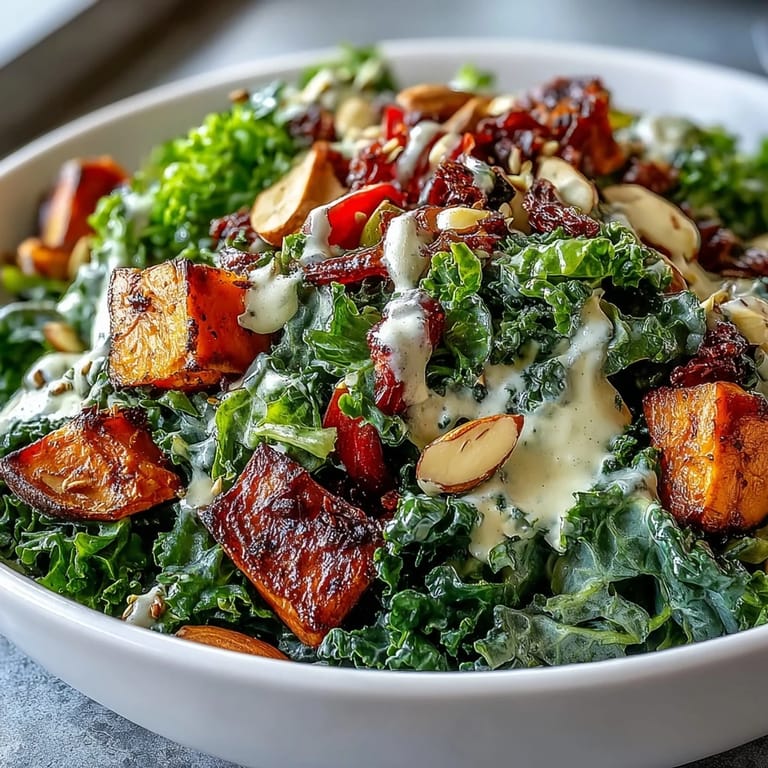
 I brought this salad to a dinner party where someone mentioned they were tired of feeling like their diet was a punishment rather than a pleasure. Watching them pile roasted vegetables onto their plate and eat without guilt or hesitation reminded me that the best healthy food doesn't announce itself as healthy—it just tastes genuinely good.
How to Make Kale Actually Taste Good
The secret isn't hiding kale in a smoothie or drowning it in dressing. Raw kale has compounds that taste bitter and harsh, and the leaves are tough enough to make your jaw tired. But when you massage it with salt and oil, you're breaking down the cell walls and mellowing those harsh flavors without cooking away the nutrition. It's a simple technique that changes the entire eating experience. The kale becomes silky and almost creamy on your tongue, able to stand up to strong flavors like tahini and roasted garlic without getting lost or tasting like punishment.
Building Flavor Through Roasting
One afternoon I accidentally left roasted vegetables in the oven a few minutes too long and they emerged caramelized and crispy around the edges, and suddenly I understood why this salad works so well. Roasting brings out the natural sugars in vegetables—the sweet potato becomes almost honeyed, the onion turns mellow and sweet, and the bell pepper develops depth and complexity. The contrast between those warm, golden vegetables and the cool massaged kale creates a textural and temperature play that makes every bite interesting. It's the kind of detail that separates a meal you tolerate from one you genuinely look forward to eating.
The Tahini Dressing Difference
Tahini dressing feels fancy and restaurant-quality, but it's nothing more than sesame paste whisked with acid, sweetness, and garlic. What surprised me the first time I made it was how forgiving it is—lemon juice brings brightness, a touch of maple syrup adds roundness, and garlic brings a gentle punch that ties everything together. The dressing doesn't dominate the salad; instead it acts like a bridge, connecting all the different vegetables and flavors into one cohesive bite.
- If your tahini dressing breaks or becomes grainy, start fresh with a clean bowl, whisk in a teaspoon of warm water to loosen new tahini, then slowly whisk in your original mixture a little at a time.
- Make extra dressing and store it in the fridge for up to five days—it's brilliant drizzled over grain bowls, roasted chickpeas, or even as a dip for raw vegetables.
- Taste the dressing before adding it to the salad; tahini varies by brand and jar, so you might need more lemon juice for brightness or a touch more maple syrup for balance.
 Save to Pinterest
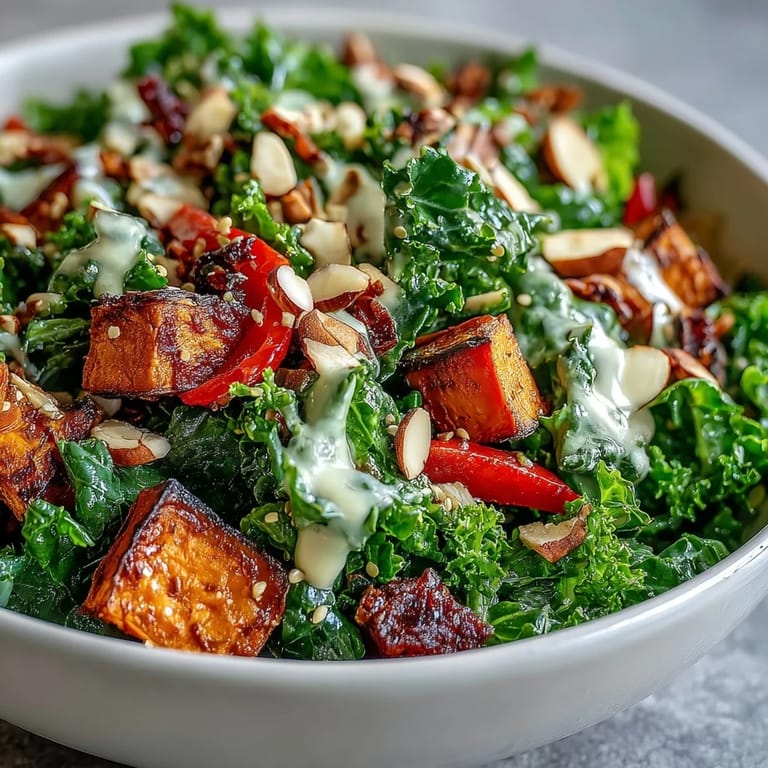
 Every time I make this salad now, I think about how food can be both nourishing and genuinely delicious without apology. It's the kind of recipe that wins over skeptics and makes you feel good inside and out.
Recipe FAQs
- → Why massage the kale leaves?
Massaging kale with olive oil and salt breaks down the tough cell structure, making the leaves tender, less bitter, and more enjoyable to eat raw. The leaves turn from rough and stiff to silky and vibrant green.
- → Can I make this ahead of time?
Yes, roasted vegetables and dressing can be prepared up to 3 days in advance. Store them separately in airtight containers in the refrigerator. Massage the kale and assemble just before serving to maintain texture.
- → What vegetables work best for roasting?
Sweet potato, bell pepper, zucchini, and red onion are ideal because they roast at similar rates. You can also use butternut squash, carrots, or Brussels sprouts. Cut vegetables uniformly for even cooking.
- → How do I adjust the tahini dressing consistency?
Start with 3 tablespoons of water and whisk thoroughly. The dressing will initially seize up—keep whisking and add more water, one tablespoon at a time, until smooth and pourable. The consistency should coat the back of a spoon.
- → What can I use instead of almonds?
Walnuts, pecans, or cashews work beautifully as substitutes. For nut-free options, try sunflower seeds or extra pumpkin seeds. Roasted chickpeas also add excellent protein and crunch.
- → Is this suitable for meal prep?
Absolutely. Portion the roasted vegetables, dressing, and massaged kale into separate containers. Keep nuts and seeds in a small bag or container to maintain crunch. Assemble individual portions throughout the week.