 Save to Pinterest
 Last winter, I tossed beef cubes into a hot pot without much of a plan, just hoping to warm up the kitchen. The smell of browning meat mixed with onions pulled my neighbor over, curious what was simmering. By the time the barley had softened and the broth turned deep and savory, we had bowls in hand and spoons clinking against ceramic. That soup became my cold-weather answer to everything—hunger, loneliness, and the need for something that tasted like care. I've made it dozens of times since, and it never gets old.
I brought this soup to a friend recovering from surgery, and she called it the first thing that actually made her hungry again. She ate two bowls that night and froze the rest in single servings. Months later, she told me she still makes it when she needs something dependable. Theres something about beef and barley that feels like a promise—it wont let you down, and it wont ask for much in return.
Ingredients
- Beef stew meat: Look for chuck or round with a little marbling, it breaks down beautifully during the long simmer and stays tender instead of chewy.
- Olive oil: Just enough to get a good sear on the beef, which builds the flavor foundation for everything else.
- Onion: A large one adds sweetness as it softens, balancing the savory broth without overpowering it.
- Carrots: Slice them thick so they hold their shape and give you something to bite into instead of dissolving.
- Celery: It adds a quiet, earthy note that you dont always notice but would miss if it wasnt there.
- Garlic: Fresh cloves release their flavor fast, so add them after the vegetables have softened to avoid burning.
- Russet potato: It breaks down just a little, thickening the broth naturally while still giving you tender chunks.
- Frozen peas: Toss them in at the end so they stay bright and sweet instead of turning mushy and gray.
- Diced tomatoes: The juices add acidity and brightness, cutting through the richness of the beef and broth.
- Pearl barley: Rinse it first to remove excess starch, then let it soak up the broth and turn plump and chewy.
- Beef broth: Use a good quality broth or stock, it makes all the difference when theres nothing to hide behind.
- Water: Thins the broth just enough so it doesnt become too salty or heavy as it reduces.
- Bay leaves: They add a subtle herbal depth that you taste without really identifying.
- Dried thyme and oregano: These dried herbs bloom in the heat and infuse the whole pot with warmth.
- Black pepper and salt: Season generously, but taste toward the end because the broth concentrates as it simmers.
- Fresh parsley: A sprinkle on top adds color and a little freshness right before serving.
Tired of Takeout? 🥡
Get 10 meals you can make faster than delivery arrives. Seriously.
One email. No spam. Unsubscribe anytime.
Instructions
- Brown the beef:
- Heat the olive oil until it shimmers, then add the beef in a single layer without crowding the pot. Let it sit undisturbed for a couple minutes so it develops a deep brown crust, then turn and repeat. Pull the beef out and set it aside, leaving the flavorful bits stuck to the bottom.
- Soften the vegetables:
- Toss in the onion, carrots, and celery, scraping up those browned bits as the vegetables release moisture. Stir occasionally until everything softens and the onion turns translucent, about five minutes.
- Add the garlic:
- Stir in the minced garlic and let it cook just until you can smell it, no more than a minute. If it browns, it turns bitter.
- Build the soup base:
- Return the beef to the pot along with the potatoes, tomatoes, barley, bay leaves, thyme, oregano, salt, and pepper. Stir everything together so the spices coat the ingredients evenly.
- Simmer low and slow:
- Pour in the beef broth and water, then bring the whole pot to a rolling boil. Once its bubbling, drop the heat to low, cover it, and let it simmer gently for an hour and a half, stirring every so often to keep the barley from sticking.
- Finish with peas:
- In the last ten minutes, stir in the frozen peas and taste the broth. Adjust the salt and pepper if needed, then pull out the bay leaves before serving.
- Serve hot:
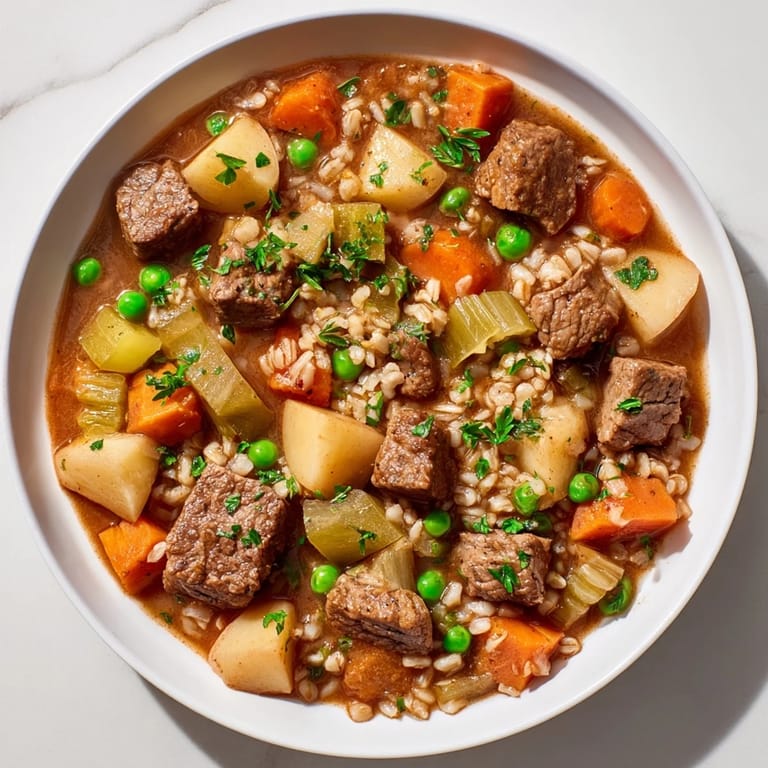
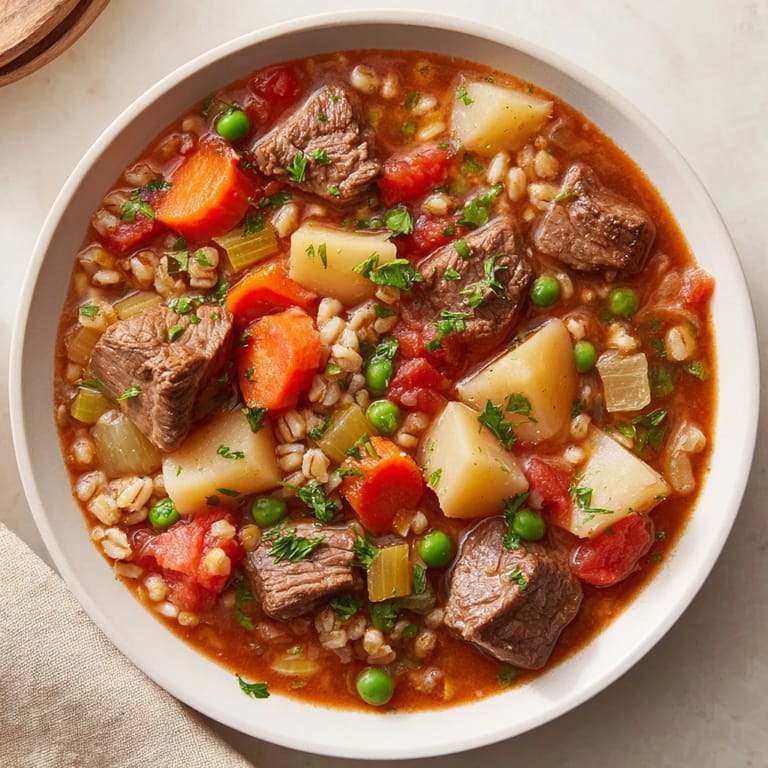
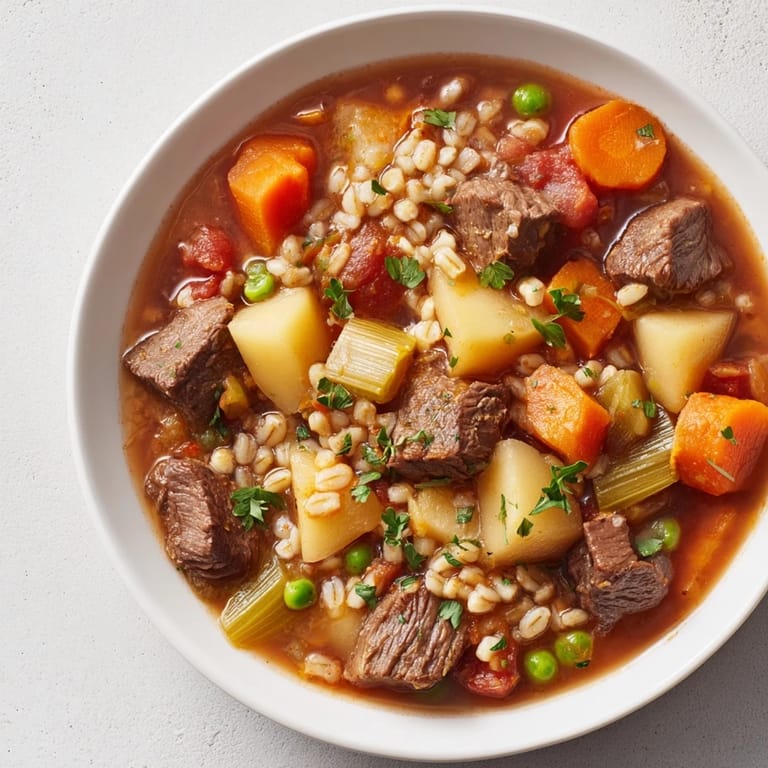
- Ladle the soup into deep bowls, scatter fresh parsley on top if you have it, and serve with something crusty to dunk. The soup will be thick, hearty, and deeply satisfying.
 Save to Pinterest
 One evening, I made this soup while a snowstorm piled up outside, and my kids came in from shoveling with red cheeks and frozen fingers. They stood over the pot with their bowls, breathing in the steam before taking a single bite. Nobody said much, but they went back for seconds and thirds. That quiet, satisfied silence told me everything I needed to know.
What to Serve Alongside
A thick slice of sourdough or a warm baguette is perfect for soaking up the broth. I also like a simple green salad with lemon vinaigrette to cut through the richness. If youre feeding a crowd, cornbread or garlic bread works beautifully too.
Storage and Reheating
This soup keeps in the fridge for up to three days in an airtight container, and the flavors deepen overnight. Reheat it gently on the stove, adding a splash of broth or water if it thickened up. You can also freeze individual portions for up to three months, just thaw in the fridge and warm slowly.
Make It Your Own
If you want to skip the gluten, swap the barley for brown rice or quinoa and adjust the cooking time. A splash of Worcestershire sauce or a spoonful of tomato paste adds even more depth. Some people like to toss in mushrooms or parsnips, and honestly, this soup is forgiving enough to handle whatever vegetables you have on hand.
- Try adding a handful of chopped kale or spinach in the last few minutes for extra greens.
- A squeeze of lemon juice right before serving brightens everything up surprisingly well.
- If you like heat, a pinch of red pepper flakes or a dash of hot sauce does wonders.
 Save to Pinterest
 This soup has pulled me through long weeks and cold nights more times than I can count. I hope it does the same for you.
Recipe FAQs
- → What cut of beef works best?
Choose stew meat or chuck cut into cubes for tender, flavorful results after slow cooking.
- → Can I substitute barley with other grains?
Yes, brown rice or quinoa are good gluten-free alternatives providing similar texture and nutrition.
- → How long should the soup simmer?
Simmer gently for about 1½ hours to allow beef and barley to become tender and flavors to develop.
- → When should frozen peas be added?
Add peas during the last 10 minutes of cooking to keep their vibrant color and slight bite.
- → What herbs enhance this dish?
Thyme, oregano, and bay leaves provide aromatic depth and complement the savory beef broth well.
- → How can leftovers be stored?
Refrigerate in airtight containers for up to 3 days or freeze for longer storage without flavor loss.