 Save to Pinterest
 One Saturday evening, I was craving the comfort of French onion soup but found myself staring at a box of pasta instead. What started as a improvisation—tossing fettuccine into a pot of deeply caramelized onions and broth—became something I've made dozens of times since. There's something magical about how the pasta absorbs all that rich, sweet, savory flavor, and the cheese melts into creamy threads throughout. It's the kind of dish that tastes like you spent hours in the kitchen, even though it's mostly just waiting for those onions to turn golden.
I made this for my sister during a particularly cold January, and she sat at my kitchen counter watching the onions slowly transform from sharp and papery to mahogany-dark and glossy. She kept asking if they were burning, but when she tasted the finished dish, she understood—that patience and the slight char were the whole point. Now whenever she visits, that's what she requests, and we always end up talking about something we haven't discussed in months over steaming bowls.
Ingredients
- 3 large yellow onions, thinly sliced: The foundation of everything. Thinner slices caramelize more evenly and faster—use a sharp knife or mandoline if you have one.
- 2 cloves garlic, minced: Just enough to add whisper of sharpness without overpowering the sweet onions.
- 350 g (12 oz) dry fettuccine or linguine: The wider ribbons hold the sauce better than thin spaghetti.
- 60 ml (1/4 cup) dry white wine: A Sauvignon Blanc or Pinot Grigio works beautifully, and the acid cuts through the richness.
- 1 L (4 cups) vegetable or beef broth: Beef broth gives deeper color and flavor, but vegetable works if that's what you have.
- 2 tbsp unsalted butter: Essential for the initial caramelization—it browns faster than oil alone.
- 120 g (1 cup) grated Gruyère cheese: Don't skip this one; Swiss is an acceptable substitute but Gruyère has more character.
- 60 g (1/2 cup) grated Parmesan cheese: Adds a salty, umami punch that rounds everything out.
- 2 tbsp olive oil: Keeps the butter from burning during the long caramelization.
- 1 tsp sugar: A small amount helps jump-start the browning process—it's not about sweetness.
- 1/2 tsp dried thyme: Fresh thyme is lovely if you have it, but dried works just fine here.
- 1 bay leaf: Adds subtle depth; don't forget to fish it out before serving.
- Salt and freshly ground black pepper, to taste: Taste as you go near the end.
Tired of Takeout? 🥡
Get 10 meals you can make faster than delivery arrives. Seriously.
One email. No spam. Unsubscribe anytime.
Instructions
- Build your foundation with butter and oil:
- Combine 2 tbsp butter and 2 tbsp olive oil in a large, deep skillet or Dutch oven over medium heat. The mixture should shimmer and smell nutty—this is where the magic starts.
- Caramelize the onions slowly:
- Add your sliced onions and 1 tsp sugar, then settle in. Stir occasionally (every few minutes) for 20–25 minutes until they've transformed into deep golden-brown ribbons that smell sweet and almost caramel-like. This patience is non-negotiable; rushing this step is the only real mistake you can make.
- Wake things up with garlic:
- Add 2 minced garlic cloves and cook for just 1 minute, stirring constantly, until the raw edge mellows and the aroma fills your kitchen.
- Deglaze with wine:
- Pour in 60 ml dry white wine and scrape the bottom of the pan with a wooden spoon to lift up all those caramelized bits. Let it bubble away for about 2 minutes until most of the wine has cooked off.
- Add your aromatics and broth:
- Stir in 1/2 tsp dried thyme and 1 bay leaf, then pour in 1 L of broth. Bring everything to a boil, then taste and adjust seasoning if needed.
- Cook the pasta right in the pot:
- Add 350 g uncooked pasta directly to the pot, stir well, then reduce heat to medium-low. Simmer uncovered for 10–12 minutes, stirring frequently, until the pasta is tender and most of the liquid has been absorbed into the noodles.
- Melt in the cheese and finish:
- Fish out the bay leaf, then remove from heat and stir in 120 g Gruyère and 60 g Parmesan until the cheese melts completely into a creamy sauce. Season with salt and pepper to taste.
- Serve and celebrate:
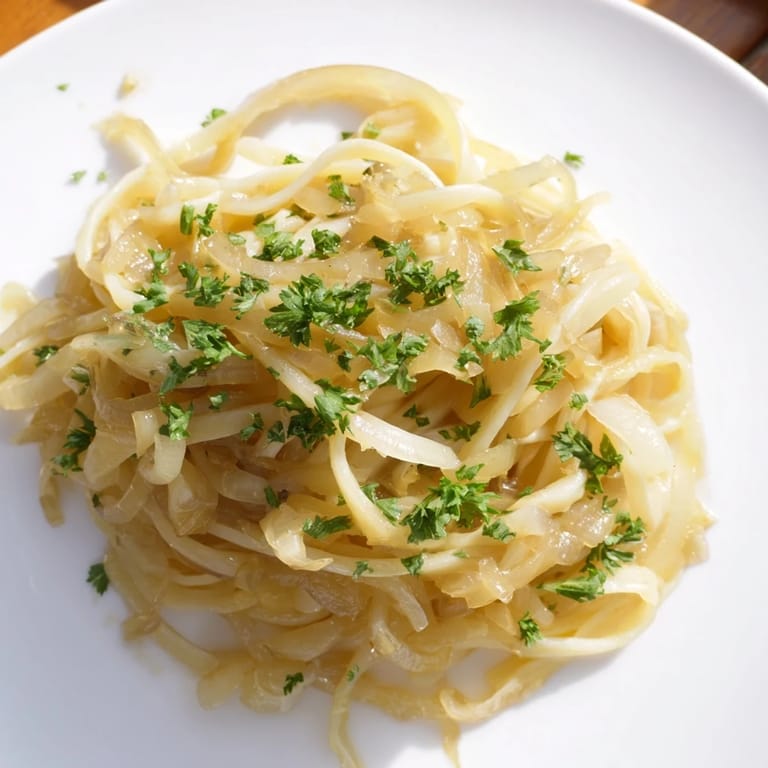
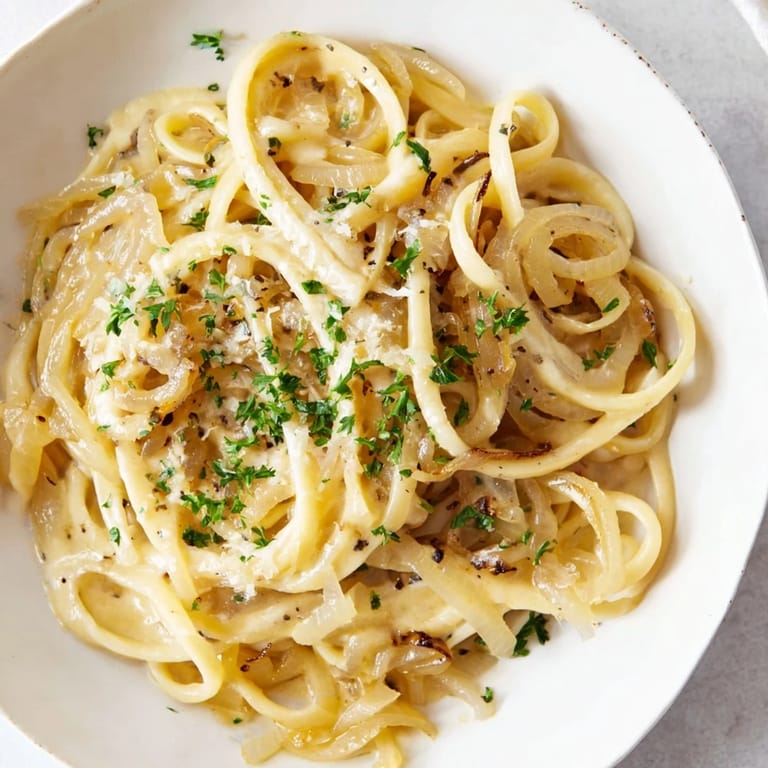
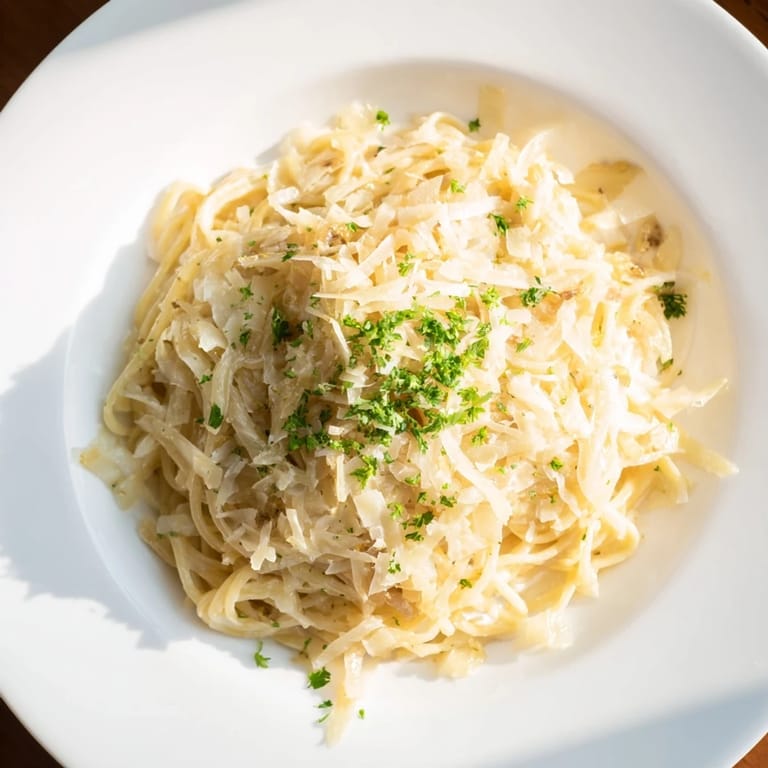
- Divide into bowls, garnish with fresh parsley and a pinch of extra cheese, and serve immediately while everything is hot and creamy.
 Save to Pinterest
 There's a moment right when the cheese melts into those caramelized onions and pasta—a moment when the whole pot becomes silky and golden—that reminds me why cooking for people matters. It's humble food, but it feels like you've given them something real.
Why This Recipe Works
French onion soup is beloved for a reason: caramelized onions are naturally sweet and rich, and they pair beautifully with savory cheese and wine. By building that same flavor profile into a pasta dish, you get all the comfort of the soup without the bread bowl ritual. The one-pot method means the pasta soaks up all that golden broth as it cooks, so every bite tastes like it's been simmering for hours. And unlike the traditional soup, there's no cheese crust on top to navigate—just creamy, cheesy pasta that comes together in about an hour.
Variations and Swaps
This dish is forgiving and adaptable. If you want deeper, meatier flavor, use beef broth instead of vegetable broth—it transforms the dish into something more substantial. Some cooks add sautéed mushrooms or even crispy pancetta pieces for extra texture and umami. If Gruyère isn't available or feels too expensive, Swiss cheese works, though it's milder and less nutty. You can also finish the dish with a splash of cognac or brandy instead of white wine for an even richer interpretation. The only thing I wouldn't change is the caramelization time—that's the non-negotiable heart of everything.
Pairing and Serving Ideas
Serve this with a glass of the same white wine you cooked with—something crisp and mineral like Sauvignon Blanc or a light Pinot Grigio cuts through the richness perfectly. A simple green salad with sharp vinaigrette on the side is all you need to balance the plate. Some people like crusty bread for soaking up every last drop, though honestly, with pasta in the pot, bread feels almost redundant. This is the kind of dish that's elegant enough for guests but feels like a warm hug on a quiet Tuesday night.
- Make sure your guests know this dish is best eaten hot, straight from the pot.
- Leftover pasta will thicken as it cools; reheat gently with a splash of broth to restore the creamy consistency.
- This dish does not keep well past a day or two, so make it when you plan to eat it.
 Save to Pinterest
 This is the kind of recipe that rewards patience and attention, the kind that tastes like you know what you're doing in the kitchen even if you're just figuring it out as you go. Make it once, and you'll make it again.
Recipe FAQs
- → How do I achieve perfectly caramelized onions?
Cook sliced onions over medium heat with butter and oil, stirring occasionally for 20-25 minutes until they reach a deep golden brown.
- → Can I substitute the pasta type?
Yes, fettuccine or linguine work best, but any long pasta can be used as long as it cooks evenly in the broth.
- → What broth options enhance the flavor?
Vegetable broth provides a lighter taste, while beef broth adds deeper richness. Both work well in this dish.
- → Is it necessary to add wine?
White wine deglazes the pan and adds subtle acidity; it’s recommended but can be omitted if preferred.
- → How to make this dish vegetarian?
Use vegetable broth and ensure cheeses do not contain animal rennet to keep it vegetarian-friendly.
- → Can I add extra vegetables?
Yes, sautéed mushrooms or herbs like parsley can enhance flavor and texture without overpowering the core ingredients.