 Save to Pinterest
 There's something almost meditative about standing in front of a pot of tomato soup as it simmers, watching the raw brightness of summer tomatoes slowly transform into something silky and deep. I discovered this recipe on a gray afternoon when my kitchen smelled like nothing at all, and I wanted to change that. One bowl of this soup later, the whole house had shifted—warm, inviting, the kind of smell that makes people pause at your door and ask what you're making.
Last winter, I made this for a friend who'd just moved into her first apartment. She had almost no kitchen equipment except a blender and a pot. Watching her taste it straight from the ladle, eyes closing for just a second, made me realize how powerful simple food can be. That bowl of soup was the first real home-cooked meal in her new place.
Ingredients
- Ripe tomatoes, 1.5 kg, roughly chopped: The backbone of this soup—use whatever tomatoes smell the most like tomatoes. If you grab watery supermarket tomatoes, that's fine too, just cook them down longer to concentrate the flavor.
- Yellow onion, 1 medium, diced: This provides the subtle sweetness that balances tomato acidity. Don't skip it thinking garlic will do the job alone.
- Garlic, 2 cloves, minced: Add it right after the onion softens so it doesn't burn and turn bitter.
- Vegetable broth, 750 ml: Use broth you'd actually want to drink—the flavor matters here since it's not hidden behind anything else.
- Extra virgin olive oil, 2 tbsp plus more for drizzling: This is the finishing touch that makes everything taste intentional. Good olive oil makes a real difference in the last spoonful.
- Fresh basil, 1 small bunch, plus extra for garnish: Add the leaves at the very end when the pot comes off heat so they don't lose their brightness.
- Sugar, 1 tsp optional: Only reach for this if your tomatoes taste sharp. It's not about sweetness—it's about rounding out harsh edges.
- Salt and freshly ground black pepper: Taste as you go and season in layers rather than all at once.
- Heavy cream or plant-based cream, 60 ml optional: Swirl this in if you want richness, or drizzle more olive oil instead for something brighter.
Tired of Takeout? 🥡
Get 10 meals you can make faster than delivery arrives. Seriously.
One email. No spam. Unsubscribe anytime.
Instructions
- Soften the onions gently:
- Pour olive oil into a large pot and let it heat just until it shimmers slightly. Add diced onion and let it sit on medium heat, stirring every minute or so. You're looking for that moment when the edges turn translucent and the kitchen starts to smell like something is happening—about 5 minutes.
- Toast the garlic briefly:
- Once the onion is soft enough to cut with a wooden spoon, scatter in minced garlic. Stir constantly for exactly 1 minute—this is the window between perfect and burnt.
- Let tomatoes collapse into themselves:
- Add all your chopped tomatoes to the pot, scraping in every bit of juice. The mixture will look chunky and angry at first. Stir occasionally and let the tomatoes break down for about 10 minutes, which is when you'll notice the color deepen and the raw edge soften.
- Simmer with patience:
- Pour in vegetable broth and turn the heat down to a gentle simmer—you want bubbles rising slowly, not aggressively. If your tomatoes tasted sharp, sprinkle in the sugar now. Let this all sit uncovered for 15 minutes, which is just enough time for the flavors to get to know each other.
- Add basil and start blending:
- Remove from heat and drop in all the basil leaves—they'll wilt immediately into the warm soup. Use an immersion blender, pushing it gently through the soup in slow circles until you reach that silky, no-chunks state. If you're using a countertop blender, work in two batches and be careful with the hot liquid.
- Taste and adjust everything:
- Once blended, give it a taste. Salt might be needed now, pepper definitely should come in at this stage when you can feel the grains going in. This is your last chance to make it exactly right.
- Finish with ceremony:
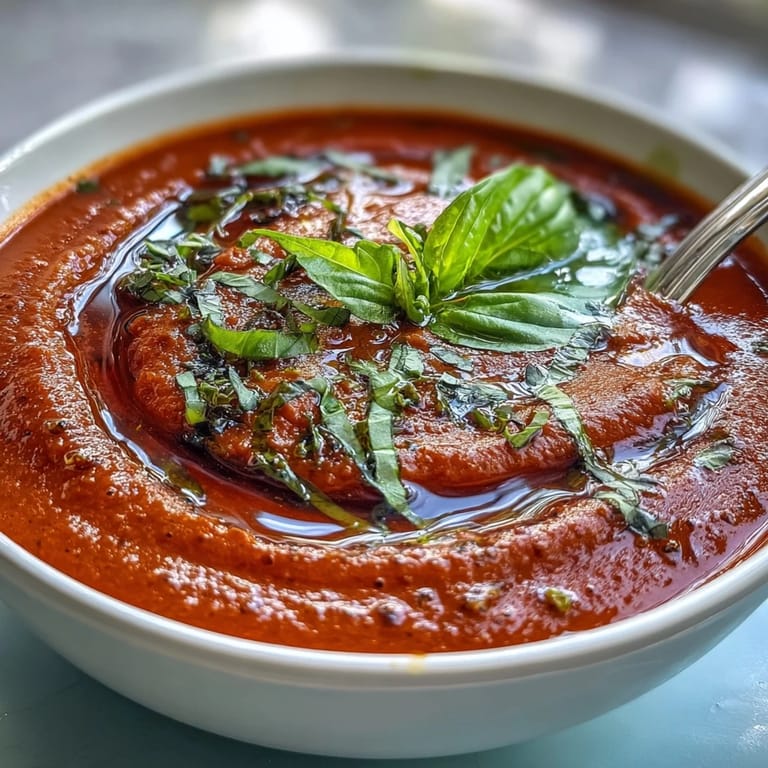
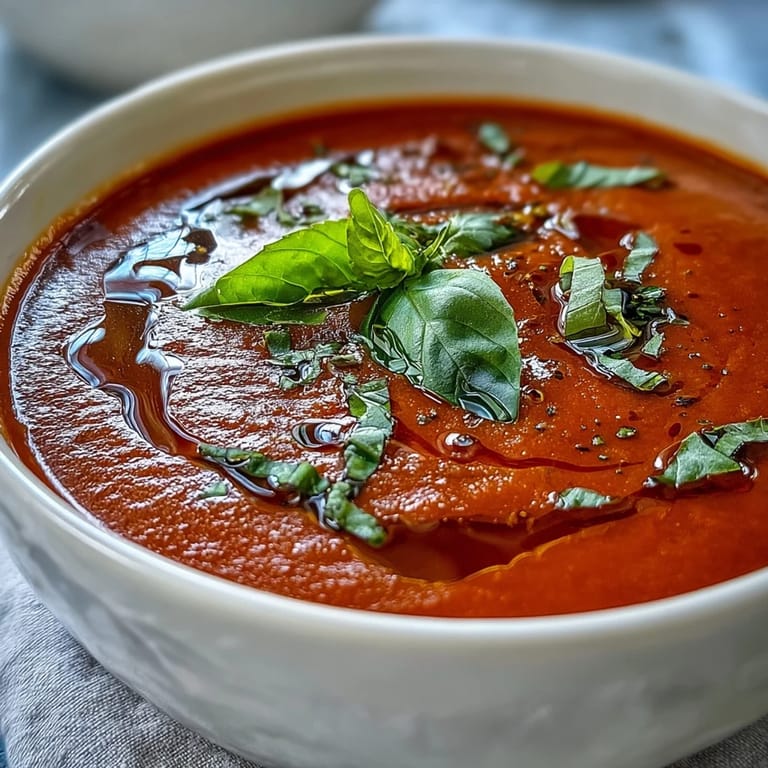
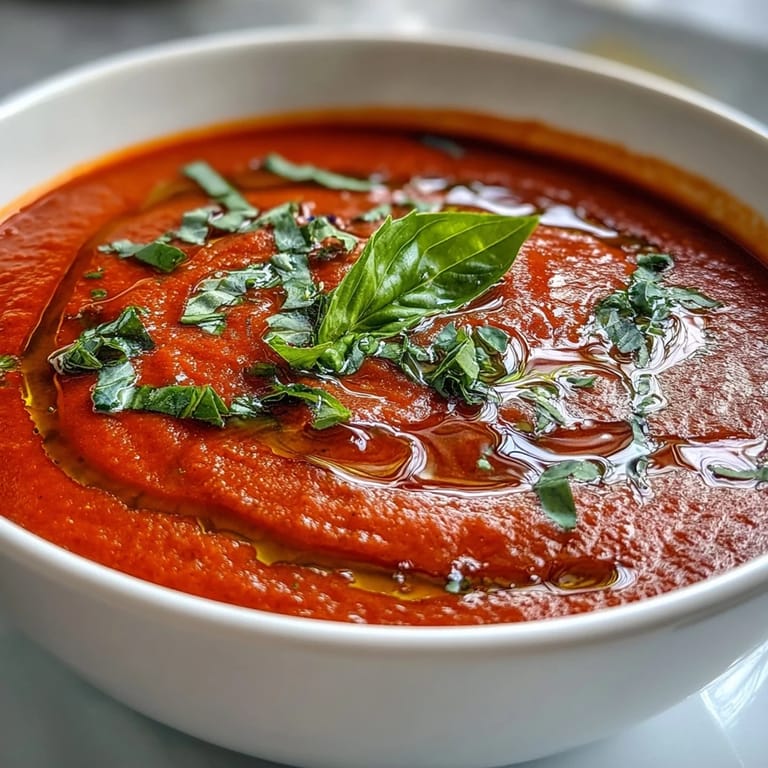
- Ladle into bowls and drizzle with olive oil—do this slowly so it pools on top in a golden circle. Place a basil leaf on each serving, and if you're using cream, swirl it in with a spoon so it creates thin lines across the surface.
 Save to Pinterest
 My neighbor once asked why tomato soup from a can never tastes like mine. I told her it's because canned soup is made in a factory where nobody's kitchen smells like basil and possibility. There's something about making it yourself that adds an ingredient that doesn't show up on any ingredient list.
When to Roast Instead of Raw
On certain days—when tomatoes look good but don't smell particularly tomato-like, or when you want deeper, almost caramelized notes—roasting changes everything. Spread your chopped tomatoes on a sheet pan, drizzle with a little olive oil, and let them sit in a 200°C oven for 30 minutes. They'll shrink down and their edges will brown slightly, concentrating flavor in a way simmering alone cannot. Your kitchen will smell like concentrated summer, and the soup will taste like you've been cooking it all day when you haven't.
Serving Suggestions That Actually Matter
This soup wants something to anchor it, something with texture and substance. Crusty bread torn into pieces works beautifully, soaking up the olive oil and becoming almost a second part of the meal. Grilled cheese sandwiches are the obvious choice, but I've also served it alongside a simple salad when I wanted something lighter, or with roasted vegetables stirred in when I wanted it to feel more like a full dinner. The soup doesn't demand accompaniment though—some days I make it just to sit with a bowl and think about nothing in particular.
Storage and Adaptations for Later
This soup keeps beautifully in the refrigerator for about 4 days, though the basil flavor fades a bit so fresh basil really should be added when you reheat. You can freeze it for up to 3 months in containers or bags—it thaws perfectly and tastes nearly identical to fresh. For a vegan version, use plant-based cream or skip it entirely and let good olive oil do the finishing work. The soup adapts too—add spinach in the last minute of simmering, or stir in white beans or lentils if you want more substance.
- Always add fresh basil after reheating rather than before, so it stays bright and aromatic.
- If the soup separates slightly after freezing, give it a good stir and add a splash of broth to bring it back together.
- Double the recipe without hesitation—it freezes so well that it's almost silly to make just 4 servings.
 Save to Pinterest
 Making tomato soup feels like capturing something fleeting—the taste of a season, the smell of simplicity, the comfort of knowing exactly what goes into your bowl. Every time you make it, you'll find a reason to make it again.
Recipe FAQs
- → Can I make this soup ahead of time?
Absolutely. This soup actually improves in flavor when made ahead and stored in the refrigerator for up to 3 days. The ingredients meld together beautifully.
- → Can I freeze tomato basil soup?
Yes, freeze in airtight containers for up to 3 months. Thaw overnight in the refrigerator and reheat gently on the stove, stirring occasionally.
- → Do I have to peel the tomatoes?
No need to peel them. The blending process breaks down the skins completely, resulting in a smooth texture without extra prep work.
- → How can I make this soup creamy without dairy?
Blend in a cooked potato or add a splash of coconut milk. The puréed vegetables also create natural thickness without any cream.
- → What's the best way to reheat leftovers?
Reheat gently over medium-low heat, stirring frequently. Avoid boiling, which can alter the flavor. Add a splash of broth if it's too thick.