 Save to Pinterest
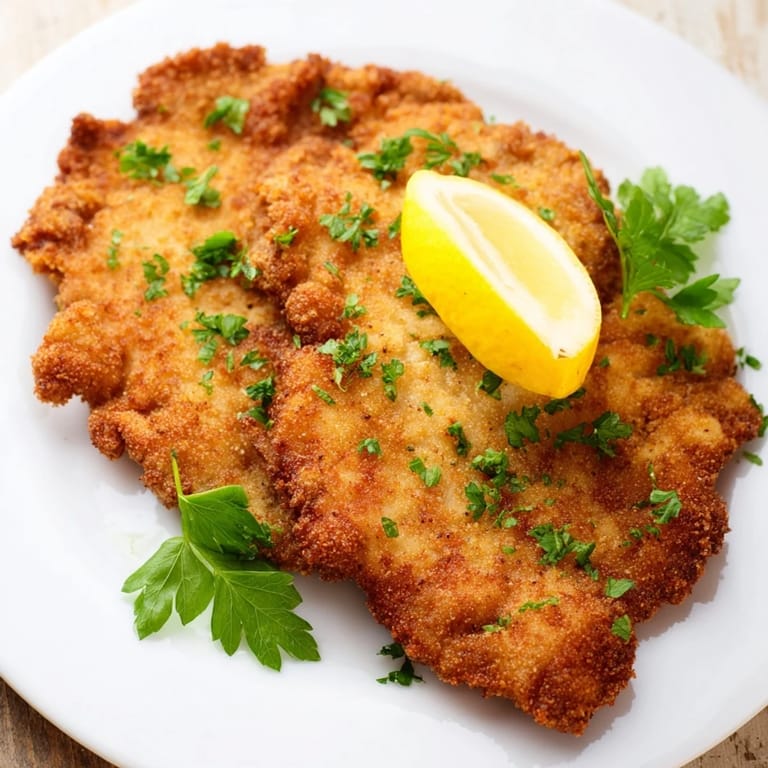
 My first Wiener Schnitzel wasn't made in Vienna at all, but in a cramped kitchen in Berlin where a friend's grandmother showed me the magic of pounding meat so thin it almost turned translucent. She taught me that the sound changes when you've hit the right thickness—a specific hollow tap that means the veal is ready. I've been chasing that same golden, shattering crust ever since, and honestly, it's hard to mess up once you understand what's supposed to happen.
I made this for my partner on a Tuesday night when neither of us wanted to go out, and the smell of clarified butter hitting hot metal got them out of their chair just from the kitchen noise. There's something about the sizzle that announces you're doing something proper, something that matters. By the time the first schnitzel came out golden and steaming, we both forgot we'd planned something casual—we were suddenly eating like it was a celebration.
Ingredients
- Veal cutlets, 4 pieces about 150 g each: Look for pale pink meat that's tender but not mushy; ask the butcher to pound them slightly if they'll do it, as this saves time and ensures even thickness.
- All-purpose flour, 100 g: This is your base layer and should be seasoned lightly with salt and pepper before use.
- Eggs, 2 large, beaten with 4 tbsp milk: The milk thins the egg slightly so it coats more evenly without creating thick clumps.
- Fine dry breadcrumbs, 150 g: Use the finest breadcrumbs you can find; panko will give you a thicker, less delicate crust.
- Clarified butter or neutral oil, 250 ml: This amount seems generous but you need the schnitzel to swim, not just sit; clarified butter tastes better but neutral oil with a high smoke point works fine.
- Lemon, 1, cut into wedges: Squeeze these over the finished schnitzel while it's hot to brighten the richness of the fat.
- Fresh parsley, 2 tbsp chopped (optional): A sprinkle adds color and a hint of freshness that cuts through the heaviness beautifully.
Tired of Takeout? 🥡
Get 10 meals you can make faster than delivery arrives. Seriously.
One email. No spam. Unsubscribe anytime.
Instructions
- Prep and pound your veal:
- Place each cutlet between two sheets of plastic wrap and pound gently but firmly with a meat mallet until the meat is a uniform 1/4 inch thick. You'll feel it loosen up as you work, and the plastic keeps splatter contained. Pat everything dry with paper towels and season both sides with salt and pepper right before breading.
- Set up your breading station:
- Three shallow dishes in a row: flour in the first, beaten eggs with milk in the second, breadcrumbs in the third. This assembly line approach keeps your hands less messy and prevents you from second-guessing yourself mid-coating.
- Bread each cutlet with a light touch:
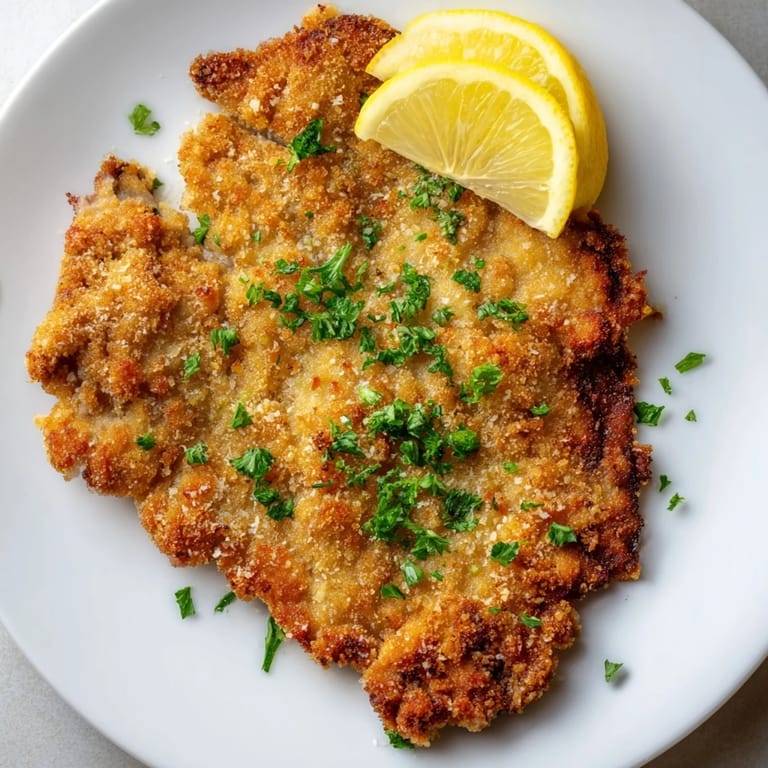
- Dredge in flour and shake off the excess, then dip into egg mixture and let the drips fall back into the dish. Coat with breadcrumbs using a light touch—don't press them in, just let them settle onto the surface. A loose, craggly coating is what gives you that shattering crust.
- Heat your fat until it shimmers:
- Pour clarified butter or oil into a large skillet and set the heat to medium-high. Wait for it to shimmer and move easily across the pan; you're looking for that moment when a tiny piece of bread dropped in sizzles immediately. This is not the time to rush.
- Fry until both sides turn golden:
- Place one or two schnitzels in the hot fat (they should move freely) and fry for 2 to 3 minutes per side until the crust is deep golden brown. Tilt the pan occasionally and spoon the hot fat over the top for even browning and extra crispiness on the upper surface.
- Drain and serve immediately:
- Use a slotted spatula to transfer schnitzels to paper towels for just a moment to drain excess fat. Serve right away with lemon wedges and a sprinkle of parsley if you like.
 Save to Pinterest
 The moment I understood schnitzel was when an older woman at a market in Vienna stopped me mid-chew and said, without introduction, that I was eating it wrong—I should squeeze lemon and eat it with my hands, standing up, which is what she did. She was absolutely right, and it changed how I think about this dish. It's not fancy food pretending to be simple; it's simple food that happens to be utterly perfect.
The Art of the Pound
The pounding step feels silly until you realize it's not about brute force, it's about patience and listening. If you rush and hammer the meat, you'll tear the fibers and end up with something mushy that falls apart in the pan. If you pound gently but steadily, the meat relaxes and becomes tender and uniform, which means it cooks evenly and stays juicy. The plastic wrap is essential not just for keeping your kitchen clean, but because it gives you feedback as you work—you'll feel the meat shift and flatten beneath the mallet, and that's your guide to when you're done.
Fat Temperature and the Perfect Crust
This is not a recipe where you can fake the temperature. If the fat is too cool, the breadcrumb coating will absorb oil before it browns, and you'll end up with something greasy. If the fat is properly hot, the outside will brown and set in seconds, creating a barrier that keeps the inside juicy while the crust shatters. The shimmering surface and the immediate sizzle when the schnitzel touches down are your signals that everything is right. Some recipes tell you to use a thermometer; I prefer watching and listening, but if you need numbers, aim for 170°C or about 340°F.
Serving and Storage
Serve schnitzel the moment it comes out of the pan while the crust is still crisp and the heat is still locked inside. Lemon is not optional—squeeze it over the surface and let the juice soak into the warm breadcrumbs. Traditionally it arrives with potato salad, cucumber salad, or lingonberry jam, and any of these will make the meal feel complete and authentic.
- If you must hold it briefly, place it on a warm plate loosely tented with foil to keep it warm without steaming the crust.
- Leftover schnitzel (if you somehow have any) is good cold the next day, though the crust softens.
- Do not refrigerate in plastic wrap or the moisture will ruin the coating; use a paper towel or plate instead.
 Save to Pinterest
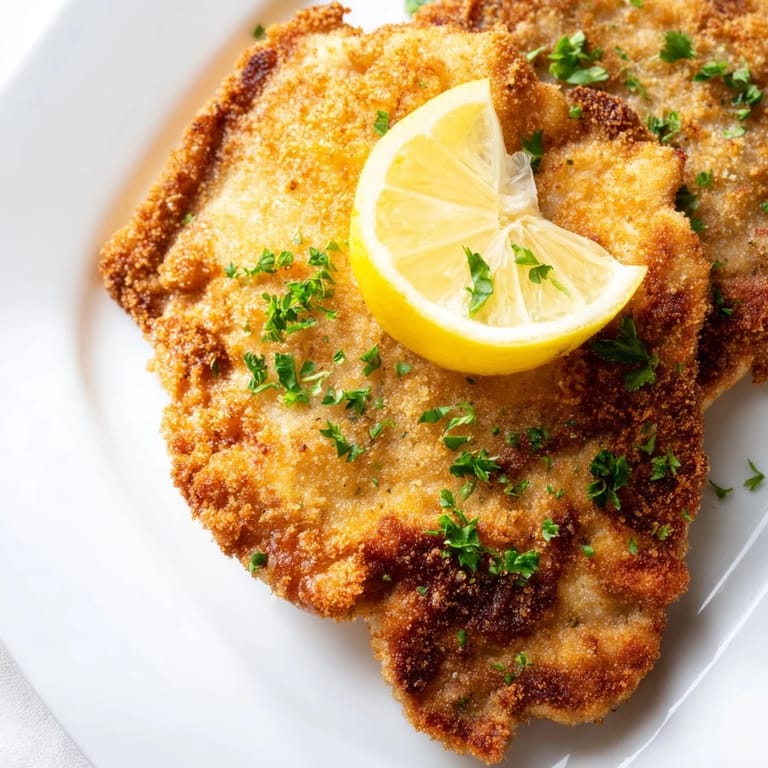
 Every time I make this dish, I'm reminded that perfection doesn't require complexity—just attention and respect for the ingredients. Wiener Schnitzel is proof that sometimes the simplest things, done right, are the ones worth repeating.
Recipe FAQs
- → What type of meat is used for Wiener Schnitzel?
Traditionally, tender veal cutlets, pounded thin to about 1/4 inch thickness, are used to achieve the classic texture and flavor.
- → How is the breading applied to the veal?
The cutlets are first dusted with flour, dipped in a beaten egg and milk mixture, then coated lightly with fine dry breadcrumbs for a crisp finish.
- → What type of fat is best for frying?
Clarified butter is preferred for frying due to its rich flavor and high smoke point, but neutral oil with a high smoke point is an effective alternative.
- → How can I ensure the schnitzel stays crispy?
Maintain the oil temperature and avoid overcrowding the pan to ensure even frying and a golden, crunchy crust without sogginess.
- → What traditional sides complement this dish?
Common accompaniments include potato salad, cucumber salad, or lingonberry jam, adding balance and freshness to the meal.
- → Can other meats be used instead of veal?
While veal is traditional, pork or chicken may be substituted but will alter the authentic Viennese experience.