 Save to Pinterest
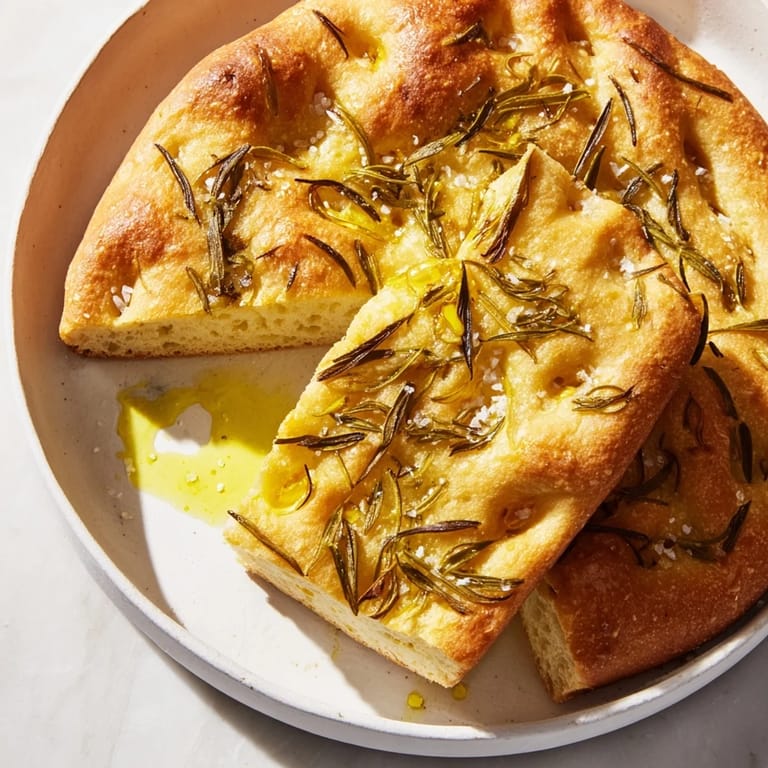
 One rainy Saturday morning, I pulled a golden sheet of focaccia from the oven and the entire kitchen smelled like a bakery in Liguria. My partner wandered in, still half asleep, drawn by the scent of rosemary and olive oil. We tore into it while it was still warm, the crust crackling under our fingers, the inside impossibly soft. That was the moment I realized bread baking wasn't some intimidating craft reserved for professionals—it was just flour, time, and a little bit of faith.
I started making this focaccia for dinner parties because it always bought me time. While guests arrived and poured wine, I'd pull this from the oven, still bubbling with olive oil, and set it on the table. Conversations would pause mid-sentence. Someone would always say they didn't know I baked bread, and I'd just smile, knowing how simple it really was.
Ingredients
- Bread flour: The higher protein content gives focaccia its signature chew and airy crumb, though all-purpose works in a pinch.
- Instant dry yeast: No need to bloom it—just mix it straight into the flour and let it do its quiet work.
- Fine sea salt: This goes into the dough for structure, while the flaky salt on top is pure texture and flavor.
- Extra virgin olive oil: Use the good stuff here, it soaks into every dimple and becomes part of the crust.
- Lukewarm water: Too hot kills the yeast, too cold slows it down—aim for barely warm to the touch.
- Fresh rosemary: Strip the leaves gently and chop them coarse so they release their piney fragrance as they bake.
- Flaky sea salt: Those crunchy crystals on top are non-negotiable, they make every bite a little event.
Tired of Takeout? 🥡
Get 10 meals you can make faster than delivery arrives. Seriously.
One email. No spam. Unsubscribe anytime.
Instructions
- Mix the Dough:
- Whisk together the flour, yeast, and fine salt in a large bowl until evenly combined. Pour in the olive oil and lukewarm water, then stir with a wooden spoon until a shaggy, sticky dough forms.
- Knead Until Smooth:
- Turn the dough onto a lightly oiled counter and knead for 8 to 10 minutes, folding and pressing until it becomes smooth, elastic, and just a little tacky. It should bounce back when you poke it.
- Let It Rise:
- Place the dough in a lightly oiled bowl, cover with plastic wrap or a damp towel, and let it rest in a warm spot for about an hour. It should puff up and double in size, soft and airy to the touch.
- Prep the Pan:
- Line a baking sheet with parchment paper and drizzle it with a tablespoon of olive oil. This keeps the bottom from sticking and adds a golden, crispy base.
- Stretch the Dough:
- Transfer the risen dough to the prepared sheet and gently press and stretch it with your fingertips to fill the pan. Cover loosely and let it rise again for 30 minutes until puffy.
- Preheat and Dimple:
- Heat your oven to 220°C while the dough rests. Once risen, press your fingertips all over the surface to create deep dimples that will catch olive oil and salt.
- Add the Toppings:
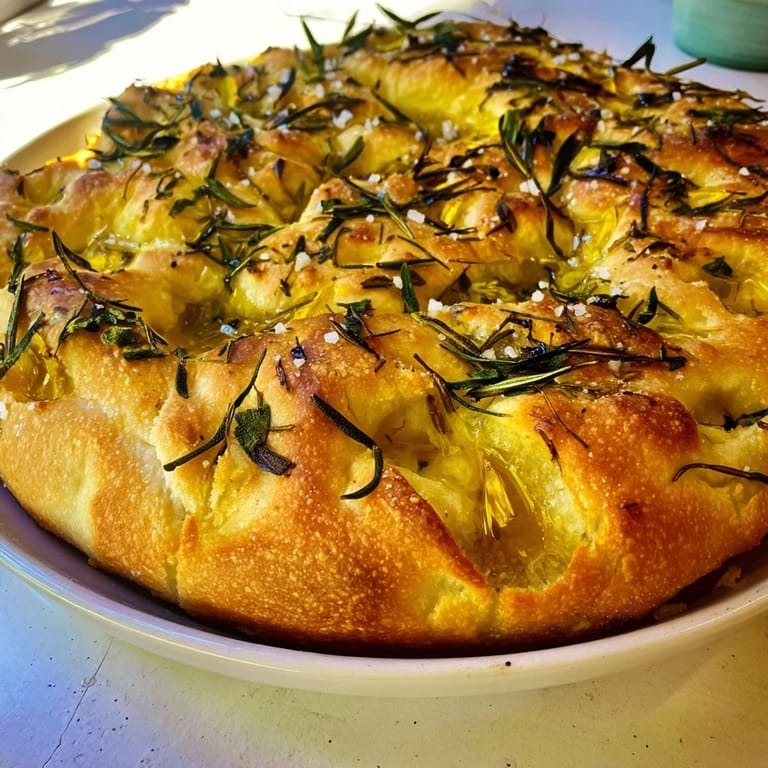
- Drizzle the remaining olive oil generously over the dough, letting it pool in the dimples. Scatter chopped rosemary and flaky sea salt evenly across the top.
- Bake Until Golden:
- Slide the pan into the hot oven and bake for 20 to 25 minutes, until the edges are crisp and golden and the top is deeply bronzed. The smell will be intoxicating.
- Cool and Serve:
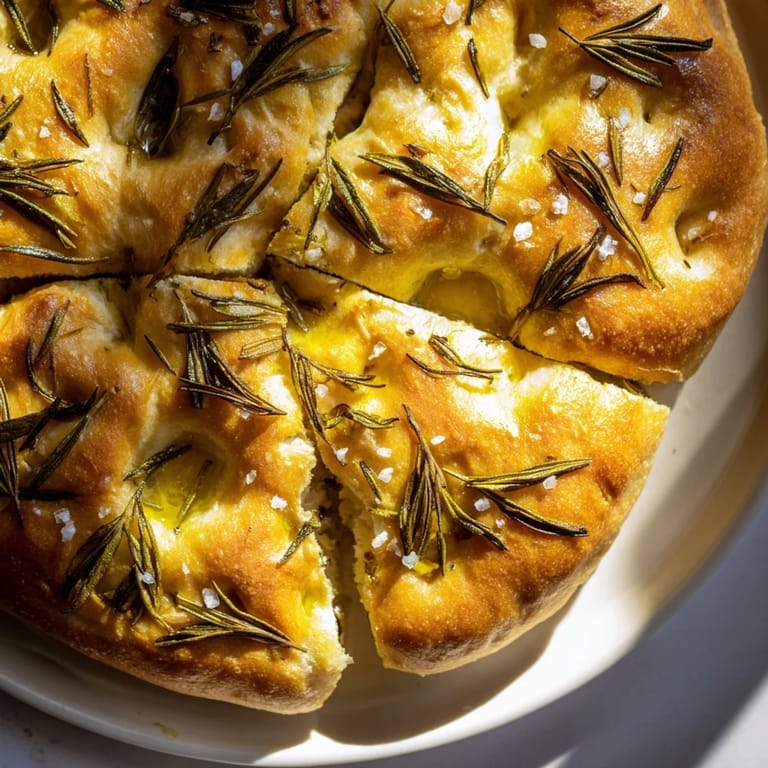
- Let the focaccia cool on the pan for a few minutes, then slice it into squares or tear it with your hands. Serve it warm or at room temperature, with or without a dipping bowl of olive oil.
 Save to Pinterest
 The first time I served this to my neighbor, she asked if I'd picked it up from the Italian deli down the street. When I told her I'd made it that afternoon, she looked at me like I'd revealed a magic trick. We sat on the porch, tearing off pieces, talking about nothing in particular, and the focaccia disappeared before the sun went down.
Making It Your Own
Once you've made the basic version a few times, you'll start seeing focaccia as a canvas. I've pressed halved cherry tomatoes into the dough before baking, scattered thinly sliced red onion and thyme, even tucked in chunks of roasted garlic. Some nights I skip the rosemary entirely and go for black olives and coarse pepper. The dough doesn't care, it just wants to be dimpled and loved.
Storage and Reheating
Focaccia is at its absolute best the day you bake it, but leftovers can be wrapped in foil and kept at room temperature for a day or two. To bring it back to life, wrap it loosely and warm it in a low oven for about ten minutes. The crust crisps up again and the inside softens, almost like it's fresh. I've also frozen slices wrapped tightly in plastic, then thawed and toasted them for quick lunches.
Serving Suggestions
I love setting out a small dish of good olive oil mixed with a splash of balsamic vinegar for dipping. Sometimes I'll serve focaccia alongside a big bowl of pasta, using it to soak up every last bit of sauce. It also makes an incredible sandwich bread—slice it horizontally, fill it with mozzarella, tomatoes, and basil, then press it in a hot pan until the cheese melts.
- Pair it with a simple arugula salad dressed in lemon and olive oil.
- Serve it warm with whipped ricotta and honey for an unexpected appetizer.
- Use it to accompany soups, stews, or any dish that begs for bread to mop up the bowl.
 Save to Pinterest
 Every time I pull a tray of focaccia from the oven, I'm reminded that the best recipes aren't complicated, they're just generous with time and attention. This one never lets me down.
Recipe FAQs
- → How do I achieve a fluffy focaccia texture?
Use bread flour and allow the dough to rise twice. Gentle kneading and proper hydration also help create the airy crumb.
- → Can I add toppings before baking?
Yes, fresh rosemary and sea salt are classic, but halved cherry tomatoes or olives can be added for extra flavor.
- → What’s the best way to bake focaccia evenly?
Preheat the oven to a high temperature and ensure the dough is stretched evenly on the parchment-lined baking sheet.
- → How do I prevent the dough from sticking while kneading?
Lightly oil your hands and work surface to keep the dough manageable without sticking.
- → Can focaccia be served cold or reheated?
It’s best served warm or at room temperature but can be refreshed in a warm oven to regain crispness.