 Save to Pinterest
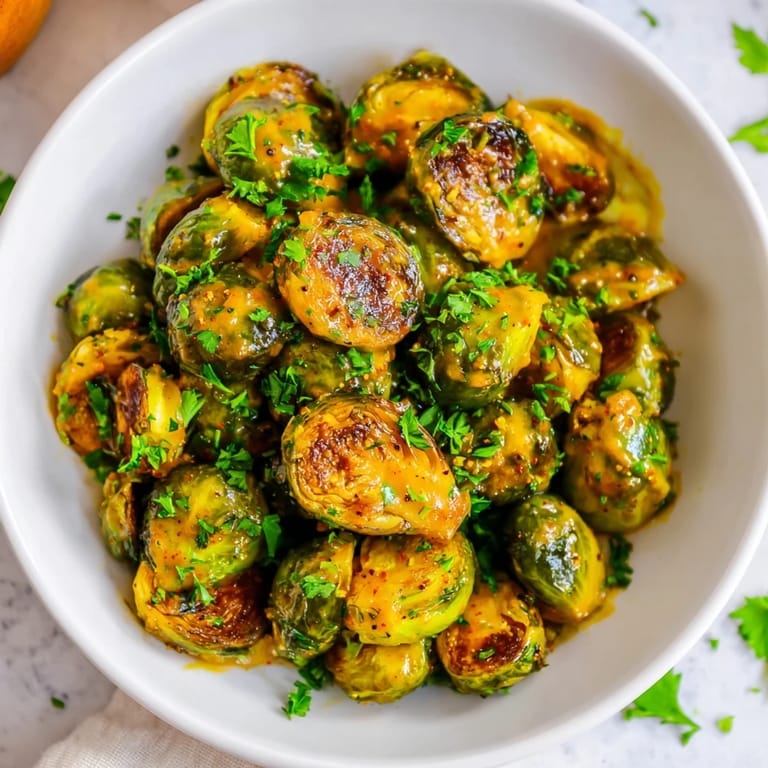
 There's something about the smell of Brussels sprouts hitting a hot pan that makes me stand a little taller in the kitchen. The first time I tried this honey-mustard version, I was feeding a group of skeptics—the kind of people who'd spent decades avoiding anything green and cruciferous. Twenty-five minutes later, there wasn't a single sprout left on the platter. What changed everything was that glaze: tangy mustard playing against floral honey, with just enough vinegar to keep things honest.
I remember my neighbor peering over the fence one evening while these were roasting, drawn in by the aroma alone. She thought I'd spent hours on some complicated side dish. When I told her the whole thing takes ten minutes to prep, she asked for the recipe right then and there, standing in the yard with her arms crossed like she'd discovered something important. That's when I knew this wasn't just another roasted vegetable situation.
Ingredients
- Brussels sprouts, 1 lb trimmed and halved: Look for ones that feel heavy for their size and have tight, unblemished leaves; halving them exposes more surface area for that all-important caramelization.
- Olive oil, 2 tbsp: This carries the glaze onto every sprout and helps them brown beautifully; don't skimp on quality here.
- Honey, 2 tbsp: Provides sweetness and helps create that glossy, caramelized finish that makes people take seconds.
- Dijon mustard, 1½ tbsp: Brings a sophisticated tang that prevents the dish from feeling one-note sweet.
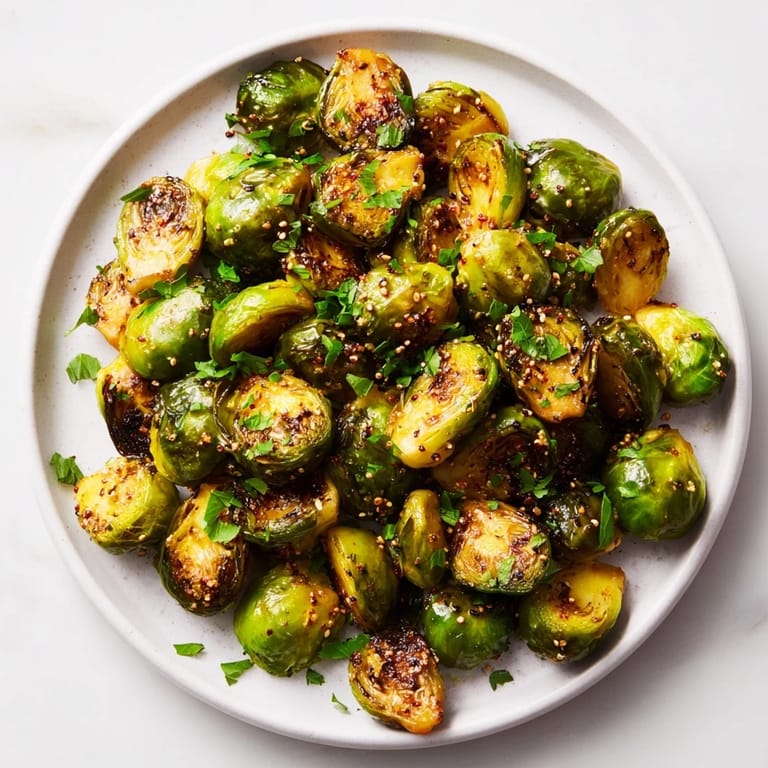
- Whole-grain mustard, 1 tbsp: Those little seeds add texture and a gentle, grainy depth that regular mustard can't match.
- Garlic powder, ½ tsp: Adds savory backbone without requiring fresh garlic prep; the powder disperses evenly throughout the glaze.
- Apple cider vinegar, 1 tbsp: This is the secret weapon—it brightens everything and keeps the honey from cloying.
- Salt and black pepper, ½ tsp and ¼ tsp: Season boldly; these quantities are just a starting point depending on your salt preferences.
- Fresh parsley, 2 tbsp chopped: A optional garnish that adds color and a fresh note right before serving.
Tired of Takeout? 🥡
Get 10 meals you can make faster than delivery arrives. Seriously.
One email. No spam. Unsubscribe anytime.
Instructions
- Get your oven ready:
- Preheat to 425°F and line a baking sheet with parchment paper so nothing sticks and you can avoid the scrubbing later.
- Build the glaze:
- Whisk together the olive oil, honey, both mustards, garlic powder, apple cider vinegar, salt, and pepper until smooth and glossy. This is where the magic happens—taste it and adjust if you want more tang or sweetness.
- Coat the sprouts:
- Toss the halved Brussels sprouts in the glaze until every piece is slicked and shimmering. Use your hands if you need to; it's faster and you'll make sure nothing gets left behind in the bowl.
- Arrange for maximum browning:
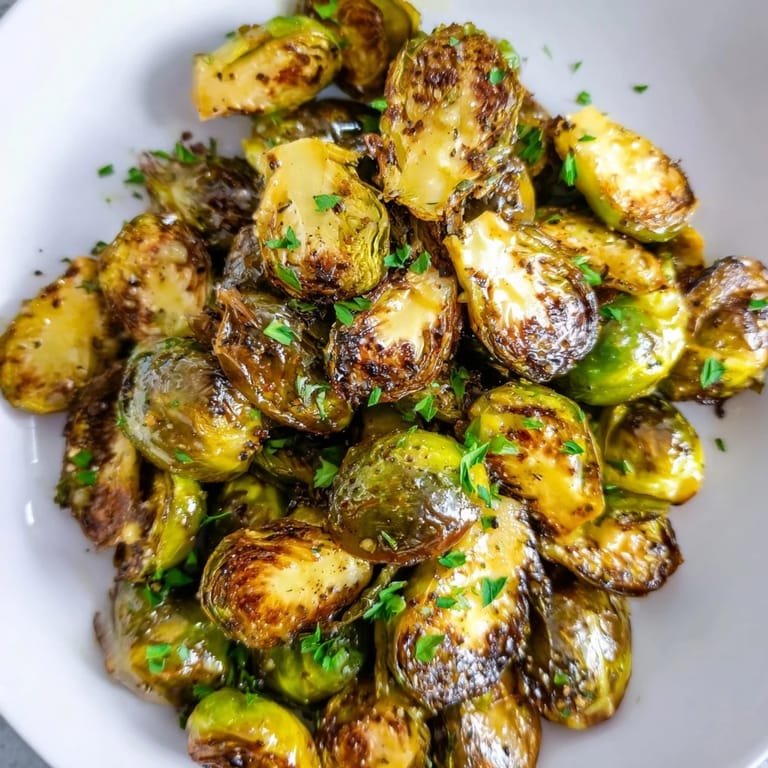
- Spread them cut side down on the prepared sheet in a single layer. The flat surface against the hot pan is what creates those caramelized, golden faces you're after.
- Roast with intention:
- Slide into the oven for 20 to 25 minutes, flipping halfway through so they brown evenly on both sides. You'll know they're done when the edges look almost burnished and a fork pierces the thickest part easily.
- Finish and serve:
- Transfer to a serving dish and sprinkle with fresh parsley if you want that fresh accent. Serve right away while they're still warm and the outsides are crispy.
 Save to Pinterest
 Last Thanksgiving, my kid, who'd spent years declaring Brussels sprouts disgusting, asked for thirds of these. That simple moment—watching someone change their mind about something because it actually tasted good—reminded me why I cook at all. Food has this quiet power to shift perspective when you get it right.
Why This Glaze Works
The combination of Dijon and whole-grain mustard creates layers of flavor instead of a flat, one-note tang. Honey adds sweetness, but apple cider vinegar snaps it back into balance so nothing feels cloying. The garlic powder grounds everything in savory territory, preventing the dish from tipping into dessert territory. What makes this different from just drizzling honey mustard over roasted vegetables is the way heat caramelizes these ingredients together, transforming them into something unified and complex.
Customizing to Your Taste
This recipe is forgiving and designed to let you make it yours. If you like heat, a pinch of red pepper flakes stirred into the glaze adds warmth without overwhelming the mustard and honey balance. For a deeper, more autumnal flavor, swap maple syrup for the honey—it changes the whole character without breaking anything. Toasted nuts scattered over the finished dish add crunch and richness; pecans and walnuts both work beautifully, and so do chopped almonds if that's what you have on hand.
Timing and Make-Ahead Tips
The beauty of this recipe is its speed, but you can prep ahead if you're cooking for a crowd. Trim and halve your Brussels sprouts the morning of, store them in a container, and make the glaze up to a few hours before cooking—just whisk it again before tossing. You can also roast them completely and reheat gently in a 350°F oven for about five minutes if your timing gets tight. Don't skip the fresh parsley finish if you have it; that moment of brightness just before serving makes the whole dish feel intentional.
- Prep Brussels sprouts and store covered in the refrigerator until cooking time.
- Make the glaze ahead but whisk again just before coating the sprouts.
- Reheat finished sprouts gently if needed, but serve fresh from the oven for the crispiest texture.
 Save to Pinterest
 This dish has a way of surprising people and turning skeptics into fans. Once you nail it once, you'll find yourself making it over and over, especially when you need something that feels special but doesn't demand much from you.
Recipe FAQs
- → How do I achieve caramelization on the Brussels sprouts?
Roast the sprouts cut side down on a parchment-lined baking sheet at 425°F for 20–25 minutes, flipping halfway for even caramelization.
- → Can I substitute honey with another sweetener?
Yes, maple syrup works well as a vegan-friendly alternative without compromising the glaze's sweetness.
- → What type of mustard works best in the glaze?
A combination of Dijon and whole-grain mustard gives the glaze a balanced tang and texture.
- → Is it possible to add some heat to the glaze?
Try a pinch of chili flakes stirred into the glaze for a mild spicy kick that complements the sweetness.
- → How should I store leftovers?
Keep cooled leftovers in an airtight container in the refrigerator for up to 3 days. Reheat gently to preserve glaze texture.