 Save to Pinterest
 I made these pickled carrots by accident one Tuesday after buying way too many carrots at the farmer's market. Instead of letting them wilt in the crisper drawer, I grabbed some vinegar and spices I had lying around, and within an hour I had something that tasted like it came from a proper deli counter. The best part? That first crisp bite, still warm from the brine, convinced me I'd somehow become a proper pickler overnight.
My roommate came home to the smell of simmering vinegar and mustard seeds and thought something was burning. When she tasted one of these straight from the jar the next morning, she started making her own batch every Sunday. That's when I knew I'd stumbled onto something that actually works.
Ingredients
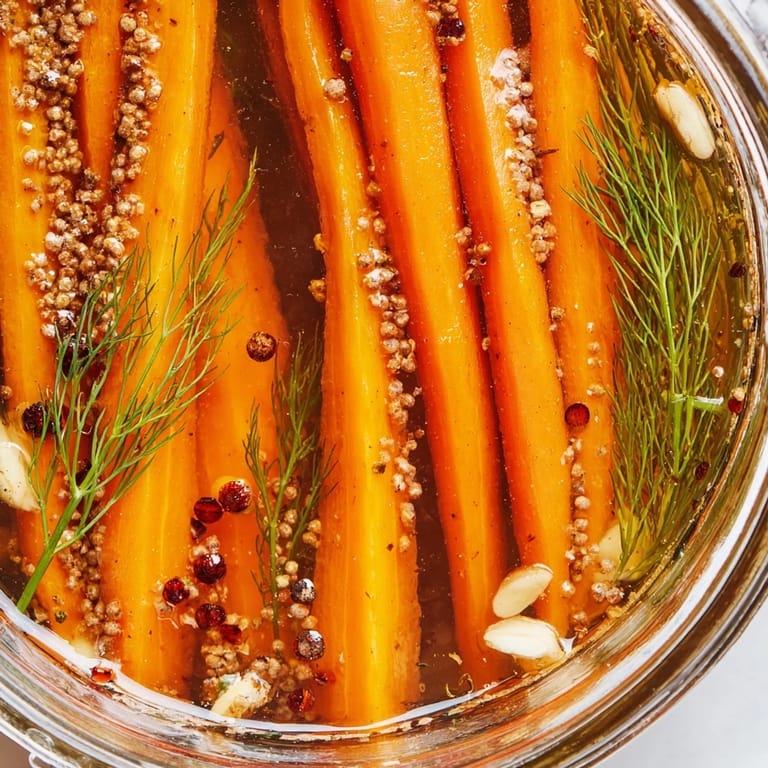
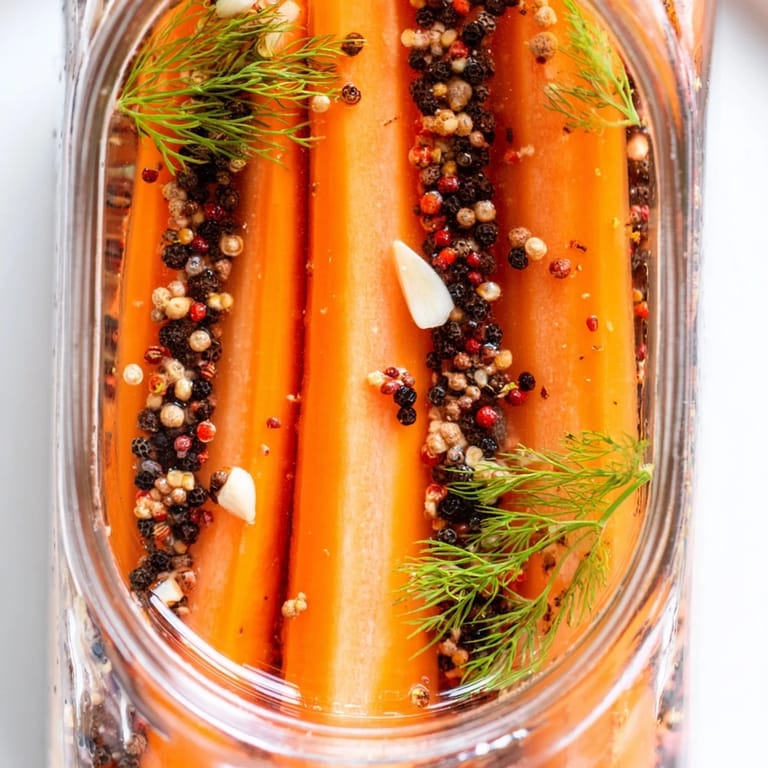
- Carrots: Four large ones give you enough spears to fill a quart jar with room to spare; peel them first so the brine penetrates better and they stay bright orange.
- Distilled white vinegar: Use distilled, not apple cider—the clarity keeps these pickles looking clean and bright in the jar.
- Water: This dilutes the vinegar just enough so it's tangy but not harsh; don't skip it.
- Granulated sugar: Two tablespoons rounds out the brine's sharpness with a subtle sweetness that balances everything.
- Kosher salt: This is the seasoning foundation; regular table salt works but kosher salt dissolves more smoothly.
- Garlic cloves: Halve them so they release their flavor into the brine without overpowering the carrots.
- Black peppercorns: Whole ones add warmth and a gentle bite without making the brine murky.
- Mustard seeds: These tiny orbs add a subtle tang and texture that makes you notice they're there.
- Coriander seeds: A quiet spice that brings earthiness without announcing itself.
- Crushed red pepper flakes: Optional, but add these if you want a gentle warmth that builds as you eat.
- Fresh dill: Two sprigs perfume the whole jar; fresh is better than dried here because you want that bright herbaceous note.
Tired of Takeout? 🥡
Get 10 meals you can make faster than delivery arrives. Seriously.
One email. No spam. Unsubscribe anytime.
Instructions
- Prepare your jar and carrots:
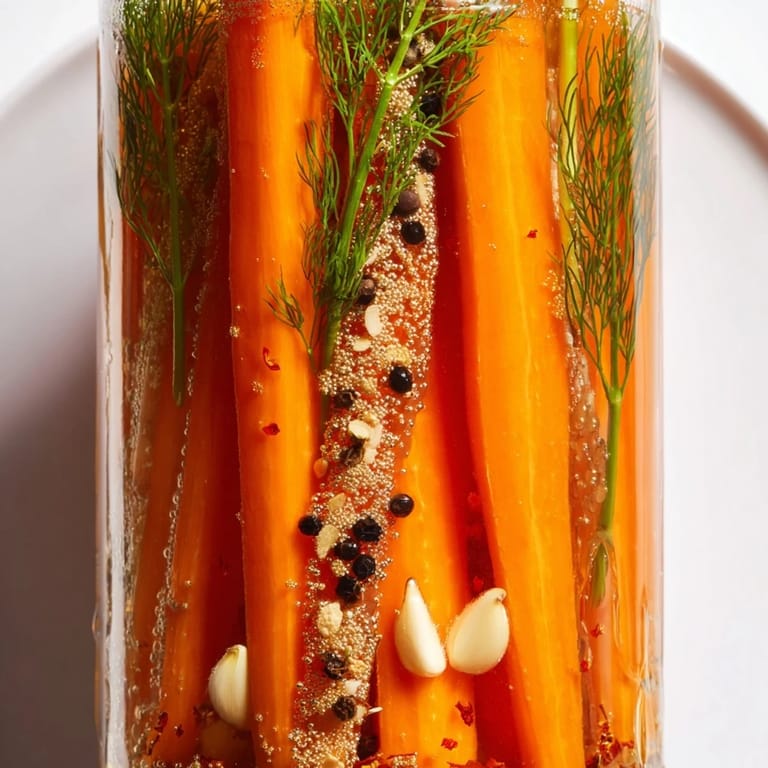
- Stand the carrot spears upright in your clean quart jar like little soldiers. Tuck the garlic halves, dill sprigs, and all your spices into the gaps between them—this way everything gets distributed evenly and looks intentional.
- Make the brine:
- Pour vinegar, water, sugar, and salt into a small saucepan and set it over medium heat. Stir occasionally until you see the sugar and salt fully dissolve; it takes about three to four minutes and you'll know it's done when the liquid looks clear and the grains are gone.
- Pour and cool:
- Carefully pour the hot brine over your carrots, making sure every spear is submerged—if any stick up above the liquid, they'll turn soft instead of staying crisp. Let the whole jar sit uncovered on your counter until it reaches room temperature; this takes about thirty minutes and lets the flavors settle.
- Seal and chill:
- Once cooled, cap the jar with its lid and slide it into the refrigerator. An hour is the minimum before you can eat them, but overnight is when they really come into their own.
 Save to Pinterest
 I brought a jar of these to a potluck once and they disappeared before the main dishes came out. Someone asked for the recipe right there at the table, and I realized how satisfying it is when something you made without fanfare becomes the thing people actually wanted.
How to Store Them
These pickles keep for up to two weeks in the refrigerator, though they're usually gone long before that. The brine actually gets more flavorful as the days pass, so don't hesitate to keep them around. If you want them to last longer, you could process them using proper canning methods, but I've never needed to because they disappear too quickly.
Ways to Use These Pickles
Beyond eating them straight from the jar like I do, these pickles show up everywhere in my kitchen. They add brightness to tacos, body to cheese boards, and a welcome crunch on sandwiches. I've even chopped them up and stirred them into mayo for a tangy spread that makes ordinary roast beef feel special.
Flavor Variations to Try
Once you nail the basic recipe, the brine is your canvas. Jalapeño slices add a slow-building heat that sneaks up on you, while swapping the dill for thyme brings an entirely different mood to the jar. I've experimented with adding a star anise pod, a strip of lemon zest, or even a few whole cloves, and every variation has taught me something new about how flavor compounds build in brine.
- Jalapeños bring spice that intensifies over the days; add two or three thin slices for gradual heat.
- Fresh thyme replaces dill for an earthier, more Mediterranean feel that pairs beautifully with roasted meats.
- A small strip of lemon zest adds brightness that keeps the pickles from feeling heavy after a week in the fridge.
 Save to Pinterest
 These quick pickles taught me that some of the best kitchen discoveries come from leftovers and open jar syndrome. Now they're something I make on autopilot whenever I need a reliable side, a gift for neighbors, or proof that I actually know what I'm doing in the kitchen.
Recipe FAQs
- → How long should the carrot spears chill?
At least 1 hour is recommended for quick tanginess, but chilling for 24 hours improves flavor depth.
- → Can I add heat to the brine?
Yes, slices of jalapeño or crushed red pepper flakes can be included for a spicy kick.
- → What spices enhance the brine flavor?
Garlic, black peppercorns, mustard seeds, coriander seeds, and fresh dill add aromatic and zesty notes.
- → How should the carrots be stored after pickling?
Keep refrigerated in a sealed jar. They stay fresh and crunchy for up to two weeks.
- → What dishes pair well with these tangy carrot spears?
They complement sandwiches, tacos, cheese boards, or can be enjoyed as a flavorful snack.