 Save to Pinterest
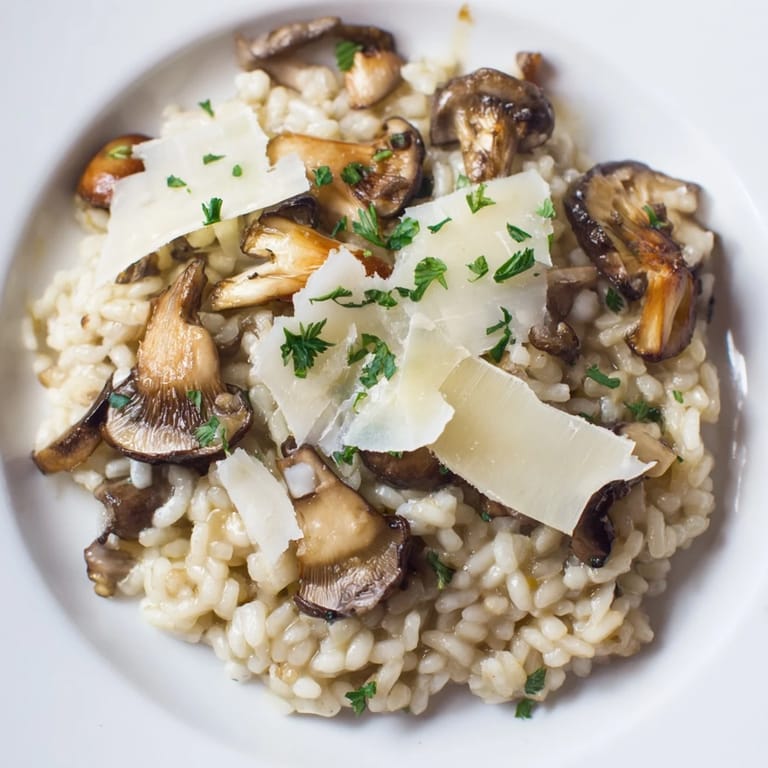
 There's something almost meditative about stirring risotto. Years ago, I was invited to dinner at a friend's apartment in Milan, and watching their nonna work this rice was like witnessing a quiet ritual—the slow addition of broth, the constant gentle stirring, the way the kitchen filled with the earthy smell of mushrooms and butter. I've been chasing that feeling in my own kitchen ever since, and somehow, this version gets me closest.
I made this for a dinner party once when my partner's parents were visiting, and I remember my hands shaking slightly as I stood at the stove, ladle in hand, wondering if I'd somehow ruin it. Midway through, my partner's dad wandered into the kitchen and asked if he could watch, and instead of being nervous, I relaxed. By the time we sat down to eat, it was perfect—creamy, rich, with just enough bite to the rice—and somehow it felt like the dinner mattered more because of those quiet minutes we'd shared in the kitchen.
Ingredients
- Arborio rice: This short-grain rice has a higher starch content that releases during cooking, creating that signature creamy texture without needing cream—it's what makes risotto actually work.
- Mixed wild mushrooms: Cremini, shiitake, and porcini each bring different earthy notes; don't skip the variety because it builds layers of flavor that a single type can't deliver.
- Vegetable broth: Keep it warm in a separate pot on the stove so each ladleful releases into the rice gently rather than shocking it with cold liquid.
- Dry white wine: It cuts through the richness and adds brightness; the alcohol cooks off but leaves the acidity behind.
- Parmesan cheese: Freshly grated makes all the difference—pre-grated versions have anti-caking agents that prevent melting smoothly into the rice.
- Cold butter: Added at the end, this technique called mantecatura creates an emulsion that gives the risotto its glossy, luxurious finish.
Tired of Takeout? 🥡
Get 10 meals you can make faster than delivery arrives. Seriously.
One email. No spam. Unsubscribe anytime.
Instructions
- Start with the foundation:
- Heat olive oil and butter in your large skillet over medium heat, then add the finely chopped onion. Let it soften for 3 to 4 minutes until it turns translucent—this takes longer than you think it will, but that's exactly right.
- Build the mushroom layers:
- Add minced garlic and cook just until fragrant, about a minute, then tumble in your sliced mushrooms. Sauté for 5 to 7 minutes, stirring occasionally, until they're golden and any liquid they release has evaporated—this step concentrates their flavor.
- Toast the rice:
- Stir in the Arborio rice and let it cook for 1 to 2 minutes, moving it around the pan so each grain gets coated in the oil and butter. You'll hear a subtle clicking sound as the grains toast slightly.
- Deglaze with wine:
- Pour in the dry white wine and stir constantly until the liquid is absorbed into the rice, about 2 to 3 minutes. This happens faster than you might expect.
- The slow dance with broth:
- Add the warm vegetable broth one ladle at a time, stirring frequently and waiting until most of the liquid has been absorbed before adding the next ladleful. This takes about 18 to 20 minutes and is the heart of the risotto process—don't rush it or skip the stirring because that's what coaxes the creaminess out.
- Finish with finesse:
- Remove from heat and immediately stir in the cold butter cubes, freshly grated Parmesan, and half the fresh parsley. Season carefully with salt and pepper, tasting as you go.
- Rest and serve:
- Let the risotto sit for 2 minutes to settle, then divide among bowls and serve right away, finishing each bowl with a scatter of remaining parsley and a generous handful of extra Parmesan.
 Save to Pinterest
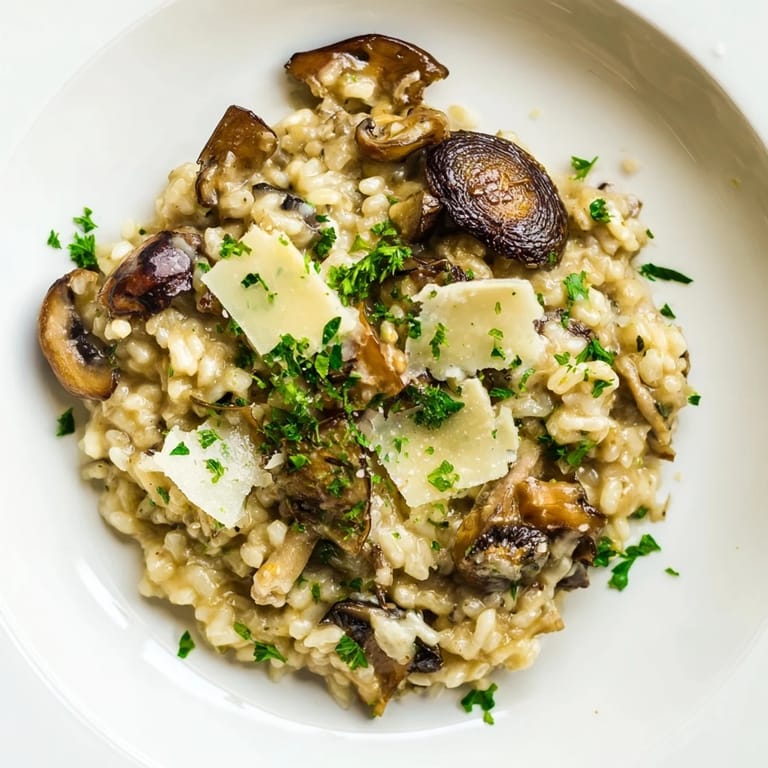
 The moment I truly understood this dish was the first time someone at my table closed their eyes while eating it and just sat there quietly for a second. No words, just that small acknowledgment that something ordinary—rice, mushrooms, butter—had been transformed into comfort. That's when risotto stopped being a technique for me and became something worth the attention it demands.
The Mushroom Question
The best version of this dish comes from using mushrooms that have actually been foraged or at least sourced from a market where someone knows where they came from. If you can't find wild mushrooms, cremini and button mushrooms work fine, but dried porcini mushrooms rehydrated in hot water and stirred into the broth add a depth that's impossible to fake. I learned this by accident one autumn when I was out of fresh mushrooms and had a bag of dried ones left from the previous season—the resulting risotto was so much richer that I've never gone back to using only fresh.
Vegetable Broth as Backbone
The quality of your broth matters more than you might think because it's not just liquid—it's the flavor foundation for every spoonful. A thin, flavorless broth results in risotto that tastes flat no matter how good your other ingredients are, while a deeply flavored, well-seasoned broth carries the whole dish. If you have the time, I make my own vegetable broth by simmering onion skins, carrot trimmings, celery, and thyme for an hour, then straining it. This costs almost nothing and transforms the final result.
Variations and Timing
This risotto is flexible enough to welcome additions if you're cooking for people with different tastes. A small handful of fresh thyme stirred in with the mushrooms adds an earthy note, while a pinch of saffron bloomed in the warm broth creates a more luxurious version. Some nights I finish with crispy sage leaves fried in butter instead of parsley, or I'll add a handful of baby spinach in the last minute of cooking. Whatever you choose, add it confidently because risotto rewards adjustments.
- If you prefer a vegetable-forward version, stir in roasted asparagus or peas during the last ladle of broth.
- For a wine pairing, serve this with a crisp Pinot Grigio that echoes the white wine in the rice.
- Leftover risotto can be pressed into patties, chilled, and pan-fried into crispy risotto cakes the next day—completely different texture, completely delicious.
 Save to Pinterest
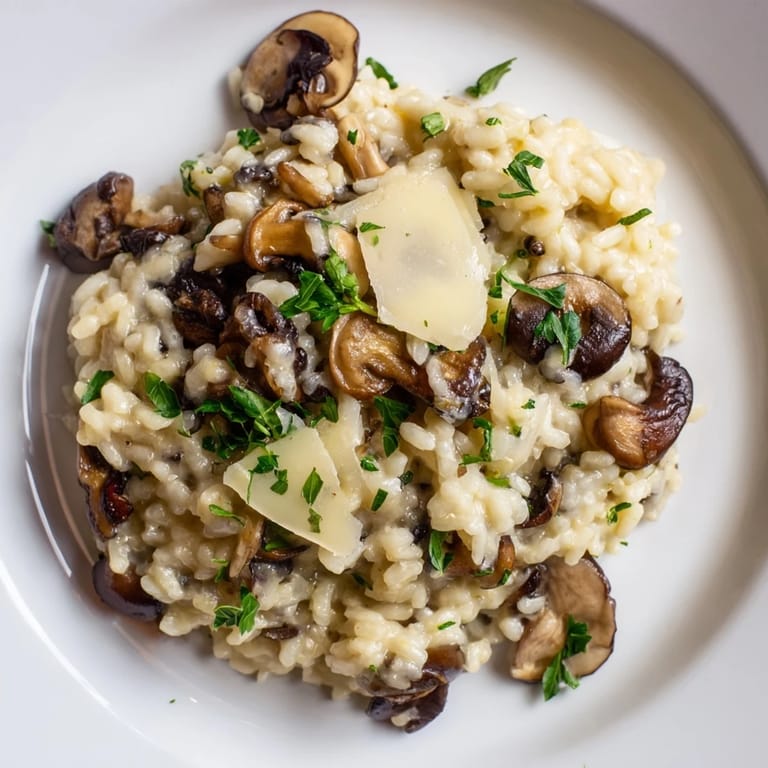
 Risotto teaches patience in a way few dishes can, and that's exactly why it's worth making. There's something grounding about standing at the stove and giving something your full attention for 20 minutes.
Recipe FAQs
- → Which rice is best for this dish?
Arborio rice is ideal due to its high starch content, which helps create the creamy texture characteristic of this dish.
- → Can I use other mushrooms besides wild varieties?
Yes, common mushrooms like cremini or button can be used, though wild mushrooms provide a richer, earthier flavor.
- → Why is the broth added gradually?
Adding warm broth in portions and stirring frequently allows the rice to release starch, producing a creamy consistency.
- → What role does the white wine play?
White wine adds acidity and depth, enhancing the overall flavor and balancing the richness of the dish.
- → How is the final texture achieved?
Finishing with cold butter and Parmesan cheese creates a smooth, rich texture and enhances the savory notes.
- → Can this be prepared vegan?
To make a vegan version, substitute butter with plant-based alternatives and omit Parmesan or use a vegan cheese.