 Save to Pinterest
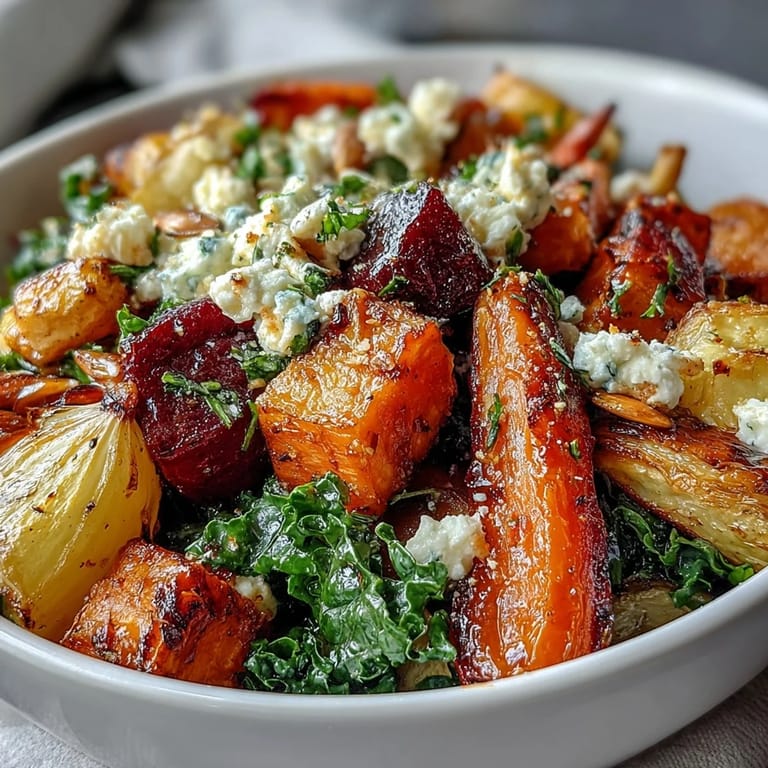
 Last November, I was standing in my kitchen on one of those gray afternoons when the farmers market had finally shifted to its winter rhythm, and I found myself with a pile of root vegetables that seemed to glow under the kitchen light. A friend stopped by while I was roasting them, and the smell of caramelized carrots and thyme filled the whole apartment—she actually sat down without being asked. That's when I realized this bowl wasn't just about using up what winter offers; it was about creating something warm that made people want to stay awhile.
My partner brought home some beautiful beets from a farm stand, and they were so vivid I almost didn't want to cut into them—but roasted alongside those golden parsnips, they created this unexpected sweetness that balanced perfectly with the sharp mustard in the dressing. Watching someone taste it for the first time and actually pause mid-bite to really taste it reminded me why I keep cooking.
Ingredients
- Carrots: Two medium ones, peeled and cut into 1-inch pieces—they caramelize beautifully and become almost candy-like, which is the secret to making this bowl feel indulgent.
- Parsnips: Cut into 1-inch pieces like the carrots, and don't skip them just because they feel unfamiliar; their earthiness is what makes this bowl feel substantial.
- Sweet potato: One small one, peeled and cubed—it adds a natural sweetness that you don't have to apologize for.
- Beet: One small beet, peeled and cut into wedges, and yes, your hands will get stained, but that's part of the deal with beets and worth it.
- Olive oil for roasting: Two tablespoons to coat everything evenly before it hits the oven.
- Kosher salt and black pepper: One teaspoon salt and half a teaspoon pepper for the vegetables themselves.
- Dried thyme: One teaspoon—fresh would be lovely if you have it, but dried works just as well and tastes almost more concentrated.
- Curly kale: Four cups, stemmed and torn, and the massaging step isn't fussy; it actually makes the kale tender enough that you'll want to eat it raw.
- Olive oil for kale: One tablespoon and a pinch of salt to massage in gently.
- Olive oil for dressing: Three tablespoons heated with shallot to create the base of something that tastes far more complicated than it actually is.
- Apple cider vinegar: One tablespoon for that tangy note that keeps everything from feeling heavy.
- Dijon mustard: One tablespoon to add sharpness and help emulsify the dressing slightly.
- Honey or maple syrup: One teaspoon to round out the acidity just enough.
- Minced shallot: One small one, softened in the oil first so it mellows instead of biting.
- Toasted pumpkin seeds: A quarter cup for crunch and nuttiness that makes you keep coming back for more.
- Crumbled feta: A quarter cup, or leave it out entirely if dairy isn't your thing.
Tired of Takeout? 🥡
Get 10 meals you can make faster than delivery arrives. Seriously.
One email. No spam. Unsubscribe anytime.
Instructions
- Heat your oven and prepare:
- Preheat to 425°F and line a baking sheet with parchment paper so nothing sticks and cleanup won't make you regret this decision. This temperature is hot enough to caramelize the vegetables without turning them to ash.
- Toss the root vegetables:
- In a large bowl, combine your carrots, parsnips, sweet potato, and beet with two tablespoons olive oil, the salt, pepper, and thyme, then spread everything evenly on the baking sheet in a single layer. If you crowd them, they'll steam instead of roast, so give them space.
- Let them roast:
- Pop them in for 30 to 35 minutes, stirring halfway through so every side gets caramelized. You'll know they're ready when a fork slides through easily and the edges are slightly darkened.
- Massage your kale:
- While the vegetables are roasting, put your kale in a bowl and drizzle it with one tablespoon of olive oil and a pinch of salt, then use your hands to gently massage and squeeze it until it softens and darkens slightly. This takes maybe two minutes and makes all the difference in texture.
- Make the warm dressing:
- Heat three tablespoons olive oil in a small skillet over medium heat, add your minced shallot, and let it soften for about two minutes until it smells sweet and mellow. Then whisk in the apple cider vinegar, Dijon mustard, and honey or maple syrup, tasting and adjusting the salt and pepper until it feels balanced between tangy and warm.
- Bring it all together:
- Divide your massaged kale among four bowls, pile the roasted vegetables on top, and drizzle everything generously with the warm dressing. The heat from the vegetables will slightly wilt the kale if you haven't already done so completely, which creates a nicer texture than if everything were ice cold.
- Finish and serve:
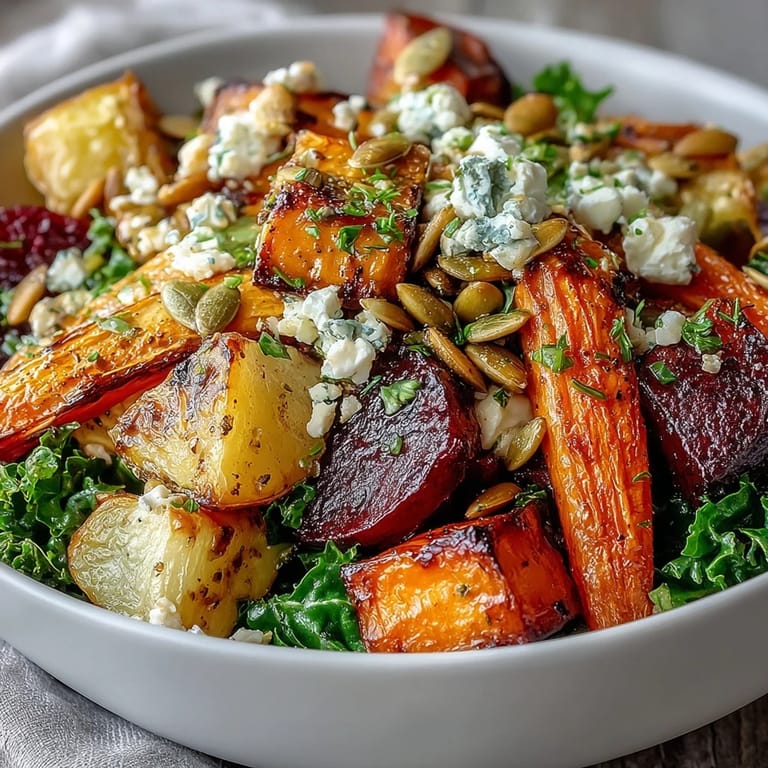
- Scatter toasted pumpkin seeds and crumbled feta over each bowl and serve right away while everything is still warm and the dressing is doing its thing.
 Save to Pinterest
 There's something about serving this bowl to people who are usually too busy or too tired to cook for themselves, and watching them actually slow down because it tastes like someone cared. That moment when food becomes an act of attention instead of just fuel—that's what this bowl does.
Why Root Vegetables Shine in Winter
Root vegetables are at their peak from November through early spring, when they've been stored in ideal conditions or freshly harvested from late crops, which means they taste sweeter and more developed than their summer counterparts. There's also something psychologically comforting about cooking with vegetables that literally come from the earth, that root you to the season and remind you that abundance takes different forms throughout the year. Roasting brings out sugars that would never emerge if you just boiled them, which is why this method transforms them into something people actually crave.
The Power of Warm Dressings
A warm dressing does something that cold vinaigrettes can't quite manage—it clings to vegetables differently, seeps into greens more thoroughly, and actually changes how your palate experiences flavors because warmth makes things taste more pronounced and rounded. I used to always reach for cold dressings on salads until I realized that winter bowls benefit from something that matches the temperature of what you're eating, which creates a more cohesive and satisfying experience. The shallot also releases its sweetness more readily when it's heated, becoming gentle and almost caramelized rather than sharp and onion-y.
Making It Your Own
The beauty of a bowl like this is that it's a framework rather than a decree—I've made this with roasted broccoli when the root vegetables looked sad, and once I added some crispy chickpeas on top because I had leftover roasted ones from something else. You can layer in cooked grains, swap the greens for whatever you have, or even add a soft-boiled egg if you want protein that isn't the feta route.
- If you want more substance, add a half cup of cooked quinoa or brown rice per serving for staying power.
- Any hearty green works—chard, collards, or even massaged spinach if you prefer something milder than kale.
- This actually tastes better the next day when the flavors have had time to get to know each other, so don't hesitate to make extra for lunch tomorrow.
 Save to Pinterest
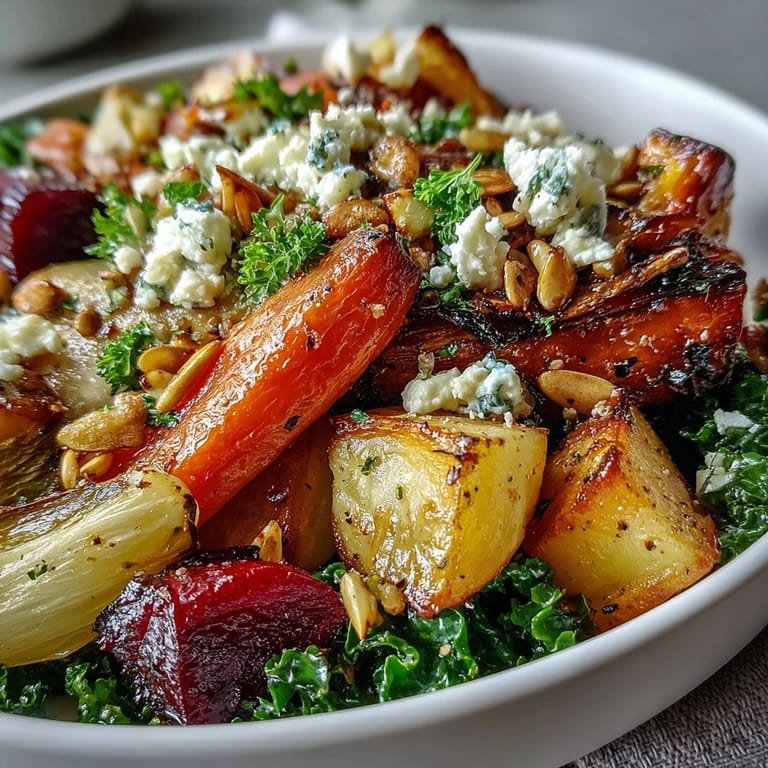
 This bowl became one of those recipes I make when I want to feel nourished but also want to share something that tastes like care. It's the kind of food that makes a gray Wednesday feel less heavy.
Recipe FAQs
- → What root vegetables work best in this bowl?
Carrots, parsnips, sweet potatoes, and beets are ideal because they roast at similar rates. Their natural sweetness intensifies in the oven, creating caramelized edges and tender centers.
- → Why massage the kale?
Massaging kale with olive oil and salt breaks down tough fibers, making the leaves softer and more pleasant to eat raw. It also reduces bitterness and improves texture.
- → Can I prepare this in advance?
Roasted vegetables keep well for 3-4 days refrigerated. Store components separately and reheat vegetables before assembling. The dressing can be made ahead and gently warmed before serving.
- → What makes the dressing special?
Warming the dressing mellows the shallot's sharpness and helps emulsify the ingredients. The combination of Dijon, vinegar, and honey creates a balanced tangy-sweet profile that complements the sweet roasted vegetables.
- → How can I add more protein?
Consider adding cooked quinoa, brown rice, or chickpeas directly to the bowl. Roasted chickpeas, sliced avocado, or a poached egg also work beautifully with these flavors.
- → What substitutions work well?
Swap kale for baby spinach or Swiss chard. Use maple syrup instead of honey for vegan options. Nutritional yeast can replace feta for a dairy-free cheesy flavor.