 Save to Pinterest
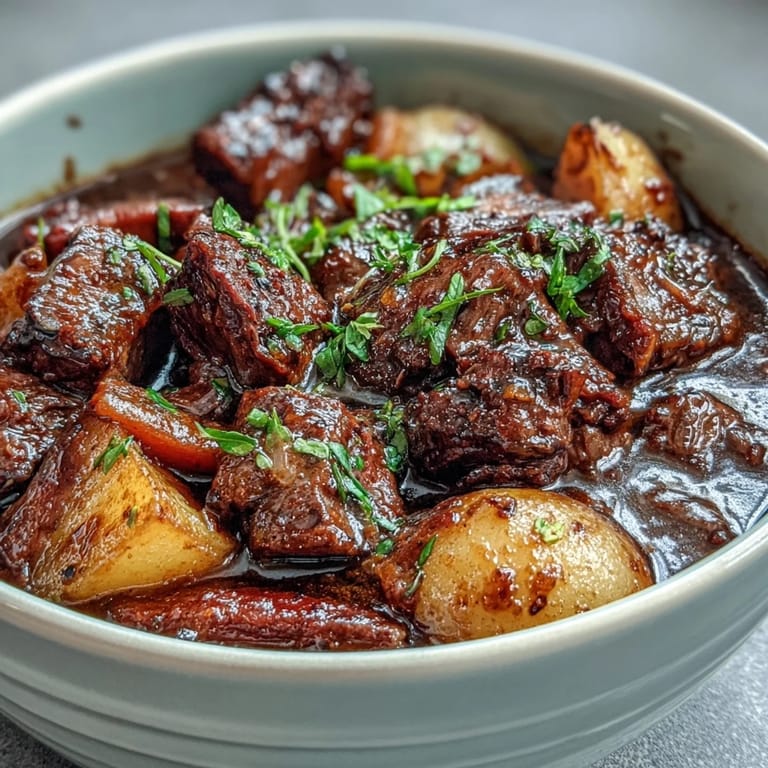
 There's something about the sound of beef hitting a hot skillet that signals the start of something good. My kitchen smelled like caramelized meat and possibility on a gray November afternoon when I decided to stop overthinking dinner and just let a slow cooker do what it does best. This beef stew became my answer to those evenings when I wanted comfort without fuss, when root vegetables softening into a rich broth felt like the only reasonable thing to eat. The wine goes in not because I'm fancy, but because it cuts through the richness with a whisper of sweetness that makes people pause mid-spoonful and ask what you did differently.
I made this for a friend who'd just moved into a new house, and we sat in her half-empty kitchen eating it straight from bowls because her table wasn't unpacked yet. She said it tasted like someone really understood what she needed, and I realized that's what good stew does—it meets you exactly where you are. Now every time I make it, I think about how food can be the first real moment of warmth in someone's new space.
Ingredients
- Beef chuck, cut into 1.5-inch cubes (2 lbs): Chuck is the workhorse of stew—it has just enough fat to become incredibly tender during the long braise, not tough like leaner cuts would be.
- Kosher salt and black pepper (1/2 tsp each): These season the meat before searing, helping create that flavorful crust that makes the whole dish sing.
- Carrots, peeled and cut into 1-inch pieces (3 large): They sweeten slightly as they cook down, becoming almost buttery if you let them go long enough.
- Parsnips, peeled and sliced (2): These are earthy and slightly sweet—they add a depth that regular potatoes alone can't quite achieve.
- Yukon Gold potatoes, peeled and chopped into chunks (2 large): They hold their shape better than russets and have a naturally buttery flavor that complements the broth.
- Yellow onion, diced (1 large): This is your flavor foundation, breaking down into the broth and rounding out all the other tastes.
- Celery stalks, sliced (3): Celery is often overlooked, but it adds a subtle vegetal backbone that makes the broth taste more complex than you'd expect.
- Garlic, minced (3 cloves): Fresh garlic gets mellow during the long cook, lending warmth instead of harshness.
- Tomato paste (2 tbsp): This concentrate adds umami depth and a subtle acidity that brightens the whole pot.
- Worcestershire sauce (1 tbsp): It's a secret weapon—fish, soy, and spice all working together to make everything taste more like itself.
- Bay leaf (1): Toss it in whole and remember to fish it out at the end, or it will remind you it's there with an unpleasant bite.
- Dried thyme and rosemary (1 tsp each): These herbs are hardy enough to survive eight hours of cooking without losing their voice.
- Beef broth (4 cups): Use good broth if you can—it becomes the soul of the stew, so don't skip quality here.
- Dry red wine (1 cup): The alcohol cooks off and leaves behind a subtle richness; if you skip it, use more broth instead.
- Cornstarch slurry (2 tbsp cornstarch mixed with 2 tbsp cold water): This thickens the broth at the end without making it gluey if you do it right.
Tired of Takeout? 🥡
Get 10 meals you can make faster than delivery arrives. Seriously.
One email. No spam. Unsubscribe anytime.
Instructions
- Season and sear your beef:
- Pat the cubed beef dry with paper towels, then toss with salt and pepper—moisture is the enemy of browning. Working in batches so you don't crowd the pan, sear the meat in a hot skillet until all sides are deep golden brown, about three minutes per batch, then transfer to your slow cooker.
- Build your vegetable base:
- Add all your chopped vegetables directly to the slow cooker with the beef—there's no need to cook them first. They'll release their moisture and flavor into the broth as everything simmers.
- Layer in the aromatics and seasonings:
- Stir in the minced garlic, tomato paste, Worcestershire sauce, bay leaf, thyme, and rosemary, making sure everything gets distributed evenly. The tomato paste should break up and blend into the liquid.
- Add your liquid and let time do the work:
- Pour in the beef broth and red wine, give everything a gentle stir, and cover. Set your slow cooker to low and walk away for eight hours—the long, slow heat is what transforms tough beef into something spoon-tender.
- Thicken and finish:
- Near the end, whisk cornstarch and cold water together in a small bowl until smooth, then stir it into the stew. Crank the heat to high, leave it uncovered, and let it bubble for about fifteen minutes until it reaches the consistency you want.
- Taste, adjust, and serve:
- Remove that bay leaf (really, don't forget it), give everything a final taste, and adjust salt and pepper if needed. The stew is best served in bowls with crusty bread alongside for soaking up the broth.
 Save to Pinterest
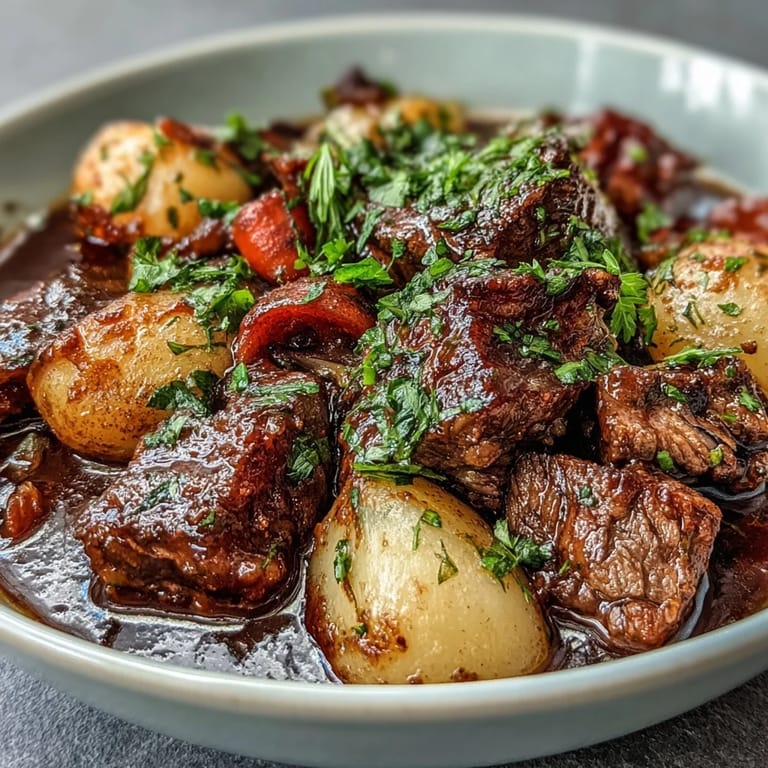
 My neighbor knocked on my door one winter evening drawn by the smell alone, and we ended up sharing a bowl while it snowed outside. That's when I understood that some food is about nourishment, but some food is about belonging, and this stew somehow managed to be both.
When to Add Extra Vegetables
If you want to add mushrooms or peas, stir them in during the last hour of cooking so they stay somewhat intact instead of dissolving into the broth. Mushrooms are particularly good if you sauté them first in that same skillet—they pick up all the browned bits left from the beef and add an earthy richness that makes people wonder what your secret is. Fresh herbs like parsley or chives scattered on top right before serving brighten everything up without overshadowing the deep flavors you've built.
Variations That Work
Sweet potatoes swap in beautifully for Yukon Golds if you want something slightly sweeter and more colorful. Some people swear by adding a splash of balsamic vinegar in the last thirty minutes, which deepens the flavors in a way that's hard to pinpoint but impossible to ignore. You can also make this completely alcohol-free by using all broth instead of wine—you'll lose that subtle complexity, but the stew will still be warming and delicious.
Make It Your Own
This is a foundation, not a rulebook, so feel free to adjust vegetables based on what's in your garden or on sale at the market. The slow cooker's job is to make whatever you put in it taste intentional and delicious, so trust it. Leftovers keep beautifully for three or four days in the refrigerator, and the stew actually tastes better the next day after the flavors have had time to really settle into each other.
- Serve it over mashed potatoes, egg noodles, or with crusty bread for soaking up every drop of broth.
- Make this on Sunday and you'll have easy dinners ready all week long.
- Double the recipe if you're feeding a crowd—it freezes incredibly well for up to three months.
 Save to Pinterest
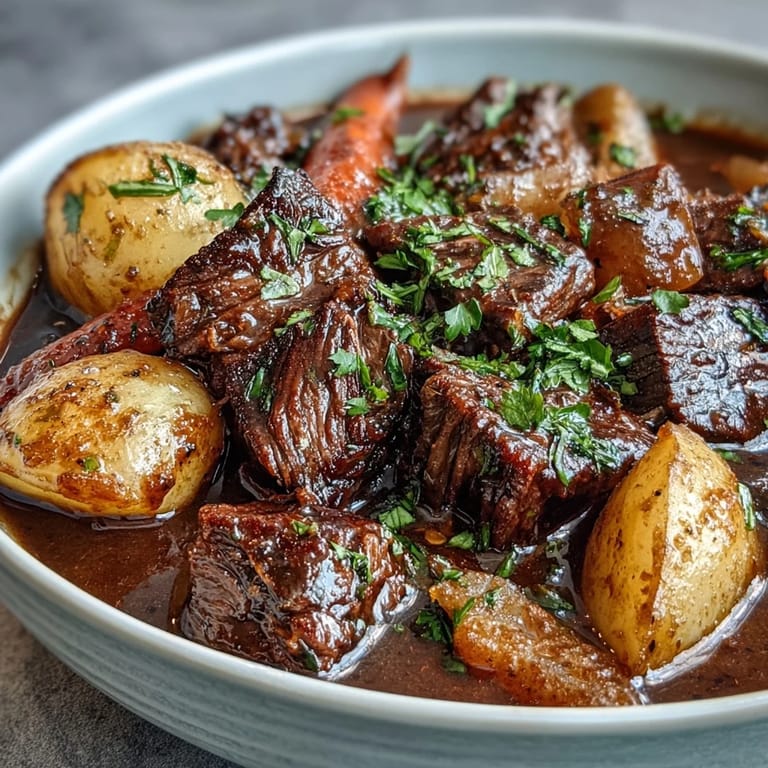
 This beef stew is the kind of dish that makes your home feel full of care and intention, whether you're cooking for yourself or for people you love. It's reliable, it's forgiving, and it reminds you why slow cooking still has magic in it.
Recipe FAQs
- → What cut of beef works best for this dish?
Beef chuck is ideal for its balance of flavor and tenderness after slow cooking.
- → Can I use fresh herbs instead of dried?
Yes, fresh thyme and rosemary can be used; just increase the quantity slightly to maintain flavor.
- → How can I thicken the stew if I don't have cornstarch?
Flour or a mashed potato can be used to thicken, but adjust quantity as needed for desired texture.
- → Is it possible to cook this on the stovetop instead?
Yes, simmer gently in a covered pot for 2-3 hours until beef and vegetables are tender.
- → What can I add for extra flavor?
Add mushrooms or frozen peas toward the end to enhance depth and texture.